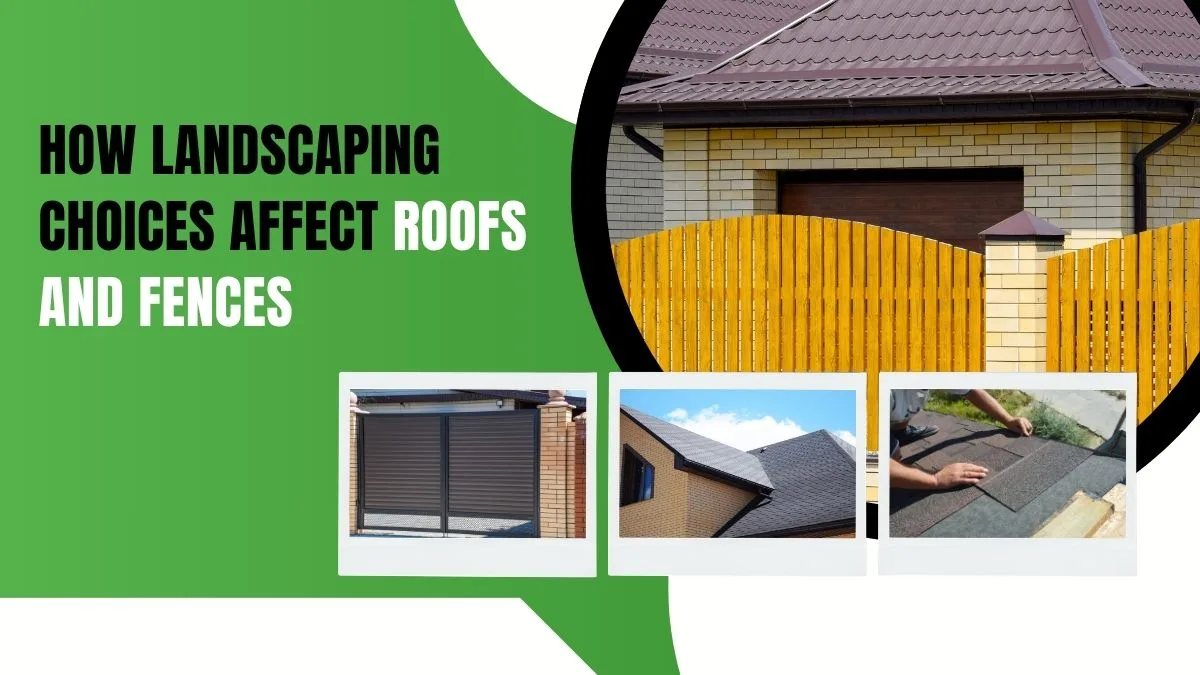

Material selection is one of the most consequential decisions a homeowner makes for their roof and fence, and one of the least understood. Most people default to whatever looks good or whatever the contractor recommends without fully understanding what they are choosing or why. In Texas, where the climate is demanding and weather events are frequent, the right material choice can mean the difference between a system that holds up for decades and one that starts failing within a few years.
This post breaks down roofing and fencing material options and explains what matters most for homeowners in Temple, Harker Heights, and Belton.
Asphalt Shingles: Still the Most Common Choice and Why
Asphalt shingles account for the majority of residential roofs across Texas, and for good reason. They offer a reasonable balance of cost, durability, and aesthetic flexibility. But not all asphalt shingles are equal, and the difference between a 3-tab shingle and a dimensional shingle matters a lot in a climate like this. A roofing company in Temple will typically recommend dimensional shingles, also called architectural shingles, over 3-tab options because of their superior wind resistance and longer warranty coverage.
Impact-resistant shingles are worth serious consideration for any homeowner in this region. Rated Class 3 or Class 4 for hail resistance, these shingles are designed to absorb the kind of hits that standard shingles cannot. Some insurance providers offer premium discounts for Class 4 shingles, which can partially offset the higher upfront material cost. If you are replacing a roof and don’t consider impact resistance, you are leaving value on the table.
Metal Roofing: A Long-Term Investment That Is Gaining Ground
Metal roofing has moved from a commercial and agricultural product to a legitimate residential option over the last decade, and it performs particularly well in Texas conditions. Standing seam metal roofs last much longer than asphalt shingles; they shed hail impact better than any granule-based product and hold up against wind loads that would strip or lift shingles. The upfront cost is higher, but the total cost of ownership over a 30 to 40 year period is often comparable or lower once you factor in the reduced maintenance and replacement cost.
Metal is not the right choice for every homeowner or every property. It reflects heat rather than absorbing it, which affects attic temperatures depending on your insulation setup. And the aesthetic is distinctive, which suits some homes and neighborhoods better than others. An honest conversation with a qualified contractor will tell you whether metal makes sense for your specific situation.
Wood Fencing: The Trade-Off Between Beauty and Maintenance
Wood fencing is the most popular choice in Texas neighborhoods for easy-to-understand reasons. It looks good, it provides genuine privacy, and it is relatively affordable to install. A fence company in Temple installs more wood privacy fences than any other type, and that volume comes with a clear-eyed view of how those fences hold up over time. The honest answer is that wood requires ongoing maintenance to perform well in Texas.
Cedar is the preferred wood species for Texas fencing because of its natural resistance to rot and insects. Pressure-treated pine is a cost-effective alternative that performs reasonably well when properly sealed. The key in either case is regular sealing and staining, ideally every two to three years, to protect the wood from moisture infiltration and UV degradation. A wood fence that is maintained properly can last 15 to 20 years. One that is left unsealed will show significant deterioration in half that time.
Metal and Hybrid Fencing: Durability Without the Maintenance Burden
Ornamental steel and aluminum fencing offer a completely different maintenance profile from wood. They do not rot, they are not susceptible to insect damage, and they hold their structural integrity through weather events that would compromise wood posts. A roof repair service in Harker Heights and the same team handling your fence can assess whether the durability trade-off makes sense for your property, particularly if you are in a location that takes direct weather exposure.
Hybrid fencing options, which combine steel posts with wood infill panels, give homeowners the privacy and warmth of a wood look with the structural durability of metal framing. The posts, which are the most common failure point in any fence system, are metal and will not rot. The panels can be replaced individually as they age without requiring a full fence replacement. For homeowners in Harker Heights dealing with fence repair in Harker Heights issues repeatedly, moving to a hybrid system is often the most cost-effective long-term decision.
Getting the Installation Right the First Time
Material choice only matters if the installation is done correctly. The best shingles on the market will underperform if the underlayment and flashing are installed improperly. Even the most durable fence posts will fail early if they aren’t set to the right depth in appropriate concrete footings. A roof repair service in Belton that does the job correctly from the start gives you a system that performs as the materials were designed to perform. Cutting corners on installation to lower upfront cost is one of the most common sources of premature failure in both roofing and fencing.
For homeowners planning fence installation in Belton TX, the installation standard is just as important as the material selected. Posts should be set at least one-third of their total length, footings should be sized for the fence height and soil conditions, and gates should be hung with hardware rated for the gate’s weight. These details are not visible once the fence is up, but they determine how the fence performs for the next decade.
Talk to a Contractor Who Knows Both Systems
The best material decisions for your roof and fence are ones made with a full understanding of your property, your budget, your climate exposure, and your long-term goals. Apex Fencing and Roofing works with homeowners across Temple, Harker Heights, and Belton to help them make those decisions with complete information rather than assumptions.