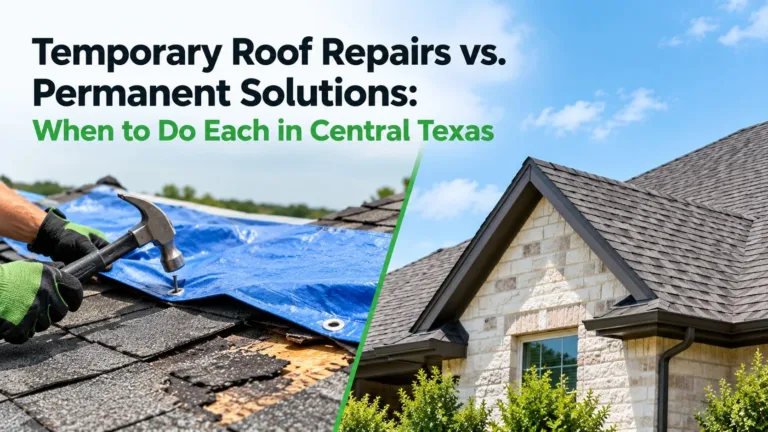
When roof damage occurs, homeowners must decide whether to make temporary repairs to stop immediate water intrusion or proceed with permanent repairs that address the underlying problem. The right choice depends on damage severity, available budget, and insurance involvement. Understanding when temporary repairs are appropriate and when permanent solutions are necessary helps homeowners respond effectively to roof emergencies.
Temporary repairs prevent additional damage and buy time while arranging permanent solutions. However, temporary repairs are not lasting solutions. Knowing when to do each helps homeowners manage roof damage appropriately.
When Temporary Repairs Are Appropriate
Temporary repairs make sense when permanent repairs cannot happen immediately but water intrusion risk exists. A storm tears off shingles and permanent repair requires contractor availability, materials, and possibly insurance approval. Temporary tarping prevents water intrusion while waiting for permanent repair scheduling.
Temporary repairs also make sense when damage occurs outside normal business hours. A roof leak starting at night might require temporary containment and prevention while waiting for daytime professional evaluation and repair. Buckets catch drips and temporary caulking prevents water spread, giving you time to call contractors in the morning.
Emergency situations sometimes require temporary repairs. If the roof has active leaks and permanent repairs cannot happen for days or weeks, temporary solutions prevent water damage from accumulating. Insurance claims may require damage assessment before permanent repair anyway, necessitating temporary protection while assessment scheduling occurs.
Types of Temporary Roof Repairs
Temporary tarping is the most common temporary roof repair. A tarp secured over damaged areas prevents water intrusion until permanent repairs occur. Tarps are not permanent solutions but provide effective short-term protection.
Temporary caulking or roofing cement can seal small gaps or separated flashing temporarily. These materials do not constitute permanent repair but prevent water from finding gaps temporarily.
Emergency patching using plywood or other materials covers large holes or damaged areas. This approach prevents water intrusion and protects interior spaces while permanent repair is arranged.
Interior water damage mitigation including bucket placement, removal of valuables from water paths, and dehumidifier use prevents damage expansion while waiting for roof repair. These actions protect your contents and reduce repair costs even though they do not address the roof problem itself.
Limitations of Temporary Repairs
Temporary repairs are not designed for extended use. A temporary tarp may last weeks but typically only months. Tarps deteriorate in sunlight and weather. Wind stresses tarps and can tear them, rendering them ineffective. Temporary repairs are intended to be short-term solutions only.
Temporary repairs do not address underlying problems. If shingles are missing, temporary tarping covers the area but does not replace shingles. Once the temporary repair fails or is removed, the underlying problem remains.
Temporary repairs may not prevent all water intrusion. A tarp covering a large damaged area prevents most water from entering but may not prevent all water from finding small gaps or seams. Some water intrusion can continue despite temporary protection.
Insurance companies sometimes dispute whether damage occurred during the temporary repair period or before. If a leak develops while temporary repairs are in place, determining whether temporary repairs prevented the leak or failed to prevent water intrusion can complicate claims.
When Permanent Solutions Are Necessary
Permanent repairs should happen as soon as possible after any roof damage. While temporary repairs buy time, extended reliance on temporary solutions risks additional damage. Permanent repairs address the problem completely rather than just preventing water intrusion temporarily.
If roof damage is extensive, permanent repair or replacement is the only practical solution. Small areas of missing shingles can be temporarily protected, but large missing sections require permanent replacement. Partial repairs are not practical when multiple areas are damaged.
If roof damage exposes structural problems, permanent repair must address the underlying structural issue. Temporary tarping does not fix rotted decking or compromised framing. Professional assessment and permanent repair are necessary.
Insurance claims often require permanent repair. Once the claim is approved, you should proceed with permanent repair rather than leaving the roof in temporary repair condition. Insurance coverage is provided for permanent solutions that restore the roof to its original condition.
Professional Evaluation Guides Repair Decisions
Professional roof contractors should evaluate damage to determine whether temporary or permanent repairs are appropriate. Contractors providing Roof Installation Services Belton and other services have expertise to assess damage severity and recommend appropriate responses.
After professional evaluation, you have information to decide whether to wait for permanent repair or pursue temporary solutions. Sometimes contractors can schedule permanent repairs quickly, making temporary solutions unnecessary. Other times, temporary repairs are clearly needed while waiting.
Contractors should explain why they recommend specific approaches. If they suggest temporary repairs, they should explain how long temporary protection is expected to last and when permanent repair should be scheduled. If they recommend immediate permanent repair, they should explain why temporary repair is inadvisable.
Cost Comparison: Temporary vs. Permanent
Temporary repairs are less expensive initially than permanent solutions. Tarping costs far less than replacing shingles or repairing damaged decking. This cost difference makes temporary repairs attractive when budget is limited or insurance claim determination is pending.
However, the total cost picture must consider that temporary repairs must eventually be followed by permanent repairs. If you spend money on temporary tarping and then pay for permanent repair weeks later, total costs may exceed the cost of permanent repair immediately.
Additionally, water damage that continues despite temporary repairs adds to total costs. Extended water exposure increases damage and repair costs far beyond the initial temporary repair cost. Permanent repair quickly reduces additional damage risk and total project cost.
Insurance claims may cover permanent repair costs but not temporary repair costs. If claims will reimburse permanent repair, spending on temporary solutions becomes an out-of-pocket expense not covered by insurance.
Insurance Considerations
Most insurance policies cover roof damage from covered perils including storms and hail. Insurance companies typically expect that homeowners take reasonable steps to prevent additional damage. Temporary repairs demonstrating that you are preventing further damage are usually viewed favorably.
However, insurance claims are based on permanent repair assessments. Adjusters evaluate damage to determine permanent repair costs. Claims are typically approved or denied based on whether damage is covered, not based on whether you have made temporary repairs.
Once claims are approved, you can proceed with permanent repairs. Insurance payments are typically issued for permanent repair costs. Using approved insurance funds for permanent repair is the appropriate use of insurance coverage.
Some insurance companies require a specific timeline for completing permanent repairs after approval. Leaving temporary repairs in place too long can result in insurance companies arguing that you have not fulfilled your responsibility to mitigate damage.
Timeline for Moving to Permanent Solutions
Temporary repairs should not be considered long-term solutions. If temporary repairs are in place, permanent repair should be scheduled as soon as possible. Temporary tarping should be replaced with permanent shingles within weeks, not months.
Schedule permanent repair as soon as contractor availability and weather permit. Delaying permanent repair risks additional damage from temporary repair failure or water intrusion continuing despite temporary protection.
Contractors offering Roof Repair Services Harker Heights should provide realistic timelines for permanent repair scheduling. If temporary repairs are necessary, contractors should give realistic estimates for when permanent repairs will be completed.
Fence Damage and Repair Decisions
Fence damage sometimes raises similar temporary versus permanent repair questions. A fence damaged by storms may require emergency repair for security purposes but benefit from permanent repair when time and budget allow.
Temporary fence repairs might include securing damaged sections or blocking off damaged areas until permanent repair. Roof Installation Services Killeen contractors can assess fence damage alongside roof damage and recommend appropriate temporary or permanent solutions.
Coordinating Temporary and Permanent Repairs
When planning permanent roof repair, discuss timeline and scope with contractors. Roof Repair Services Temple and other contractors should explain whether permanent repair can be completed quickly or whether scheduling delays are anticipated.
If contractors estimate extended delays before permanent repair scheduling, temporary solutions become more important. Plan for duration of temporary protection and schedule permanent repair as the primary focus.
Final Thoughts
Temporary roof repairs prevent water damage while permanent repairs are being arranged. However, temporary solutions are not lasting and must be followed by permanent repair. Understanding when each approach is appropriate helps homeowners respond effectively to roof damage.
Professional assessment guides repair decisions and helps ensure that appropriate responses prevent unnecessary damage. Whether temporary repairs or immediate permanent repair is appropriate depends on damage severity, contractor availability, and insurance involvement.
The goal is to restore your roof to proper condition as quickly as possible. Temporary repairs buy time, but permanent solutions provide lasting protection. Fencing Company in Temple and professional roofing contractors understand these distinctions and can guide appropriate responses to damage.
A fence contractor in Temple similarly understands temporary versus permanent repair decisions for fence damage. Professional guidance ensures that your property is protected and restored appropriately.