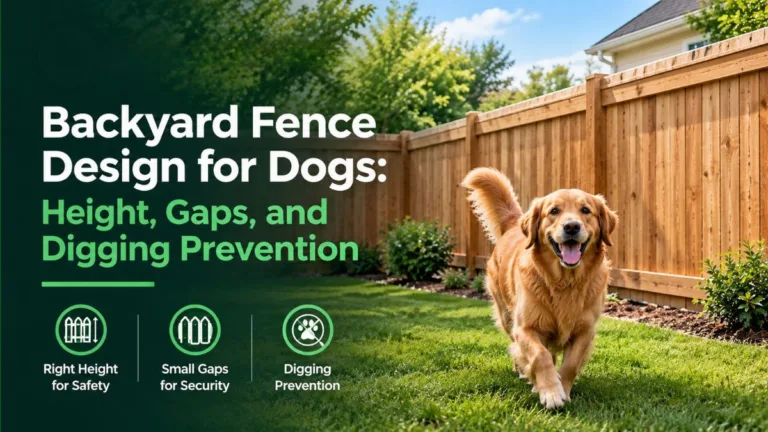
A backyard fence is one of the most important tools for keeping a dog safe. It gives your dog room to run, protects them from traffic, and prevents them from wandering into neighboring yards or the street. Yet many fences that look secure to people fail to contain determined dogs. Some are jumped, some are dug under, and some are squeezed through because a gap was overlooked. Designing a fence with a dog’s actual behavior in mind makes a significant difference in both safety and peace of mind.
Every dog is different. A calm older dog may never test a fence, while a young, athletic breed or a dog with strong prey drive may explore every weak point. Start by observing your dog’s habits, then plan the fence to match the most determined behavior you expect to encounter.
Assessing Your Dog’s Behavior
Watch how your dog moves around the yard. Does it stand at the fence and stare at passing people or animals? Does it try to climb, dig, or push at particular spots? Is it a strong jumper, or does it prefer to squeeze through gaps? These observations shape the design. A dog that digs needs a different solution than a dog that climbs, and many dogs do both. Honest assessment early on prevents expensive changes later.
Choosing the Right Height
Height is the first line of defense against jumping. Fence height recommendations depend on the size and athleticism of the dog, but in general, taller fences are more effective for energetic breeds. Check local zoning rules before choosing a height, since many communities limit residential fence heights and may require approval for taller designs. A professional who provides Roof Installation Services Belton and fence work can explain which heights are permitted for your lot.
Height alone does not stop a dog that climbs. Fences with horizontal rails placed close together give paws less to grip, while smooth vertical surfaces are harder to scale than fences with visible footholds. Avoid placing furniture, planters, or woodpiles against the fence, since these give a dog a launching point.
Controlling Gaps and Spacing
Gaps are a common escape route, particularly for smaller dogs or puppies. Measure the spacing between boards and between the fence and the ground. Gaps that look harmless to people can be large enough for a determined dog to slip through. Solid privacy designs, close-spaced picket fences, or welded wire panels with small openings all help. Check the bottom edge of the fence carefully, since the gap beneath a gate or along uneven ground is one of the most overlooked escape points.
Gates need the same attention. A gate with a large gap at its bottom or sides defeats the rest of the fence. Adjust gate clearance so that it sits close to the ground without dragging, and use latches that a dog cannot easily open.
Preventing Digging
Digging is one of the most frustrating behaviors for owners, and it can compromise a fence quickly. Preventing it requires a barrier below ground. Common solutions include burying wire mesh or a solid barrier along the base of the fence, extending it outward or inward, so that a digging dog encounters resistance before reaching the boundary. Some owners use a concrete footing or a rock border along the fence line, which can also discourage digging in the most vulnerable spots.
Installing a digging barrier during construction is much easier than adding one later. If your fence is already in place, a contractor offering Roof Repair Services Harker Heights and fence services can inspect the base and recommend an appropriate retrofit.
Materials That Stand Up to Claws and Teeth
Dogs can damage fences through chewing, scratching, and repeated pressure. Wood is attractive and customizable, but it can splinter or develop gaps if a dog chews the boards. Vinyl resists scratching better and does not splinter, though a determined chewer can still damage it. Metal fences, including welded wire and steel panels, are very durable but may require coatings to prevent rust. Choose the material that fits your dog’s habits and your maintenance tolerance.
Fasteners matter too. Hardware that is exposed on the dog’s side of the fence can become a target for chewing, so consider placing fasteners on the inside of the yard where possible. Use galvanized or stainless fasteners to resist corrosion from the outdoor environment.
Gate Latches Built for Dogs
Many dogs learn to open simple latches by pushing, pawing, or nudging. Choose latches that require a deliberate action, such as a lift-and-push design or a spring latch that must be held open. Some owners add a second latch positioned higher or lower than the first, which makes it harder for a dog to operate both. Self-closing hinges help the gate return to a secure position after someone walks through it.
Checking the Fence Regularly
Walk the perimeter once a month and look for loose boards, bent rails, gaps near the ground, and areas where soil has washed away. Pay attention after storms, since wind and heavy rain can shift posts and open new gaps. Dogs also change behavior as they age or as new animals and people appear nearby, so reassess the fence whenever circumstances change.
Working With Professionals
A well-designed dog fence combines height, close spacing, a digging barrier, secure gates, and durable materials. Professional installation ensures that posts are set deeply enough to resist pressure from a dog that leans or pushes, and that the base is finished properly. Discuss your dog’s habits with the contractor so the design addresses the real risks rather than only the standard specifications. A Fencing Company in Temple can review your yard, suggest a layout that suits your dog, and explain the tradeoffs between designs.
Many homeowners coordinate fence work with other exterior projects, which can make scheduling easier. If you are also planning roof work, a Roof Installation Services Killeen provider can help coordinate timing. A fence contractor in Temple can also design a yard that keeps your dog secure while still looking good from the house.