A privacy fence sounds simple. You pick some wood. Someone puts posts in the ground. Boards go up. Done. You have your privacy.
But there is so much that can go wrong in that process. And the worst part is most of the mistakes are invisible at first. The fence looks completely fine for the first few months. Then summer hits. Then rain comes. Then the ground freezes and thaws. And slowly things start going wrong in ways that end up being really expensive to fix.
I have seen fences that were less than two years old already leaning badly. Boards splitting and cracking. Posts that could be pushed with one hand. All because of mistakes made during the planning or installation phase.
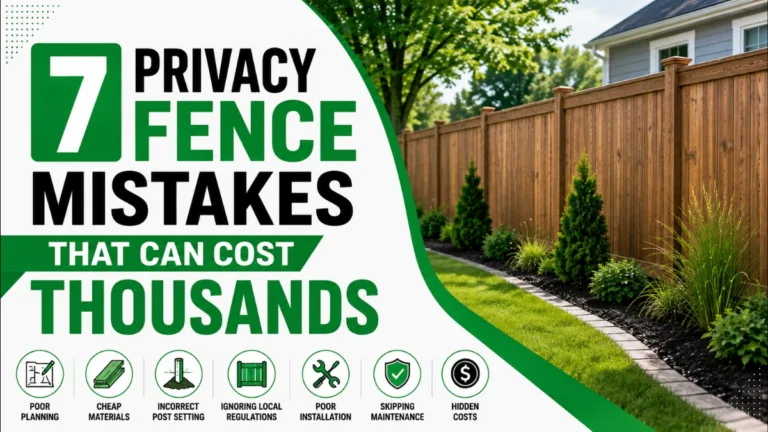
So let us go through the seven biggest ones. Because knowing these ahead of time is genuinely worth money.
Mistake 1 Skipping the Planning Stage Completely
Most people do zero planning before putting up a fence. They just decide they want one and start figuring out materials and contractors.
That rush causes problems right from the start.
Here is what planning actually means before any wooden fence installation services begin:
- Knowing exactly where your property line is. Not where you think it is. Where it actually legally is. A survey might be needed if you are not sure.
- Understanding local fence rules. Most areas have height limits. Some neighborhoods have HOA rules about materials or colors. Some city codes require permits for fences over a certain height.
- Thinking about drainage. Where does water flow in your yard after heavy rain? If your fence blocks natural water flow, you might end up with flooding or water pooling against the fence base constantly.
- Knowing where underground utility lines are. Digging post holes without checking first is genuinely dangerous. There are free services that will mark utility lines before you dig.
Skipping any of these steps can mean tearing down a fence you just paid for because it crossed a property line or violated a local rule. That is an expensive lesson.
Mistake 2 Using the Wrong Wood for the Job
Not all wood is the same. This surprises a lot of people because wood is wood, right?
Wrong.
Some wood rots fast when it stays wet. Some wood splits badly in heat. Some wood is soft enough that insects eat right through it. Choosing the wrong type of wood for a fence that is going to live outside in all weather is one of the most common and costly mistakes people make.
Here are the main options and what they actually mean:
Pressure treated pine This is treated with chemicals that help it resist rot and insects. It is a solid and affordable option for fence posts especially. The posts are the most important part because they sit in the ground where moisture is constant.
Cedar Naturally resistant to rot and insects without needing chemical treatment. It smells good, looks great, and holds up well. It costs more than basic pine but it lasts significantly longer.
Redwood Similar to cedar in its natural resistance. Beautiful grain. Tends to be more expensive and harder to find depending on where you live.
Basic untreated pine Fine for indoor projects. For an outdoor fence it is going to have problems within a few years. Avoid this for any part of a fence that will be exposed to the elements.
The wood choice also affects how well fence staining services work later. Some woods absorb stain beautifully and hold it for years. Others need more prep and more frequent reapplication.
Mistake 3 Not Setting Posts Deep Enough
This one causes more fence failures than almost anything else.
The posts are the skeleton of your fence. If the posts are not set correctly, nothing else matters. The boards can be perfect. The stain can be beautiful. But if the posts fail, the whole fence goes with them.
Posts need to go into the ground deep enough to be stable. The general rule most professionals follow is that one third of the post should be underground. So if you have a six foot fence, your posts should be at least eight feet long with two feet underground. For a taller fence, posts go even deeper.
The posts also need proper concrete around them. And the concrete needs to be sloped slightly away from the post at the top so water drains away from the wood rather than sitting against it.
When posts are set too shallow or without proper concrete, a strong wind can push the whole fence over. Or the posts slowly lean over time as the ground shifts with seasons.
This is one of the main reasons that proper wooden fence installation services from experienced people is worth paying for. Getting posts right requires knowing what you are doing.
Mistake 4 Ignoring Wood Treatment After Installation
So the fence is up. It looks great. Fresh wood has that really nice smell and color. And a lot of homeowners just leave it at that.
Big mistake.
Untreated wood exposed to sun, rain, and humidity starts breaking down faster than most people expect. The sun dries it out. It starts cracking. Rain gets into those cracks and the wood swells and shrinks with each wet and dry cycle. Over time boards warp, split, and become structurally weak.
Seal and stain paint services for wooden fence are not just about making the fence look nice. They are about protection. A good stain soaks into the wood and creates a barrier against moisture. A sealer on top locks that protection in.
Done right, treating a wooden fence can easily double how long it lasts. A fence that might need replacing in 8 years without treatment could last 15 to 20 years with proper and regular treatment.
For anyone in Central Texas, the heat alone does a lot of damage to untreated wood. The sun here is strong. Summers are long and dry. Without protection the wood just dries out and cracks faster than it would in cooler climates.
Mistake 5 Waiting Too Long Between Staining
Okay so let us say you did get your fence treated when it was first installed. Great start.
But then life gets busy. A year goes by. Then two. Then you look at the fence and the color has faded and the wood looks a bit gray and dry but it still seems okay so you leave it another year.
This is how people end up with fences that need full replacement when they could have just needed maintenance.
Wood stain and sealant does not last forever. In hot sunny climates like Central Texas it typically needs reapplication every one to three years depending on the product used and how much sun exposure the fence gets.
When the protective layer wears off, moisture gets back in. And once water gets deep into wood that has dried and cracked, the damage happens quickly.
Fence staining near Temple TX services can assess the current condition of your fence and tell you what it actually needs. Sometimes it is a full strip and restain. Sometimes it just needs a fresh coat on top. Either way, staying on top of it is dramatically cheaper than letting it go until the wood itself is compromised.
Mistake 6 Not Fixing Small Problems Quickly
A loose board here. A small crack there. One post that wobbles a tiny bit when you push it.
These things seem minor. And individually they kind of are. But left alone they grow into big problems surprisingly fast.
A loose board lets wind get behind the fence. Wind pressure on that one loose board puts stress on the surrounding boards and eventually on the posts. What started as one loose board becomes a section of fence that is pulling apart.
A small crack in a board lets water in. Water expands when it freezes. If you are in an area that gets cold winters, that crack gets bigger every freeze and thaw cycle.
A post that wobbles slightly is telling you something is wrong underground. Maybe the concrete cracked. Maybe the post itself started rotting at the base where it meets the ground. Ignoring it means that post fails completely at some point, usually during a storm when you least want to deal with it.
Fence repair services for small issues are genuinely inexpensive. Catching things early keeps them in the minor category. Waiting turns minor things into major ones.
Mistake 7 Choosing the Cheapest Contractor Without Asking the Right Questions
Everyone wants to save money. That is completely reasonable. But the cheapest quote for a fence job is not always the best deal.
Here is the thing. A fence is not something you buy once and throw away if it does not work out. It lives on your property for years. It affects how your home looks. It affects your property value. It affects your security and privacy every single day.
A contractor who cuts corners on post depth, uses the wrong grade of wood, skips the underlayment at the base of boards, or does not use proper hardware is going to give you a fence that costs you more in the long run.
Good questions to ask any fence contractor before hiring:
- How deep will the posts go and what concrete mix will you use
- What grade and type of wood are you using for the boards versus the posts
- Do you handle any required permits
- What does your warranty cover and for how long
- Can you show me examples of fences you installed that are two or more years old
A contractor who gets annoyed by these questions is a contractor to avoid. Someone who does good work is happy to talk about how they do it.
For homeowners looking at a fence company Copperas Cove TX area, the same standards apply. Check reviews. Ask for references from nearby completed jobs. Drive by and look at their previous work if you can.
The Thing About Wooden Fences That People Forget
Wood is a living material. Even after it has been cut and shaped into fence boards, it still responds to its environment. It expands in humidity. It contracts in dry heat. It reacts to sun. It absorbs water.
That is actually what makes wood beautiful. The grain, the texture, the warmth of it. But it also means wood needs more attention than vinyl or metal or composite.
Wooden fence installation services done properly with the right wood, the right post depth, proper drainage consideration, and good quality hardware give you a fence that can honestly last 20 years or more. Add regular staining and timely small repairs and that timeline gets even longer.
The mistakes on this list are not complicated to avoid. They just require a little knowledge and a little attention. And now you have both.
Before You Start Your Fence Project
A few things worth doing before anything else:
- Walk your property line and confirm where it actually is
- Check your local rules on fence height and permit requirements
- Think about what the fence needs to do pure privacy, some airflow, decorative, security
- Get at least three quotes and ask each contractor the questions listed above
- Plan for ongoing maintenance from day one, not as an afterthought
A good privacy fence does exactly what the name says. It gives you privacy. It makes your outdoor space feel like yours. It runs quietly in the background, doing its job without you having to think about it much.
Getting there starts with avoiding the mistakes most people make before the first post ever goes in the ground.