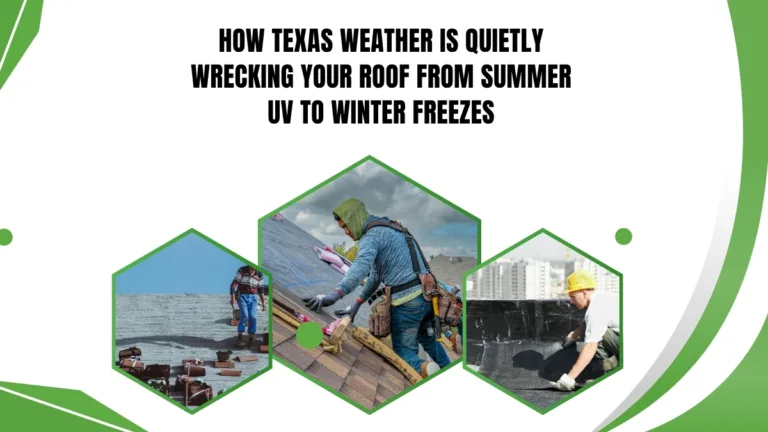
Texas doesn’t do mild weather. And your roof sitting outside, absorbing all of it, every day of the year, feels that more than almost any other part of your house.
The Obvious Enemy: Sun and Heat
Roof surface temperatures in Texas summers can climb past 150°F, even when the air temperature is a “mere” 96–100°F. That kind of sustained heat dries out asphalt shingles, causing them to crack, curl, and shed the protective granules that shield them from UV damage in the first place. Once granules are gone, the exposed asphalt underneath degrades even faster a cycle that quietly shortens a roof’s real-world lifespan well below its rated one. Proper attic ventilation is one of the few things that meaningfully slows this down, since it keeps heat from building up directly underneath the shingles.
The Counterintuitive Enemy: Temperature Swings
Here’s the part most homeowners don’t think about: it’s not just the heat, it’s the swing. North Texas can see summer highs over 100°F and winter lows below 15°F in the same year, with several freeze-thaw cycles in between. Every one of those swings makes roofing materials expand and contract thousands of times over a roof’s life. That constant movement fatigues fasteners, weakens sealant, and eventually cracks shingles right at the nail line, usually long before anyone notices from the ground.
The One Most People Forget: Sudden Freezes
Texas roofs are built with heat in mind, which is exactly why they’re not always ready for a hard freeze. When cold snaps roll through, moisture that’s worked its way into small cracks can freeze and expand, widening gaps that summer heat had already started. It doesn’t take a repeat of a major statewide freeze event for this to matter; even a routine winter cold front can do it if a roof already has hidden wear.
The Wet-Season Enemy: Wind and Humidity
Severe thunderstorm gusts in North Texas regularly reach 60–80 mph, more than enough to lift shingles weakened by heat or age. Meanwhile, in Houston and East Texas, humidity brings its own slow-motion problem: condensation in the attic and moisture trapped along the roofline create ideal conditions for algae, mildew, and rot, which appear as dark streaks long before they become leaks.
What This Means for Maintenance
Because most of this damage is gradual, the roofs that fail early are usually the ones nobody looked at until something went wrong. An annual inspection, ideally after peak summer heat and before winter, can catch curling, blistering, and granule loss while they’re still a maintenance issue rather than a replacement.
The Same Weather Hits All of Central Texas
This cycle of heat, freeze-thaw swings, wind, and humidity plays out the same way whether you’re in a brand-new subdivision or a decades-old neighborhood. That’s why an aging roof due for a roof installation in Belton, a roof installation in Cameron, a roof installation in Copperas Cove, or a roof installation in Temple usually shows the wear well before the rated lifespan is up. It’s also why smaller fixes, like roof repair in Bartlett or routine roof maintenance in Cyclone, tend to catch problems while they’re still cheap to fix.
Curious how your roof is holding up against a full year of Texas weather? Apex Fencing & Roofing offers seasonal roof inspections to detect heat, wind, and moisture damage before it becomes a bigger problem. We serve Temple, Belton, Copperas Cove, Cameron, Bartlett, and Cyclone. Call (254) 239-0432 to schedule yours.