
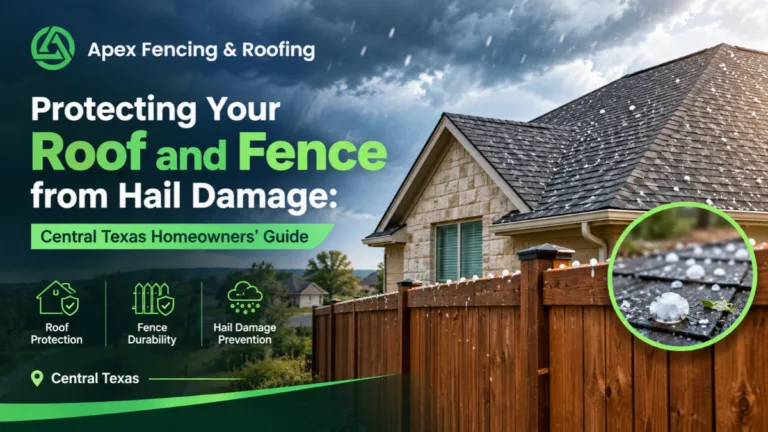
Hailstorms pose significant threats to both roofs and fences in Central Texas. The region’s geography and weather patterns create conditions where large hail can fall with little warning, causing extensive damage to exterior structures in minutes. Understanding hail damage risks and knowing how to prepare and respond can help homeowners protect their properties and make informed decisions about repairs and recovery.
Hail damage is often hidden and may not become apparent immediately after a storm. A roof that appears intact after hail could have sustained damage that allows water intrusion months or years later. Similarly, fence damage from hail or debris can compromise structural integrity even when the damage is not immediately obvious. Taking a proactive approach to hail preparedness and having damaged properties professionally evaluated ensures that problems are identified and addressed before they escalate.
Understanding Hail Damage to Roofs
Hail impacts roofs in several ways, depending on stone size, wind speed, and roof material. Small hail typically causes cosmetic damage to shingles that may not affect roof function. Larger hail can crack shingles, dislodge granules, crack flashing, and damage vent pipes and other roof components.
The most dangerous aspect of hail damage is that it is often hidden. A shingle that appears intact from the ground may have hairline cracks that allow water to seep into the roof system. This hidden damage gradually expands as freeze-thaw cycles stress the weakened shingles. Over time, water intrusion develops into serious damage to decking, insulation, and interior structures.
Hail damage assessment requires professional expertise. After severe hail storms, homeowners should contact contractors offering Roof Installation Services Belton or Roof Repair Services Harker Heights for professional inspection. A documented assessment is important for insurance claims and for understanding whether repairs are sufficient or whether replacement is necessary.
Hail Damage Patterns and Signs
Hail damage to roofs follows certain patterns that professionals recognize. Hail typically impacts the side of the roof facing the storm, though wind can change impact direction. Damage often concentrates in specific areas, particularly roof slopes facing the prevailing wind direction.
Common signs of hail damage include dents or impact marks on shingles, missing or cracked shingles, granule loss creating bald spots on the roof, and bruises or cracks on metal components like flashing, gutters, and vent pipes. Damage to roof-mounted items such as satellite dishes, antennas, or solar panels indicates the severity of hail exposure.
From the ground, homeowners can sometimes spot obvious damage such as missing shingles or visible bruising. However, detailed hail damage assessment requires professional roof inspection. Contractors providing Roof Installation Services Killeen have training and equipment to identify damage that homeowners might miss.
Fence Damage from Hail and Storm Debris
While roofs receive the most attention after hail storms, fences also suffer significant damage. Hail can crack fence boards, dent metal fencing, and weaken posts and connections. In areas with trees, falling branches create additional fence damage that compounds hail impacts.
Wood fences are particularly vulnerable to hail and debris damage. Large hailstones can crack boards, and falling branches can splinter or break fence sections. Metal fences can be dented, and vinyl fencing can crack if struck with enough force. Chain link fencing typically withstands hail better than solid fences, but hail can still damage posts, gates, and fasteners.
After severe storms, homeowners should inspect their entire fence line for damage. A qualified fence contractor in Temple or Fencing Company in Temple can assess fence damage and determine whether sections can be repaired or whether broader replacement is needed.
Pre-Storm Preparation Strategies
While homeowners cannot prevent hail, they can take steps to reduce damage risk. Keeping gutters clean ensures that water drains properly and does not pool on the roof surface. Trimming tree branches that hang over the roof or fence prevents branch damage and reduces impact severity.
Ensuring that roof fasteners are tight and secure helps shingles resist wind and hail impact. Similarly, fence posts should be properly set and connections secure to resist wind forces and debris impact. Regular maintenance before storm season positions properties to withstand severe weather better than neglected properties.
For properties with older roofs, considering Roof Repair Services Temple or replacement before severe weather season provides added protection. A newer roof with quality materials is more likely to withstand hail damage than aging shingles.
Post-Storm Assessment and Documentation
Immediately after a severe hail storm, homeowners should inspect their property for damage, taking photographs and noting locations of visible impacts. This documentation is essential for insurance claims. Photographs should show the overall property damage as well as close-up details of specific damage to roof areas, fence sections, and other structures.
Homeowners should not attempt to climb on the roof to inspect for damage, as this creates safety hazards and can cause additional damage. Instead, qualified contractors should perform a professional inspection. A detailed professional assessment includes photographs and written descriptions that insurance companies expect to see.
Contacting insurance companies promptly after storms initiates the claims process. Insurance adjusters will visit to assess damage and determine coverage. Having documentation from professional contractors along with homeowner photographs helps ensure that insurance assessments are thorough and fair.
Working with Insurance After Hail Damage
Most homeowners insurance policies cover hail damage to roofs and other structures. Understanding insurance coverage and the claims process helps homeowners navigate recovery after storms. Coverage limits, deductibles, and specific policy terms affect how much insurance will cover for repairs or replacement.
Insurance companies typically send adjusters to assess damage and determine payment amounts. Having professional assessment from qualified contractors is valuable during this process. Insurance adjusters expect to see detailed documentation and may rely on contractor assessments to understand damage extent and appropriate repair costs.
It is important to understand that insurance companies may deny or limit coverage for damage if maintenance has been inadequate. Regular roof inspections and maintenance demonstrate good stewardship that supports insurance claims. Working with contractors who document maintenance history helps establish that proper care was taken.
Repair vs. Replacement After Hail Damage
The decision between repairing hail damage and replacing roofing or fencing depends on several factors. For roofs, damage extent, roof age, and insurance coverage all influence the decision. If hail damage is isolated to one or two roof areas and the roof is otherwise in good condition, repair may be appropriate and sufficient.
However, if hail damage is widespread or if the roof is already aging, replacement may be more practical. A new roof provides better protection going forward and eliminates uncertainty about whether hidden damage exists. Similarly, if fence damage is extensive, replacement may be more cost-effective than attempting repairs.
Professional assessment helps homeowners make these decisions. Contractors providing Roof Installation Services Belton or other locations can evaluate damage and provide estimates for both repair and replacement, allowing homeowners to make informed decisions.
Long-Term Considerations After Hail Events
After a hail storm, homeowners should consider whether upgraded materials or improved construction techniques could provide better protection in future storms. Hail-resistant roofing materials are available that better withstand impact compared to standard shingles. Similarly, fence materials vary in their resistance to weather damage.
Planning for hail-resistant features during roof or fence replacement provides added security. While these improvements may cost more initially, the long-term benefit of reduced storm damage risk justifies the investment for many homeowners.
Coordinating roofing improvements with fencing upgrades makes sense when both projects are being addressed. A contractor who can handle both roof and fence work ensures that exterior improvements are coordinated and completed efficiently. Whether discussing Roof Repair Services Harker Heights or fence work, comprehensive exterior planning prevents multiple disruptions to the property.
Insurance Claims Best Practices
Successful insurance claims begin with thorough documentation. Photographs of damage, professional contractor assessments, and detailed descriptions of all affected areas support claims. Keeping receipts for emergency repairs or temporary protection measures helps document expenses that may be reimbursable.
When communicating with insurance companies, provide all requested documentation promptly and completely. Ask questions about coverage terms and claim procedures to ensure understanding. If insurance denies or limits coverage that you believe should be paid, requesting additional review or seeking independent assessment helps resolve disputes.
Selecting qualified contractors for repairs is important both for quality of work and for insurance interactions. Contractors familiar with insurance claims and documentation requirements help ensure that work meets insurance standards and that appropriate payment is received.
Final Thoughts
Hailstorms pose real risks to Central Texas properties, but understanding hail damage, preparing for storms, and responding effectively to damage significantly reduces long-term impacts. Proper assessment of hail damage, thorough insurance documentation, and decisions about repair versus replacement should be made based on professional evaluation rather than homeowner guessing.
By taking a proactive approach to roof and fence maintenance before storm season, having properties professionally assessed after severe storms, and working through insurance claims systematically, homeowners can protect their properties and recover effectively when hail damage occurs.