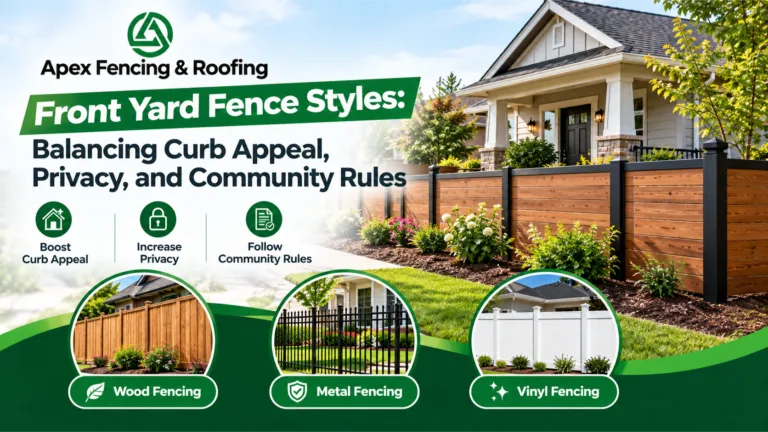
A front yard fence shapes how a home is seen from the street. Unlike backyard fencing, which is designed mainly for privacy and containment, a front fence has to look good from every angle and fit the character of the neighborhood. It frames the entrance, defines the yard, and sets the tone for the property. The right choice balances the homeowner’s need for definition and security with the aesthetics that make the home inviting.
Front fences also have to work within practical constraints. Height limits, setback requirements, and homeowner association guidelines all affect what can be built. Understanding these rules before choosing a style prevents costly redesigns.
Start With the Home’s Architecture
A fence should feel like part of the house rather than an add-on. Traditional homes often suit picket fences, split rail designs, or simple board fences with clean lines. Modern homes may look best with horizontal slat fencing, minimalist metal panels, or a combination of materials that echo the house’s siding or trim. Craftsman and ranch-style homes often pair well with low, open fencing that keeps the front of the house visible. Consider the colors of the home, the roof, and the landscaping. A fence color that complements the siding and roof creates a cohesive look, while a contrasting accent color can highlight the entrance. A Roof Installation Services Belton provider who also handles fencing can help coordinate colors across the exterior, since roofing color often sets the palette for the rest of the home.
Picket and Open Designs
Picket fences are classic and welcoming. They define the yard clearly while allowing neighbors and passersby to see the front of the house. Pickets can be spaced for a lighter look or set closer together for a more substantial appearance. Open designs such as split rail or ranch-style fencing offer a rural feel and work well on larger lots where a full boundary is not needed. Open front fences are generally easier to maintain than solid ones because they catch less wind and collect less debris. They also support landscaping, since plants can grow along the fence line and soften the boundary.
Semi-Private and Decorative Options
Some homeowners want a bit more privacy in the front yard without building a wall. Semi-private designs such as lattice panels, alternating board patterns, or shorter solid sections combined with open railings can provide screening while keeping the entrance visible. Decorative metal fencing, with simple scrolls or geometric patterns, creates a refined look that works well with many architectural styles. Ornamental fencing requires care in installation. Panels must be spaced and aligned precisely, and gates must hang evenly so that the entrance looks finished from the street.
Respecting Height and Setback Rules
Many communities restrict front fence heights more strictly than backyard heights, and some require a setback from the sidewalk or property line. Corner lots often face additional restrictions because of sight-line requirements near intersections. Confirm these rules with your local planning or building department before ordering materials, and check whether a permit is required. Homeowner associations may impose additional guidelines covering materials, colors, and styles. Obtain the written guidelines and submit plans for approval if required. Attempting to install a non-compliant fence can lead to removal orders and fines, so this step is worth doing carefully.
Materials for Front Yard Fences
Wood offers a warm, traditional look and works well with many home styles, but it requires regular staining or painting. Vinyl provides a clean appearance with low maintenance, and modern vinyl products are available in many colors and profiles. Metal fencing, including aluminum and steel, offers durability and a refined look, often at a higher initial cost. Composite materials combine the look of wood with greater resistance to moisture and insects. Choose a material that matches both your appearance goals and your willingness to maintain the fence. A Roof Repair Services Harker Heights contractor who also installs fencing can explain how each material performs in local conditions.
Gates and Entry Design
The front gate is often the focal point of the fence. A well-designed gate can make the entrance feel welcoming and well considered. Consider the gate’s width, which should comfortably accommodate a wheelbarrow or bicycle if needed, and its height, which should match the rest of the fence. Hardware should be sized appropriately and finished to complement the gate and fence. A gate with a decorative latch or a simple arched top can add character without much extra cost. Plan the gate’s swing direction carefully so it does not block the sidewalk or conflict with a driveway. If the gate opens onto a walkway, make sure there is enough clearance for guests to pass.
Landscaping as Part of the Design
Planting along a front fence softens its lines and integrates it into the yard. Shrubs, perennials, and climbing plants can create layers that make the fence feel like part of the landscape. Choose plants with mature sizes that fit the space, and allow room for maintenance on both sides of the fence. Landscaping that is too close to the fence can trap moisture against the boards or make repairs difficult.
Coordinating the Fence With Other Projects
Front yard fencing often happens alongside other exterior improvements, such as painting, roof replacement, or walkway work. Coordinating these projects helps the finished property look intentional and can reduce overall disruption. A Roof Installation Services Killeen provider can help time roof work so it does not conflict with fence installation, and both trades can advise on color and material choices that work together.
Planning the Final Result
Before committing, take photographs of the front of the home from the street and sketch potential fence lines and gate positions. Visit neighbors’ fences to see how different styles look in the same neighborhood. Request written proposals that include height, materials, gate hardware, installation method, and warranty terms. Comparing these details side by side makes it easier to choose a fence that meets both your goals and local requirements.
A front fence is one of the most visible investments a homeowner can make. The right design enhances curb appeal, respects the neighborhood, and gives the property a welcoming first impression. A Fencing Company in Temple can help you evaluate styles and materials for your home, and a fence contractor in Temple can walk you through permitting and layout so the finished fence looks as good as you imagined.