
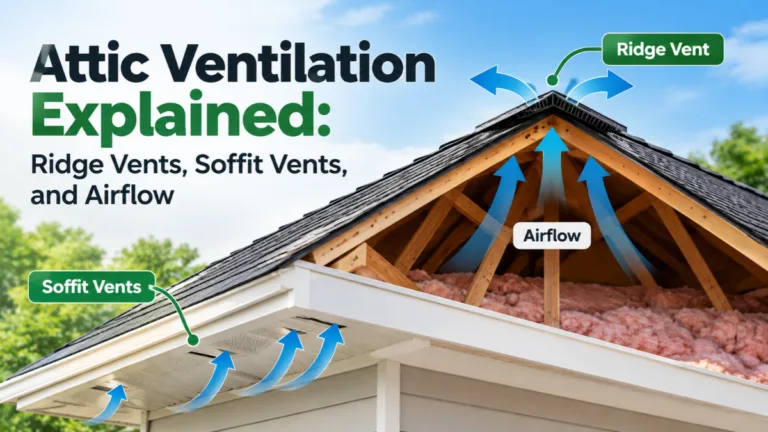
Attic ventilation is one of the least visible parts of a roofing system, yet it affects almost everything that happens beneath the shingles. A well-ventilated attic lets hot air escape in summer, moisture leave in winter, and the roof deck stays dry. Poor ventilation does the opposite, trapping heat and humidity that can shorten shingle life, promote mold, and make the home harder to cool. Understanding how ventilation works helps homeowners recognize problems and ask the right questions during a roof project.
Ventilation is a system rather than a single component. Air needs a path to enter near the bottom of the roof and a path to exit near the top. When those paths are balanced and unobstructed, air moves naturally through the attic. When they are not, the attic stagnates.
Why Attics Need Ventilation
In Central Texas, attics can become extremely hot during the day, particularly under dark roofing. That heat radiates downward into the living space and forces the air conditioner to work harder. In cooler months, warm, moist air from the house can rise into the attic and condense on cold surfaces, which can dampen insulation and wood framing. Ventilation addresses both problems by moving air in and out continuously.
Ventilation also protects the shingles themselves. Excessive attic heat can accelerate aging in roofing materials, while trapped moisture can contribute to deck deterioration. A roof that is properly ventilated is more likely to reach its expected service life.
Balancing Intake and Exhaust
Effective attic ventilation depends on a balance between intake vents, which bring fresh air in, and exhaust vents, which let warm air out. Too little exhaust leaves hot air trapped. Too little intake means the exhaust vents pull air from the house rather than from outside, which can disturb the home’s pressure balance. Most designs aim for a combination of low intake and high exhaust, with intake positioned at the eaves and exhaust positioned at or near the ridge.
The right balance depends on the roof’s design, the attic’s size, and local climate conditions. A contractor offering Roof Installation Services Belton will typically calculate the required ventilation area based on accepted building guidance and then select vent types to meet it.
Ridge Vents
Ridge vents run along the peak of the roof and allow hot air to exit along the entire ridge line. They are popular because they are discreet, provide even exhaust, and work well with continuous soffit intake. Ridge vents must be installed correctly, with the proper cut in the roof deck and appropriate baffles, or they may allow rain or snow to enter. Installation quality matters as much as the product itself.
Ridge vents are often paired with a vented ridge cap that protects the opening from weather while still allowing air to escape. On roofs where ridge ventilation is not practical, other exhaust options may be more suitable.
Soffit Vents
Soffit vents sit beneath the eaves and provide the intake half of the system. They allow fresh air to enter the attic and move upward along the underside of the roof deck. Soffit vents work best when they are unobstructed. Insulation pushed against the soffit or debris blocking the opening can cut airflow dramatically, so check soffit openings from inside the attic as well as from outside.
Some soffit systems use continuous vent strips, while others use individual round or rectangular vents. Continuous strips generally provide more even intake. Whatever style is used, the goal is to keep the opening clear and allow air to reach the attic space evenly.
Gable and Power Vents
Gable vents are placed in the triangular walls at either end of the attic. They can provide exhaust, but they are less effective than ridge vents because they only ventilate the areas near the gable ends. Power vents use a fan to pull air out of the attic. They can be useful in some situations, but they require electricity, must be controlled by a thermostat or humidistat, and can create problems if intake is insufficient. Discuss whether a powered option is necessary before choosing one.
Signs of Poor Attic Airflow
Several signs suggest that ventilation may be inadequate. Excessive attic heat is one of the most obvious signs, and you may feel it on upper floors or notice it when accessing the attic. Condensation on nails or the underside of the roof deck during cold weather is another indicator. Stained or dark sheathing, a musty odor, or frost on framing in winter all point to trapped moisture. Shingles that curl or age prematurely may also be linked to heat buildup, though other causes exist as well.
If you notice these signs, have a qualified professional inspect the attic. Roof Repair Services Harker Heights providers often check attic ventilation during routine inspections, especially after roof repairs.
Ventilation and Insulation Work Together
Insulation and ventilation must be planned together. Insulation keeps heat from moving between the living space and the attic, while ventilation removes heat that reaches the attic from the roof. Blocking soffit vents with insulation or installing insulation that restricts airflow can undo the benefits of both. When insulation is added or upgraded, make sure the baffles that keep air channels open are installed properly at each rafter bay.
Ventilation During Roof Replacement
A roof replacement is an ideal time to evaluate ventilation. The old roof covering is removed, which exposes the deck and makes it easier to add or upgrade vents. Ask your contractor to assess the existing intake and exhaust, measure the attic space, and recommend changes if needed. Adding ridge vents or improving soffit intake during replacement is often more practical than doing it later.
Some homeowners worry that adding ventilation will increase the risk of leaks. Properly installed vents, flashed and sealed correctly, do not increase leak risk, and they often reduce the moisture problems that lead to deck damage over time. The key is quality workmanship.
Maintaining Ventilation Over Time
Ventilation components need periodic care. Clean debris from soffit vents, check ridge vents for blockages after storms, and confirm that insect screens remain intact without restricting airflow excessively. Wasp and bird nests are common obstructions, particularly in spring. If you notice reduced airflow, a contractor offering Roof Repair Services Temple can identify and correct the issue quickly.
Working With Professionals
Attic ventilation is easy to overlook, but it plays a central role in roof performance, energy use, and comfort. A balanced system of intake and exhaust, installed carefully and maintained over time, supports every other part of the roof. When planning your next roofing project, ask how ventilation will be evaluated and improved. A Fencing Company in Temple can also help you think about the exterior as a whole, and a fence contractor in Temple can coordinate fence work with roofing so the entire property is protected and well maintained.