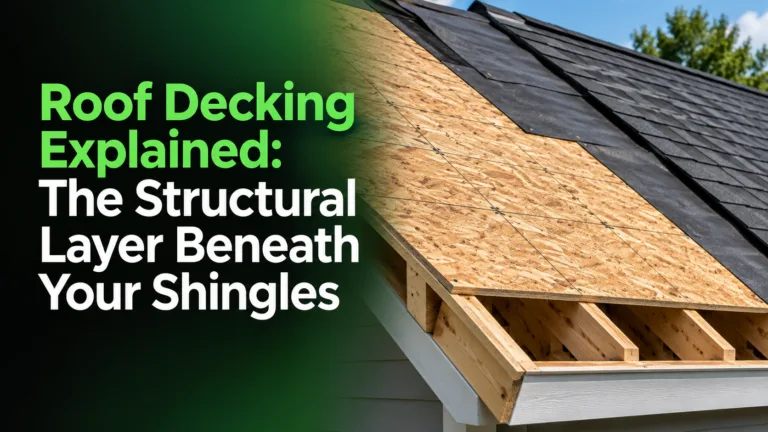
Most homeowners think of the roof as the shingles they see from the street, but the most important structural element sits underneath. The roof deck, sometimes called sheathing, is the layer of panels fastened to the rafters or trusses. It supports the roofing materials, carries snow and wind loads, and provides a nailing surface for shingles. When the deck is sound, the roof performs as designed. When it deteriorates, even a new shingle installation can fail prematurely.
Decking is hidden from view during normal use, which makes it easy to ignore. Problems often become visible only after water has been entering for some time. Understanding how decking works and what damages it helps homeowners recognize warning signs earlier.
Common Decking Materials
Most residential roof decks are made from oriented strand board or plywood. Both are engineered to hold fasteners and resist the stresses of normal roof loading. Plywood tends to handle moisture exposure differently from oriented strand board, and each material has a recommended thickness based on rafter spacing and local building requirements. Older homes may have solid wood boards, which can perform well but may have gaps or uneven surfaces that affect new roofing.
When decking is replaced, the new panels should match the thickness and spacing required by the roof design and local code. A contractor offering Roof Installation Services Belton can verify the existing structure before recommending decking materials.
How Decking Gets Damaged
Water is the most common cause of deck damage. A leak at a flashing joint, a missing shingle, or a clogged valley can allow water to reach the deck and soak the panels. Wet wood swells, loses strength, and may begin to rot if moisture persists. Poor attic ventilation also contributes, because trapped humidity can keep the deck damp from below. Heat and UV exposure during the roof’s life can weaken the surface, particularly where shingles have aged.
Physical damage is another concern. Foot traffic during maintenance, falling branches, and impact from hail can crack or dent panels. Improper nailing, such as nails driven too high or too shallow, can cause fasteners to loosen and shingles to lift.
Signs of Deck Trouble
From the attic, look for dark staining on the underside of the deck, especially near rafters, vents, and penetrations. Soft spots, a musty odor, or delaminated plywood layers are more serious signs. From the roof surface, a spongy feel underfoot or visible sagging between rafters can indicate that the deck has lost strength. Any of these signs warrants professional inspection, since the cause may extend beyond a single area.
Inspect after major storms, when the roof may have been stressed in ways that are not visible from the ground. A Roof Repair Services Harker Heights provider can examine both the surface and the attic to find the source of any moisture.
Repairing Versus Replacing the Deck
Small areas of damaged decking can often be repaired by cutting out the affected section and installing a new panel, properly supported by framing and fastened to code. Larger or widespread damage typically requires replacement of the affected panels. Extensive rot may indicate that the framing has also been compromised, which requires further evaluation before any new decking is installed.
Repairs should always address the cause of the moisture. Replacing wet decking without fixing the flashing or ventilation problem that let water in simply sets up the same failure again.
Decking and Roof Replacement
A roof replacement is the best time to inspect the deck thoroughly. Once the old shingles and underlayment are removed, the surface can be checked for soft spots, gaps, and fastener problems. Any damaged panels can be replaced before new roofing is installed. Many contractors will note deck condition in writing, which helps establish what was found and what was repaired.
Ask your contractor how the deck will be inspected and what happens if additional damage is discovered. Clear communication about this step prevents surprises and helps the budget stay predictable.
Protecting the Deck Over Time
Keep gutters clear so water does not back up under the roof edge. Maintain attic ventilation so moisture can escape. Check flashing and seal problems promptly. Trim branches that rub against the roof or drop debris into valleys. These habits protect the deck and help the shingles perform as intended.
The deck is a quiet but essential component of the roof. Treating it with the same attention you give the shingles protects the entire system. A Fencing Company in Temple can coordinate with roofing specialists when exterior work overlaps with roof repairs, and a fence contractor in Temple can help plan drainage around the property so water is directed away from the structure. For roof decking evaluation or replacement, a Roof Installation Services Killeen provider can give you a clear assessment and written recommendations.
If any roof repairs are needed alongside this project, a Roof Repair Services Temple provider can inspect the roof and recommend a practical sequence for the work.