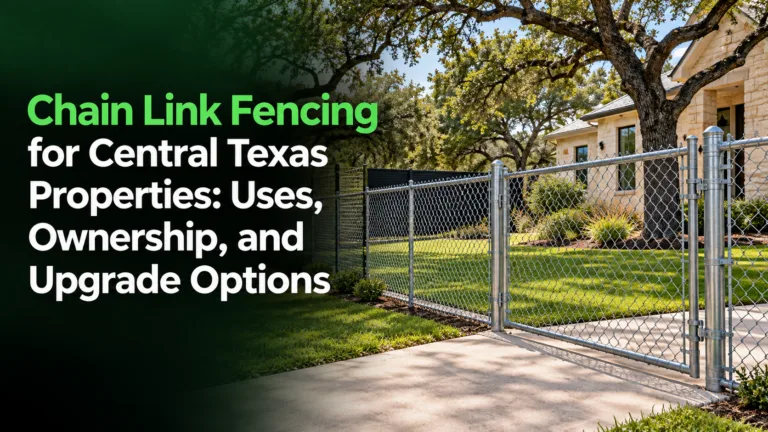
Chain link is one of the most practical fencing materials ever developed. It is durable, relatively inexpensive to install, and open enough that it rarely blocks a view or feels oppressive. For many Central Texas properties, it is the right answer for boundaries, pet enclosures, sports areas, and commercial yards. It is also often misunderstood. Some homeowners dismiss it as purely utilitarian, while others assume it cannot be made attractive. The truth lies somewhere in between, and understanding its strengths and limits helps you decide whether it belongs on your property.
Chain link performs well in a climate that is hot, dry for stretches, and occasionally struck by hard storms. Its open weave allows wind to pass through rather than pushing against the fence, which reduces stress on posts and fabric. Those qualities explain why chain link remains common across the region.
Where Chain Link Works Best
Chain link excels when security, containment, and visibility matter more than privacy. It is a common choice for pet runs, play areas, pool perimeters, and property boundaries where neighbors want to keep an open sightline. Businesses and utility sites use it for the same reasons. Its simplicity also makes it a good option for temporary or budget-conscious projects that may be upgraded later.
Chain link is less suited to homeowners who want complete privacy or a decorative front yard. In those cases, a solid wood, vinyl, or ornamental metal fence may be a better fit. Many properties combine materials, using chain link along rear or side boundaries and a more attractive design in front. A Roof Installation Services Belton provider who also installs fencing can help you decide where each material belongs.
Understanding Chain Link Ownership Costs
Chain link is often chosen because its maintenance is modest, but it still requires attention. The galvanized coating protects the steel from corrosion, and any scratches or cut ends should be treated promptly to prevent rust from spreading. Tension wires and fabric must be checked for sagging, and posts should be inspected at the ground line where moisture collects. Keeping vegetation from growing through the fabric also prevents slow damage and keeps the fence looking neat.
Vinyl-coated chain link adds color and reduces glare, though the coating can crack or fade if it is damaged or exposed to intense sun for years. Choose a coating rated for outdoor use and inspect it regularly. Planning ongoing care from the start makes the fence easier to live with for decades.
Post Spacing, Bracing, and Strength
A chain link fence is only as strong as its posts and bracing. Corner, gate, and end posts carry the most load because they hold the tension of the fabric. These posts should be larger in diameter than line posts, set deep in concrete, and braced with horizontal rails or diagonal supports where needed. Line posts are spaced at intervals that depend on the fence height and the fabric gauge. Poor bracing can allow the fabric to sag, and sagging fabric invites climbing and damage.
Gate posts deserve particular attention because gates swing repeatedly and transfer weight into the post. Gates should be braced and hung on sturdy hardware, and the latch should be tested after installation. A Roof Repair Services Harker Heights provider with fencing experience can verify that gate and corner posts are installed to hold up over time.
Upgrading Chain Link for Privacy
Many homeowners who choose chain link later want more privacy. Several options can help. Privacy slats woven through the fabric block some views, although wind load increases and the slats must be secured properly. Windscreen fabric offers more coverage and a cleaner look, but it adds weight and wind resistance that the posts must handle. Planting shrubs or vines along the fence line can also soften the boundary and create natural screening over time.
Before adding privacy material, confirm the fence can support the extra load. A heavier application may require stronger posts or additional bracing, and it should not interfere with drainage or access.
Chain Link Around Pools and Play Areas
Chain link is frequently used around pools and play spaces because it is visible, durable, and easy to climb only if poorly maintained. Local codes often set requirements for pool barriers, including height, gate type, and spacing. These requirements vary by jurisdiction, so check local rules before designing a barrier. A professional can help ensure the fence meets the applicable standards.
For play areas, pay attention to fabric openings, sharp wire ends, and posts that could be climbed. Selecting appropriate fabric gauge and mesh size, and finishing the top rail neatly, reduces the risk of injury.
Installation Considerations
Chain link installation involves setting posts, stretching fabric, and attaching it with tension bands and tie wires. The process requires care to keep the fabric taut and the top rail straight. Ground conditions matter, since clay soils that expand and contract can move posts over time. Setting posts in concrete and providing drainage at the base helps the fence remain stable. Ask your contractor how they plan to address soil conditions on your lot.
A Roof Installation Services Killeen contractor who also handles fencing can often coordinate chain link installation with roofing or exterior work, which can simplify scheduling and access.
Deciding Whether Chain Link Fits Your Property
Chain link is a practical, long-lasting material that suits many Central Texas properties. Its strengths are durability, low visibility, and resistance to wind. Its limitations are privacy and a utilitarian appearance, though thoughtful upgrades can address both. Compare chain link with other materials based on your priorities, and request written proposals that describe post sizes, fabric gauge, coating, and gate hardware. A Fencing Company in Temple can walk you through those options and help you choose the right approach for your site.
Whether chain link is your primary fence or a boundary solution alongside a decorative front, it rewards good design and steady maintenance. Homeowners who want a complete review of their fencing options can also speak with a fence contractor in Temple who can measure the property and recommend a layout.
If any roof repairs are needed alongside this project, a Roof Repair Services Temple provider can inspect the roof and recommend a practical sequence for the work.