Choosing the right driveway gate is an important part of planning a residential or commercial fencing project. A gate should provide convenient access, work with the available space, and complement the appearance of the surrounding fence.
Two common options are sliding gates and swing gates. Both can offer reliable access when properly designed and installed, but they work in different ways. Understanding their features can help property owners select a suitable gate system.
What Is a Sliding Gate?
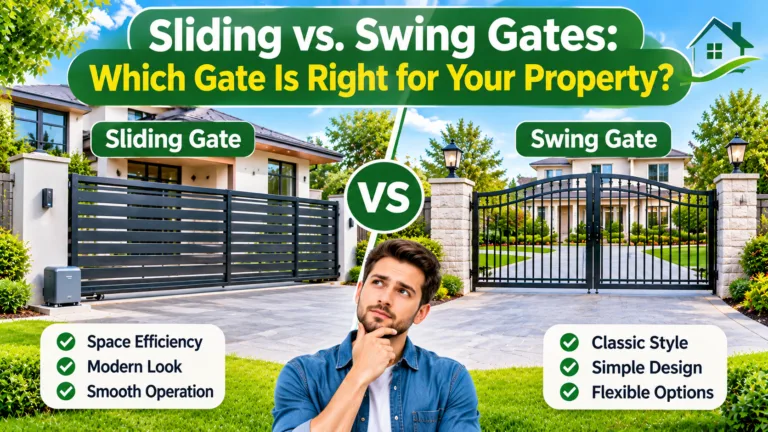
A sliding gate opens by moving sideways along the fence line. Instead of swinging inward or outward, the gate travels parallel to the entrance.
Depending on the design, it may operate using a ground track or a cantilever system that supports the gate without a track across the driveway.
Sliding gates are often considered for properties where driveway space is limited or where a swinging gate would interfere with vehicles.
Benefits of Sliding Gates
Space efficiency: Sliding gates do not require the large opening area needed by a swing gate. This can be helpful when the driveway is short or close to a road.
Suitable for sloped driveways: Certain sliding gate designs can work well where the driveway has a slope that would make a traditional swing gate difficult to operate.
Controlled movement: A properly installed sliding system moves along a planned path, making it suitable for many residential and commercial entrances.
Things to Consider
Sliding gates require sufficient space beside the entrance for the gate to move completely open. This area must remain clear of vehicles, landscaping, and other obstructions.
Track-based systems may also require regular cleaning to remove dirt, leaves, and debris. The supporting structure, rollers, and operating components should be inspected periodically.
What Is a Swing Gate?
A swing gate opens by rotating on hinges. It may consist of a single panel or two panels that meet in the center of the entrance.
Swing gates are commonly used in residential driveways and properties with enough clearance for the gate to open safely.
Benefits of Swing Gates
Traditional appearance: Swing gates can create an attractive entrance and complement a wide range of fencing styles.
Simple operating design: The basic structure uses hinges and support posts, although automated versions require additional equipment.
Flexible designs: Swing gates are available in wood, steel, aluminum, and other materials, allowing homeowners to coordinate them with their existing fencing.
Things to Consider
A swing gate needs enough space to open inward or outward. Homeowners should consider vehicle parking, pedestrian movement, landscaping, and nearby roads before selecting this design.
The gate’s weight, hinge quality, and post strength are also important. Heavy gates may require reinforced support structures and suitable hardware.
Sliding Gate vs. Swing Gate: Key Differences
Space requirements: Sliding gates need clear space along the fence line. Swing gates need open space within their operating path.
Driveway slope: Sliding gates may be more suitable for certain sloped entrances, while swing gates generally work best on relatively level surfaces.
Maintenance: Sliding systems may require attention to tracks, rollers, and moving hardware. Swing systems require regular inspection of hinges, posts, and alignment.
Appearance: Both designs can be attractive. The best choice depends on the property’s architecture and the preferred entrance style.
Installation requirements: Sliding systems often involve more planning for side clearance and support mechanisms. Swing gates require adequate post strength and opening clearance.
Should You Choose an Automatic Gate?
Both sliding and swing gates can be designed for automatic operation. Automated systems allow property owners to open and close gates using remote controls, keypads, or compatible access devices.
Before choosing an automatic setup, consider the gate’s weight, frequency of use, power supply, safety sensors, and manual release options.
Automatic gates must be installed with suitable safety features to reduce the risk of accidents. Children, pets, pedestrians, and vehicles should be considered when planning the operating area. A fence contractor in Temple can recommend the safety features and sensors suited to your entrance.
How to Make the Right Choice
Start by measuring the driveway entrance and available space. Check the ground level, surrounding fence layout, vehicle access requirements, and location of nearby structures.
Think about how frequently the gate will be used and whether you want manual or automatic operation. The material should also suit the local climate and the expected level of maintenance.
A professional Fencing Company in Temple can assess these conditions, recommend suitable gate hardware, and ensure that the installation is planned around the property’s layout.
Final Thoughts
Sliding and swing gates can both provide practical access and enhance a property’s entrance. Sliding gates may be better where driveway clearance is limited, while swing gates can be an excellent option for properties with sufficient opening space.
The right decision depends on your available space, driveway conditions, design preferences, and access requirements. Careful planning and professional installation can help ensure that your new gate operates smoothly and complements the rest of your fencing system.