Fence posts carry the weight of the entire fence. They resist wind pressure, support gates, and anchor the fence against the ground’s constant movement. Choosing the right post material and installation method is one of the most important decisions in any fence project, yet it is often overlooked in favor of fence panels and finishes. A beautiful fence built on weak posts will eventually lean, sag, or fail.
Central Texas soils and weather add special demands. Expansive clay can shift as moisture changes, summer heat dries and cracks materials, and storms bring strong gusts. Posts must be selected and set with these conditions in mind.
Pressure-Treated Wood Posts
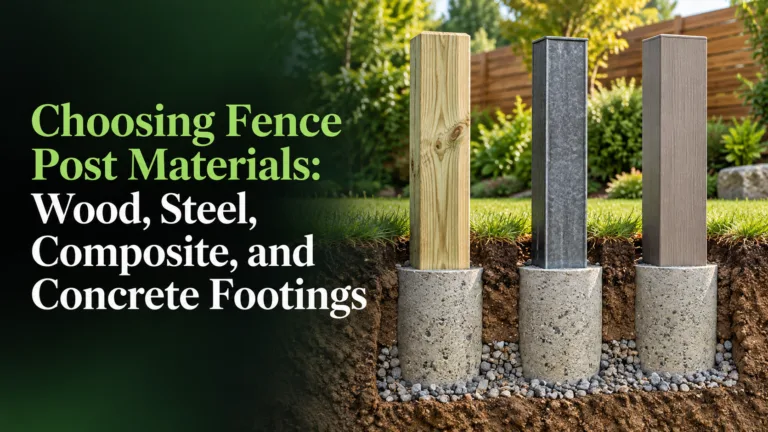
Pressure-treated wood is the most common fence post material in residential projects. It is affordable, widely available, and easy to cut and install. Treatment chemicals protect the wood from decay and insects, which extends service life considerably compared with untreated lumber. However, treated posts still require protection at the ground line, since moisture is the main threat to wood. Proper setting in concrete and good drainage around the base are important.
Check that treated posts are rated for ground contact. Posts intended for above-ground use may not last when buried. Ask your supplier or contractor to confirm the treatment level before purchase.
Steel Posts
Steel posts are strong, straight, and resistant to rot and insects. They are commonly used with wood, vinyl, and chain link fencing, and they can be particularly useful for taller fences or heavier gates. Galvanized steel resists corrosion well, but scratches or cut edges can rust if not treated. Steel posts also transmit no moisture-related decay, which makes them attractive in damp soils.
Steel posts often require specialized brackets or attachment hardware to connect with panels. Make sure the hardware is compatible with your fence design and is rated for outdoor exposure.
Composite and Vinyl Posts
Composite posts are made from blends of wood fiber and plastic or from solid polymer materials. They resist rot, insects, and moisture, and they do not require staining or sealing. Vinyl posts, which are often hollow and designed to be filled with concrete or reinforcement, are common in vinyl fencing systems. Both options can deliver long service life, though their strength depends on the product and whether reinforcement is used.
Composite and vinyl posts should be installed exactly according to the manufacturer’s instructions. Improper depth or inadequate concrete can lead to movement even with a durable material.
Setting Depth and Concrete Footings
Post depth affects stability more than most homeowners expect. Posts are typically set deep enough that roughly a third of their length is buried, adjusted for fence height and soil conditions. Taller fences, gate posts, and posts in loose or expansive soil may require deeper footings. Concrete footings resist movement and protect the buried portion of the post from direct soil contact. The shape and size of the footing also matter. A footing that is wider at the base can resist lifting, while a properly crowned top sheds water away from the post. Gravel at the bottom of the hole can improve drainage and reduce standing water.
Matching Posts to Soil and Exposure
Soil type and exposure should guide post selection. In wet or poorly drained soil, steel or composite posts may outperform untreated wood. In areas with strong wind, larger posts, deeper setting, or steel reinforcement may be necessary. Gate posts and corner posts carry more load than line posts and should be sized accordingly.
A contractor offering Roof Repair Services Temple alongside fence work can evaluate soil and drainage on your lot, because the same conditions that affect posts also influence roof runoff and foundation moisture.
Post Caps, Protection, and Maintenance
Post caps protect the top of wood posts from water entering the end grain, which is one of the fastest routes to decay. Caps should fit securely and be made of durable material. For wood posts, inspect the ground line every year and look for softness, cracking, or insect activity. Steel posts should be checked for rust, and composite posts should be checked for loose hardware.
Keeping soil graded away from posts and avoiding trapped moisture at the base extends post life in any material.
Working With a Professional
Post selection is closely tied to fence design and installation technique. A qualified crew will evaluate soil, set posts to the correct depth, and use appropriate concrete and hardware. Ask for a written proposal that lists post material, dimensions, footing details, and warranty terms. A Roof Installation Services Belton provider with fencing experience can coordinate post installation with other exterior work so the property is handled efficiently.
Strong posts are the foundation of a lasting fence. Choosing the right material and setting it correctly protects the investment in every panel that follows. A Fencing Company in Temple can recommend post options suited to your property, and a fence contractor in Temple can design the layout and footing plan. Homeowners who are also planning roof work can review timing with a Roof Repair Services Harker Heights provider so both projects proceed smoothly.
Homeowners comparing options can also ask a Roof Installation Services Killeen provider how the fence layout interacts with roof drainage and the eaves.