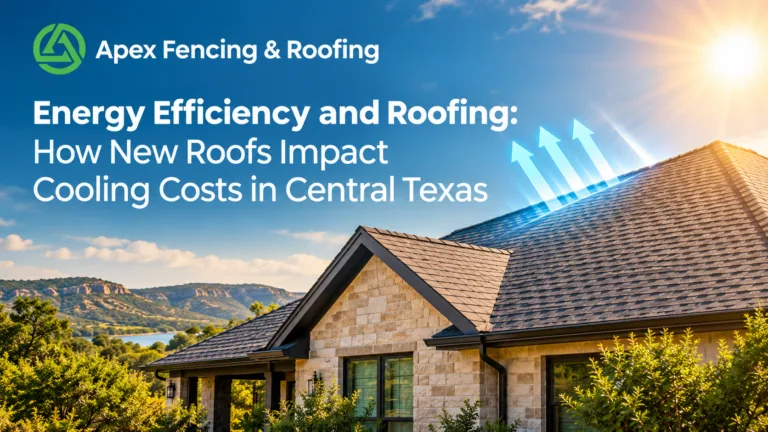
Central Texas summers are intensely hot, and cooling costs consume a significant portion of many homeowners’ utility budgets. While many homeowners focus on air conditioning efficiency, they often overlook how roofing affects cooling costs. A roof that absorbs heat raises attic temperatures dramatically, forcing air conditioning systems to work harder to cool the home. Conversely, a roof designed for energy efficiency can reduce cooling costs substantially and extend air conditioning system lifespan.
When planning roof replacement, considering energy efficiency alongside durability and appearance can yield long-term savings that offset higher initial costs. Understanding how roofing materials and installation affect home energy efficiency helps homeowners make choices that reduce both environmental impact and monthly utility bills.
How Roofing Affects Home Temperature
The roof is the part of the home most directly exposed to the intense Central Texas sun. On hot summer days, roof surface temperatures can exceed 160 degrees Fahrenheit. If the roof absorbs and retains this heat, attic temperatures rise to 140-150 degrees or higher. This heat radiates downward, increasing the temperature of the home’s ceiling and upper floors.
Once heat enters the attic, air conditioning must work harder to cool the home. Upper-floor cooling becomes particularly challenging because heat constantly enters from above. Air conditioning systems run longer, consume more electricity, and experience more wear and tear. Over an air conditioning system’s lifespan, the cumulative effect of excess heat load can significantly reduce equipment life and increase total operating costs.
Selecting a roof with high solar reflectance during Roof Installation Services Belton or similar projects reduces the amount of heat absorbed by the roof. This simple change can substantially lower cooling costs during summer months.
Cool Roof Technologies and Materials
Cool roof technology uses lighter colors, reflective coatings, or specially designed materials to reflect rather than absorb solar heat. Light-colored shingles, metal roofing with reflective finishes, and tiles designed for heat reflection all fall into this category. These materials have high solar reflectance, meaning they reflect a large portion of the sun’s energy rather than converting it to heat.
Traditional dark asphalt shingles absorb heat effectively, making them energy-inefficient in hot climates. Light-colored asphalt shingles, available in gray, tan, or white, reflect more heat and reduce attic temperatures compared to dark shingles. The temperature difference is measurable and translates directly into energy savings.
Metal roofing is particularly effective for energy efficiency. Metal reflects heat well, especially if the metal is light-colored or has a reflective coating. Metal roofing can reduce attic temperatures by 20-30 degrees Fahrenheit compared to dark asphalt, resulting in significant cooling cost reductions. Contractors providing Roof Repair Services Harker Heights can discuss metal roofing options for energy-conscious homeowners.
Ventilation’s Role in Energy Efficiency
Proper attic ventilation works hand-in-hand with cool roofing materials to maximize energy efficiency. Ventilation allows hot air to escape from the attic rather than accumulating. Ridge vents at the roof’s peak and soffit vents along the eaves create airflow that removes heat before it can radiate into the home.
Without adequate ventilation, even cool roofing materials cannot effectively manage attic heat. Air becomes stagnant and temperatures rise. Proper ventilation ensures that whatever cool benefits the roof provides are realized in lower attic temperatures.
Inadequate ventilation also promotes moisture accumulation, which contributes to mold growth and material deterioration. Improving ventilation during roof replacement provides both energy efficiency and structural protection. Contractors planning Roof Installation Services Killeen should discuss ventilation improvements as part of energy-efficient roof design.
Insulation and Thermal Management
Attic insulation works with roofing to control heat flow into the home. Insulation resists heat conduction from the hot attic into living spaces below. Higher R-value insulation provides better resistance to heat flow. During roof replacement, evaluating and potentially upgrading insulation can improve overall home energy efficiency.
A cool roof combined with adequate insulation and ventilation creates an integrated system that minimizes heat gain. Each component works together: the roof reflects heat, ventilation removes heat that does penetrate, and insulation resists heat conduction into the home. This comprehensive approach maximizes cooling efficiency.
Impact on Air Conditioning Systems
Air conditioning systems work more efficiently when outdoor heat load is reduced. A home cooled by a cool roof requires less cooling than the same home with a heat-absorbing roof. This reduced demand extends air conditioning system life and reduces operating costs across the system’s lifespan.
Studies show that homes with cool roofs experience 10-30% reductions in cooling costs compared to homes with dark roofs, depending on climate severity and other factors. In Central Texas’ intense heat, cool roofs often produce cooling cost reductions in the higher end of this range.
Over the life of an air conditioning system (typically 15-20 years), reduced cooling demand translates into substantial cost savings. Additionally, reduced operating stress means fewer repairs and longer system lifespan before replacement becomes necessary.
Environmental Benefits of Energy-Efficient Roofing
Reduced cooling costs mean reduced electricity consumption. Lower electricity use reduces demand on the grid and reduces the power plant emissions associated with electricity generation. A household that reduces cooling energy consumption by 20% significantly reduces its carbon footprint.
Cool roofing materials also reduce the urban heat island effect in cities and neighborhoods. When many properties have cool roofs rather than heat-absorbing roofs, neighborhood air temperatures are lower. This benefits everyone in the area and contributes to regional climate moderation.
Cost Considerations and Long-Term Value
Cool roofing materials sometimes cost more initially than standard options. Light-colored or premium metal roofing may have higher upfront costs compared to basic dark asphalt shingles. However, when long-term energy savings are considered, the higher initial cost is often justified.
A homeowner might pay an additional $1,000-2,000 for cool roofing compared to standard options. If this investment reduces cooling costs by 10-20% annually, savings of $300-600 per year are realistic in many homes. Over a 20-year roof life, these savings total $6,000-12,000, far exceeding the initial cost increase.
Contractors providing Roof Repair Services in Temple and other locations can help homeowners understand the financial implications of energy-efficient roofing choices. A realistic cost-benefit analysis helps make informed decisions about material selection.
Coordinating Exterior Projects for Maximum Efficiency
When planning roof replacement, consider coordinating other exterior improvements that affect energy efficiency. Properly installed gutters and downspouts ensure water drains away from the foundation, protecting the structure. Cool roof installation with proper ventilation maximizes cooling efficiency. A Fencing Company in Temple or other exterior contractor can coordinate with roofing work to ensure that all exterior elements work together to improve overall home performance.
Similarly, discussing fence contractor in Temple services alongside roofing work allows for coordinated scheduling. While roof work is underway, fencing improvements can be planned and executed efficiently.
Final Thoughts
Roofing significantly impacts home energy efficiency and cooling costs in Central Texas. Cool roofing materials that reflect rather than absorb solar heat can reduce cooling costs substantially. Combined with proper ventilation and insulation, energy-efficient roofing creates homes that are more comfortable, less expensive to cool, and more environmentally responsible.
When planning roof replacement, considering energy efficiency alongside other factors helps homeowners make choices that provide long-term value. The initial cost of efficient roofing is typically recovered through energy savings within the roof’s lifespan, making it a smart financial and environmental investment.