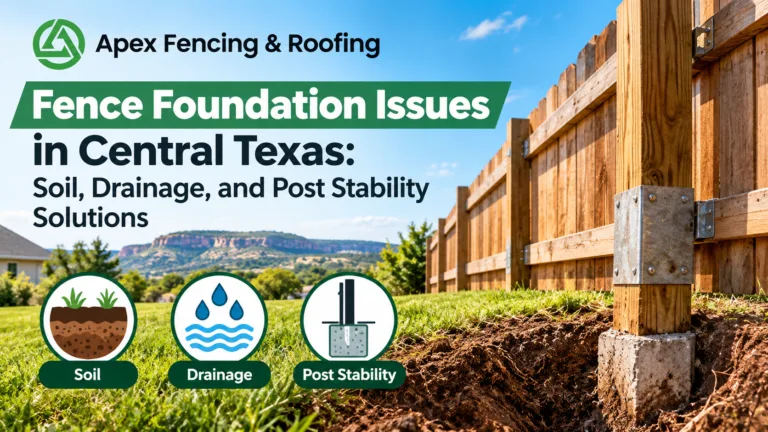
Central Texas soil conditions present unique challenges for fence installation and stability. Soil composition, drainage patterns, freeze-thaw cycles, and seasonal moisture variations all affect how well fence posts remain stable over time. A fence that is perfectly level and solid when installed may begin to lean or fail within a few years if foundation and soil issues are not properly addressed during initial installation. Understanding soil and drainage considerations helps homeowners choose fencing solutions that remain stable and functional for decades.
Professional fence contractors understand how Central Texas soil behaves and how to install posts that remain stable despite challenging ground conditions. Poor foundation work is one of the most common reasons fences fail prematurely. Investing in proper foundation installation during initial construction prevents expensive repairs and replacement later.
Central Texas Soil Characteristics
Central Texas soils vary significantly depending on specific location but often contain clay with varying proportions of sand and gravel. Clay soil is expansive, meaning it expands when wet and contracts when dry. This expansion and contraction creates soil movement that can push on fence posts or allow them to shift and become unstable.
Clay’s tendency to hold water creates drainage issues. Soil that does not drain well retains moisture around fence posts, accelerating post rot and deterioration. Posts set in poor-draining soil may fail faster than those in well-drained soil even if the same post material and installation method are used.
Some areas of Central Texas have shallow bedrock or caliche layers that prevent deep post installation. Hard soil layers can make post hole digging difficult and limit how deep posts can be set. These limitations require creative solutions to achieve adequate post stability and longevity.
Post Depth and Stability
Proper post depth is critical to fence stability. Posts must extend deep enough into the ground to resist wind loads and provide lateral stability. General guidelines suggest that posts should be buried to approximately one-third of their above-ground length. A six-foot fence typically requires posts buried 24-30 inches deep.
In Central Texas, where soil movement occurs seasonally, posts may need to be deeper than standard recommendations. Deeper posts are more resistant to seasonal heave and frost action that can dislodge shallowly set posts. However, soil composition sometimes makes very deep installation impractical.
Professional fence contractor in Temple services understand local soil conditions and adjust installation depth accordingly. A contractor who knows that caliche or bedrock exists at certain depths in their service area can plan accordingly rather than discovering limitations during installation.
Post Setting Methods and Materials
How posts are set affects their longevity. Concrete footings stabilize posts and protect the below-ground portion from soil contact that accelerates rot. Posts set in concrete remain more stable longer than posts set in soil alone, even if the concrete is only in the bottom portion of the hole.
Concrete quality matters. Using appropriate concrete mix strength for the application ensures that concrete footings remain solid for decades. Professional fence installation uses proper concrete techniques that result in solid, durable footings.
Post material also affects foundation performance. Pressure-treated wood resists rot better than untreated wood. Composite posts resist rot and insect damage entirely, though they cost more initially. Metal posts do not rot but can rust if not properly treated. A Fencing Company in Temple can discuss post material options and how different materials perform in Central Texas conditions.
Drainage and Water Management
Proper drainage around fence posts prevents water from accumulating and accelerating post deterioration. Posts should not sit in standing water or in soil that remains waterlogged. Grading the area around fence posts to slope away helps water drain quickly rather than accumulating.
In areas where natural drainage is poor, installing drain rock or gravel around post footings improves drainage. Water moves through gravel more quickly than through clay soil, reducing moisture contact with the post. While these improvements add initial cost, they extend post lifespan significantly.
Below-ground post protection is critical in areas with poor drainage. Concrete footings should extend above ground slightly to prevent water from pooling at the soil-post interface. Some installers use metal post sleeves or other barriers to protect the below-ground portion of wooden posts from direct soil contact.
Frost and Seasonal Heave
While Central Texas winters are milder than northern regions, freeze-thaw cycles still occur. When soil freezes, it expands slightly, pushing on objects within the soil. This frost heave can gradually dislodge fence posts or push them upward slightly. Over multiple freeze-thaw cycles, cumulative movement becomes visible as posts shift position.
Posts set deep with concrete footings resist frost heave better than shallowly-set posts. The weight and depth of a solid concrete footing help anchors posts firmly in place despite soil movement. Posts without adequate depth or concrete support may shift noticeably after a few winter cycles.
Soil Expansion and Movement
In addition to frost heave, seasonal soil moisture variation causes expansion and contraction. Wet seasons swell clay soil. Dry seasons shrink it. This expansion and contraction continues throughout the fence’s life and can cause noticeable movement.
Professional fence installation in Central Texas accounts for this movement. Posts may be set with slightly more depth or with special design features that accommodate seasonal movement. Contractors familiar with local soil conditions know how to minimize problems caused by expansive soil behavior.
Gate Posts and Heavy-Use Areas
Gate posts require special attention because gates apply concentrated loads through hinges and latching hardware. A gate post that is inadequately supported will shift and bind, making the gate difficult to operate. Over time, inadequate support can cause gate posts to become severely misaligned.
Gate posts should be set deeper and more solidly than standard fence posts to handle the additional stress. Many failures occur in gate posts because contractors treat them like regular fence posts rather than recognizing the increased load requirements. Professionals understand the difference and install gate posts appropriately to withstand repeated use over years.
Soil Assessment Before Installation
Professional fence contractors should conduct soil assessment before installation to understand soil conditions, drainage characteristics, and any limitations that affect installation. Soil boring or probing reveals soil composition at depth and identifies caliche layers or other obstacles.
This assessment allows contractors to plan installation appropriately and alert homeowners to any complications that affect cost or timeline. Discoveries during installation are more problematic than being prepared for them beforehand.
When consulting with Roof Installation Services Belton or other contractors who also handle fencing, discuss soil assessment and foundation planning. A professional approach to soil and foundation issues ensures fence longevity.
Landscape and Tree Considerations
Trees near fences can affect soil moisture and drainage. Large trees draw moisture from soil, which can increase soil movement and expansion-contraction cycles. Root systems can also interfere with fence posts or create drainage problems.
When planning fence installation, identify significant trees and their locations. Professional contractors account for tree proximity when planning post placement and depth. In some cases, tree locations influence gate placement or other fence design decisions.
Long-Term Maintenance and Monitoring
Even well-installed fences require monitoring over time. Seasonal inspections can identify post leaning or other movement early, when preventive measures are possible. Addressing minor movement prevents problems from escalating into major failures.
Post replacement becomes necessary eventually. If a post begins to rot or becomes unstable, professional replacement addresses the problem and inspects soil and drainage conditions to prevent recurrence. A Roof Repair Services Harker Heights or fence professional can handle post replacement and ensure proper soil and foundation treatment during replacement work.
Coordinating with Roofing and Other Exterior Work
When planning major exterior improvements including roofing and fencing, soil and drainage evaluation benefits the entire property. Proper grading, drainage, and site assessment improve both fence stability and roof water management. Roof Installation Services Killeen and fencing work can be coordinated to address comprehensive property drainage and foundation issues.
Final Thoughts
Central Texas soil conditions and seasonal moisture variations create unique challenges for fence stability. Understanding soil characteristics, implementing proper post depth and concrete footings, and managing drainage all contribute to fence longevity and performance.
Professional fence installation that accounts for local soil conditions results in fences that remain stable and functional for decades. Contractors who understand Central Texas soil and foundation requirements provide fences that withstand the region’s unique environmental challenges.