
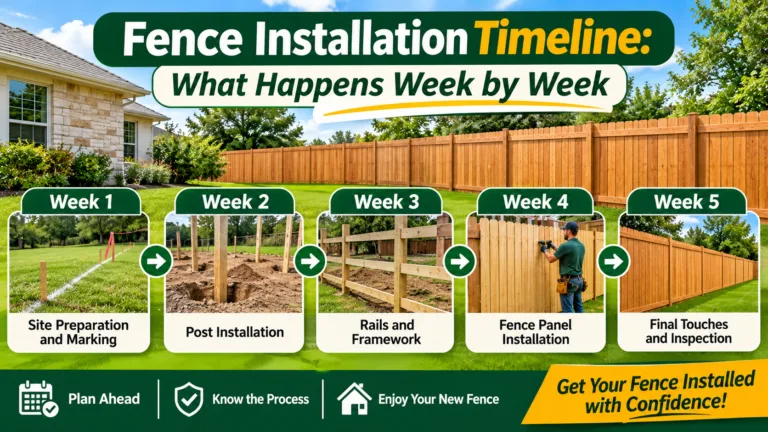
Many homeowners want to know how long a fence will take before work begins. The honest answer is that the timeline depends on the fence length, the material, the site conditions, the permit process, and the crew’s schedule. Still, most projects follow a predictable sequence. Understanding that sequence helps homeowners plan around the work, prepare the yard, and recognize when something is taking longer than expected. It also helps avoid surprises such as delayed permits or a gate that cannot be ordered in time.
This guide walks through a typical residential fence project in stages, from the first conversation to the final walk-through. Specific timing will vary, and your contractor should provide a schedule tailored to your property.
Before the Crew Arrives: Planning and Approvals
The first stage happens before any digging starts. It includes a site visit, measurement of the property, confirmation of the boundary, and selection of materials and design. If a survey is needed, it may take additional time to schedule and complete. Many communities require a permit for fences above a certain height or near a street, and the application process can take days or weeks depending on the jurisdiction. Homeowner association approvals may add another review step. Ordering materials is also part of this stage. Custom gates, specialty panels, and certain metal products can have longer lead times than standard lumber. Ask your contractor which items may take extra time and when they should be ordered.
Locating Utilities and Marking the Line
Before any post hole is dug, utility lines must be located. In most areas, a call to the local utility locating service is required before excavation, and the marks typically remain in place for a limited period. Confirm the layout against the survey and mark the fence line with stakes and string. Discuss the placement with neighbors if the fence will be close to a shared boundary. This step is brief in practice, but it can delay the start of work if a utility locate is not scheduled early. A reputable contractor will handle this coordination.
Week One: Layout and Post Setting
Installation usually begins with layout. The crew sets corner and gate posts first, since they establish the alignment for the rest of the fence. Holes are dug to the depth specified for the design and soil conditions. Posts are set plumb and braced while concrete is poured. Concrete needs time to cure before panels or gates are attached, and that curing period is an important part of the schedule. Rushing it can weaken the connection. Line posts are set next, spaced according to the panel width. Each post is checked for alignment, height, and plumb before the crew moves on. Depending on the fence length and terrain, this stage may take several days.
Week Two: Rails, Panels, and Gates
Once the posts have cured, the crew attaches rails, brackets, and panels. For wood fences, this may include installing pickets or boards in sequence and checking spacing as the work progresses. For metal and vinyl fences, the panels are typically clipped or bolted to the posts. Gates are hung last, after the posts have settled and the frame is square. Hinges and latches are adjusted so the gate swings freely and latches reliably. Gate installation often takes longer than expected because gates must be checked repeatedly for alignment. A gate that is out of square will bind, so the crew should verify it before final fastening.
Finishing Work and Cleanup
After the panels and gates are installed, the crew typically trims posts, fills any voids, and removes excess concrete and soil. Wood fences may be stained or sealed, though many homeowners schedule staining separately after the lumber has dried. Metal fences may receive touch-up paint on any scratches. Final cleanup includes removing construction debris, sweeping, and restoring the disturbed ground. Ask whether cleanup is included in the proposal. Clear language about this detail prevents disagreements at the end of the project.
Weather and Other Delays
Central Texas weather can interrupt the schedule. Heavy rain makes soil unworkable and can delay concrete setting. High winds make panel installation difficult and unsafe. Extreme heat can affect curing and stain application. A schedule should include reasonable allowances for weather, and the contractor should explain how delays will be communicated. Other delays may come from material shortages, inspection scheduling, or unexpected soil conditions such as rock or caliche. Discuss these possibilities before the work begins so the timeline remains realistic.
Final Inspection and Walk-Through
When the fence is complete, walk the entire length with your contractor. Check the height, alignment, spacing, gate operation, and finish. Note any items that need correction and agree on a timeline for completing them. If an inspection is required by the permitting authority, it should be scheduled promptly after installation so the project can be closed out. Keep the warranty documentation, permit records, and a copy of the final proposal. These records are useful for future maintenance and for any property sale.
How to Prepare Your Yard
Homeowners can help the schedule by clearing the fence line of vegetation, moving outdoor furniture, toys, and planters, and keeping pets indoors during construction. Let the crew know about irrigation lines, sprinklers, and any buried items you are aware of. Plan parking and access for delivery trucks, and confirm whether a dumpster or debris container will be needed. Clear communication with the crew helps avoid damage and keeps the project moving.
Working With a Qualified Contractor
A good contractor will provide a written schedule, explain each stage, and keep you informed when the timeline changes. Ask for references and examples of similar projects, and request a clear estimate of the time required. Compare schedules from more than one contractor, since availability and approach can vary. If your fence is part of a broader exterior project, coordinate the timing with other trades. A Roof Installation Services Belton provider can help schedule roof work so that equipment and material deliveries do not conflict with fence installation. A Fencing Company in Temple can build a schedule tailored to your property, and a fence contractor in Temple can walk you through each stage of the project. Homeowners who need roof repairs first can review the timing with a Roof Repair Services Harker Heights specialist, while a Roof Installation Services Killeen provider or a Roof Repair Services Temple provider can help coordinate drainage work near the fence.