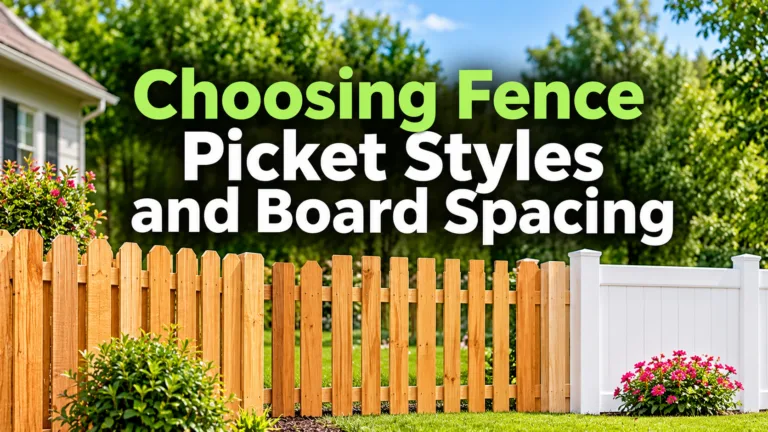
Picket style is one of the most visible decisions in a fence design. The width of each board, the gap between them, and the shape of the top edge all shape how the fence looks from the street and how it performs for wind, privacy, and containment. A fence with narrow boards and wide gaps reads completely differently from one with wide boards set tight together. Picket choices also affect how much material you need and how easy the fence is to maintain. A thoughtful choice here can make a modest fence look refined, and a large one look balanced instead of heavy.
Here are the main picket options, how spacing changes privacy and airflow, and how to match the design to the home and the property.
Common Picket Widths
Pickets typically come in a range of widths — narrower boards give a lighter, more traditional look, while wider boards create something bolder and more substantial. Narrow pickets can make a front yard feel open and inviting, while wide pickets usually go up for privacy or in designs going for a more contemporary look. Board width should be proportionate to the fence height, since very wide boards on a short fence can look heavy, and very narrow boards on a tall fence can look flimsy. Wider boards are also more prone to cupping and warping as they dry, so their quality and moisture content matter more. Ask your supplier about the lumber grade and how it was dried.
Spacing and Privacy
The gap between pickets decides how much the fence blocks sight lines and wind. Tight spacing, where boards nearly touch, gives strong privacy and a solid look. Wider spacing, sometimes called open picket, lets light, air, and views through, which suits front yards and spots where the fence is mainly a boundary marker. Spacing can also vary across the fence — tighter in some sections, wider in others — to build a custom pattern. For containment, spacing needs to be narrow enough that pets and small kids can’t get through. Check the openings carefully, especially near the ground, and avoid any gap wide enough for an animal’s head or body to fit through.
Top Profiles
The top edge of a picket sets the fence’s character. Flat tops are simple and modern. Dog-ear tops, with angled corners, show up often in privacy fences and lean more traditional. Spear or pointed tops suit formal, decorative designs. Scalloped and arched tops add a cottage or classic feel. Whatever profile you pick, keep it consistent across the fence so the design reads as intentional, not mismatched. Top profiles also affect how water sheds. Pointed and angled tops let rain run off, while flat tops can trap water if they’re not properly sealed or capped. Pick a profile that fits the design and sheds water well.
Matching the Fence to the Home
A picket fence should complement the house’s architecture. Traditional homes often suit classic picket shapes and generous spacing. Craftsman and farmhouse styles pair well with wider boards and simple tops. Modern homes usually look best with clean, flat-topped boards, tight or consistent spacing, and restrained detailing. Think about the house’s color and trim, and how the fence will frame the entrance and yard. The fence should also fit the scale of the property. A small lot can look crowded with a tall, heavy fence, while a large lot can look sparse with light pickets. Walking the property and checking the view from the street helps judge the proportions.
Rails, Frame, and Structural Balance
Picket style affects the frame behind it. Pickets fastened to two or three horizontal rails need enough spacing and support to stay straight. Wide spacing with thin rails can let the fence flex in the wind, while very tight spacing with heavy rails adds weight. Size the frame to match the picket width and spacing, and size the fasteners to hold each board securely. Balanced construction is what keeps the fence looking straight over time. Ask your contractor how the rails and pickets will be aligned and how the spacing stays consistent across the full run.
Material Considerations
Wood pickets give the most design flexibility, but need sealing or staining and periodic checking. Vinyl pickets come in standard profiles with fewer options for spacing and width. Metal pickets, usually aluminum or steel, give clean lines and can be spaced widely while still containing pets. Composite boards mimic wood and come in various widths with less upkeep. Pick the material that fits the look you’re after and the care you’re willing to put in. Whatever the material, sealed ends and cut edges keep moisture from getting in and causing early breakdown.
Gates and Picket Alignment
Gates should match the picket style and spacing so the entrance reads as part of the fence, not something bolted on. Gate pickets should line up with the fence pattern, and the gate’s top should match the fence’s profile. A mismatched gate, with different spacing or a different top, looks like an afterthought. Plan the layout so the gate lands at a natural break and the pattern continues cleanly on both sides.
Maintenance Across Different Styles
Open picket fences tend to be easier to maintain, since they have fewer surfaces that trap moisture and debris. Tight-spaced privacy pickets need more attention to drainage and airflow behind the boards and may need more frequent cleaning. Pointed and decorative tops should get checked for cracks and loose parts, since those details are more vulnerable to wind. Whatever style you choose, periodically checking the rails, boards, and fasteners keeps the fence performing well.
Planning the Right Design
Pick a picket style by weighing the house, the property, how much privacy you want, and the maintenance you’re prepared to do. Ask for sample boards or a mock-up section if you can, since a picket’s look can change a lot once it’s actually standing in the yard. Request a written proposal that spells out board width, spacing, top profile, rail count, and material. A Fencing Company in Temple can help you compare picket styles and picture how each would look on your property. A fence contractor in Temple can design the layout and gate placement so the fence reads as one unified structure. Homeowners planning roof work alongside the fence can coordinate timing with a Roof Installation Services Belton provider, while a Roof Repair Services Harker Heights or Roof Installation Services Killeen provider can advise on exterior drainage near the fence line. A Roof Repair Services Temple specialist can review roof edges that sit close to the fence.