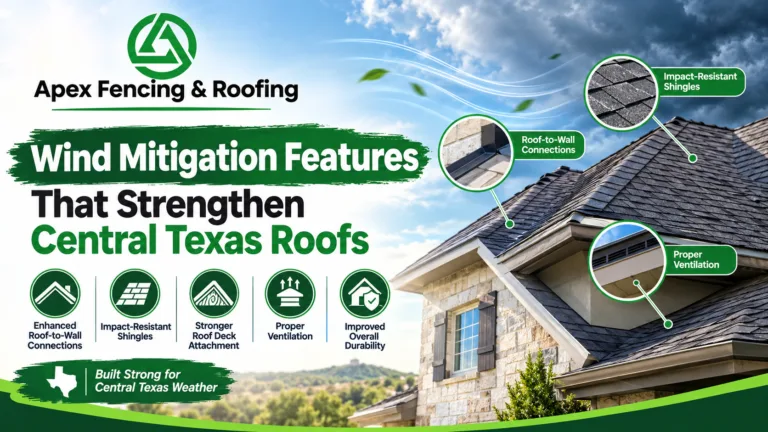
Wind is one of the most destructive forces a roof faces. Strong gusts can lift shingles, peel back edges, and tear off whole sections of roofing, sometimes leaving the deck exposed underneath. Once wind has taken part of a roof, rain gets in fast. A lot of roofs fail not because of the materials themselves but because of how they were fastened, sealed, and detailed. Knowing what actually improves wind resistance helps homeowners ask better questions on a new roof and size up the one they already have.
Here are the wind mitigation measures that show up on residential roofs and how they fit into a complete roofing system. None of this guarantees a specific insurance discount or performance result — that depends on the property, the product, and local rules.
Why Wind Lifts Roofs
When wind moves over a roof, it creates pockets of high and low pressure. Edges, corners, and ridges take the greatest uplift, because the air accelerates over those features and pulls at the roof covering. If shingles are poorly fastened or sealed, that uplift can peel them off the deck. Once one shingle lifts, the next one’s more exposed, and the damage spreads across the roof. Roof shape matters here too. Hip roofs generally handle wind better than gable roofs, since their slopes on all sides cut down the exposure of large flat planes. Low-pitched roofs and large overhangs can be more vulnerable, depending on the design.
Shingle Ratings and Sealing
A lot of asphalt shingles carry a wind rating when installed according to the manufacturer’s instructions. Sealing strips on the back of each shingle bond to the course below after warm weather, which helps the shingle resist uplift. If that seal is weak or never formed, the shingle can lift in the wind. Cold-weather installation, incorrect nailing, and aged sealant can all weaken the bond. Ask your contractor which shingle product they’re proposing, its wind rating, and how it’ll be installed. Confirm the nailing pattern and sealing method follow the manufacturer’s guidance, since performance depends on both the product and the install.
Nailing Patterns and Fastener Quality
Nails hold shingles to the deck, and their number, placement, and depth all matter. Nails driven too high, too low, or at an angle lose holding power. Overdriven nails cut through the shingle; underdriven ones leave it loose. Corrosion-resistant fasteners of the right length matter a lot, especially in coastal or humid areas where corrosion moves faster. Some installations call for extra nails in the edge and corner zones where wind pressure is highest. A knowledgeable crew applies the right pattern for each zone of the roof.
Starter Strips and Edge Details
The first course of shingles along the eave and rake is often the most exposed to uplift. Starter strips designed for that edge give it a firm base and extra sealing, cutting the odds the lower courses lift. Drip edge and properly installed eave flashing also help hold the roof perimeter together. Check edge details after storms. Lifted starter courses or bent drip edge are early signs that wind is starting to affect the roof.
Hip Roofs and Roof Geometry
Hip roofs and roofs with shorter spans tend to resist wind better than tall gable ends with large exposed sections. Hip caps and ridge caps should be fastened securely, with their sealing checked regularly. When planning a new roof, it’s worth discussing whether the shape or pitch could be adjusted for better performance while still meeting your design goals. Roof overhangs catch wind too, so their length and support matter. An overhang that’s unsupported or poorly fastened can lift and tear away.
Decking and Framing Connections
A roof can only resist wind if the deck and framing are connected properly. Sheathing should be fastened to rafters or trusses with the right nail pattern, and the framing connected to the walls with proper hardware. Weak connections at the top plate can let the entire roof lift, which is one reason framing inspection matters during a replacement. If the decking is damaged or poorly fastened, shingle fastening alone can’t make up for it. A full review of the deck and connections helps confirm the roof works as a system, not just a surface.
Roof-Mounted Equipment
Antennas, solar racks, vent hoods, and other roof-mounted equipment catch wind and transfer that load onto the roof. These need to be anchored to the structure and flashed properly. Loose or poorly fastened equipment can tear off roofing material along with it. If you’re planning to add equipment, talk anchoring and flashing through with your roofer first.
Gutters, Fascia, and Wind Exposure
Wind can damage gutters and pull them away from the fascia, which then lets water into the roof edge. Secure gutter hangers, sound fascia, and tight connections keep the perimeter intact. After storms, check gutters for bends, separation, and missing fasteners, and fix problems quickly.
Inspection After Storms
Inspect the roof after any strong wind event. From the ground, look for missing shingles, curled edges, bent flashing, lifted ridge caps, and debris on the roof. Walk the perimeter to check gutters and fascia. Photograph any damage — useful for repair planning and for insurance claims if they apply. Don’t climb onto a damaged roof. A Roof Installation Services Belton provider can do a detailed inspection after storms and recommend repairs. Prompt attention keeps wind-damaged areas from letting water into the structure.
Choosing a Wind-Resistant Roof
When picking a new roof, weigh the shingle or panel rating, the installation method, the fastening pattern, the edge details, and the roof shape together. Ask the contractor to walk through each component and how it contributes to wind resistance. Get written documentation of the products and installation method, and confirm the warranty actually covers wind-related performance as described. A roof that’s properly designed, fastened, and maintained holds up better in strong storms. Wind resistance is a system, and every part of it contributes to the result.
Working With a Qualified Crew
Wind-resistant installation takes attention to detail at every stage, from the deck to the final ridge cap. A crew that follows the manufacturer’s nailing and sealing instructions and checks edge details carefully produces a stronger result. A Roof Repair Services Harker Heights provider can review wind-related repairs, and a Roof Installation Services Killeen provider can plan a wind-resistant replacement from the ground up.
Wind affects fences too, so it’s worth planning both together. A Fencing Company in Temple can design fence layouts that reduce wind pressure on posts, and a fence contractor in Temple can inspect fences already damaged by storms. A Roof Repair Services Temple provider can handle roof damage from the same storms, so both the roof and the property around it get covered.