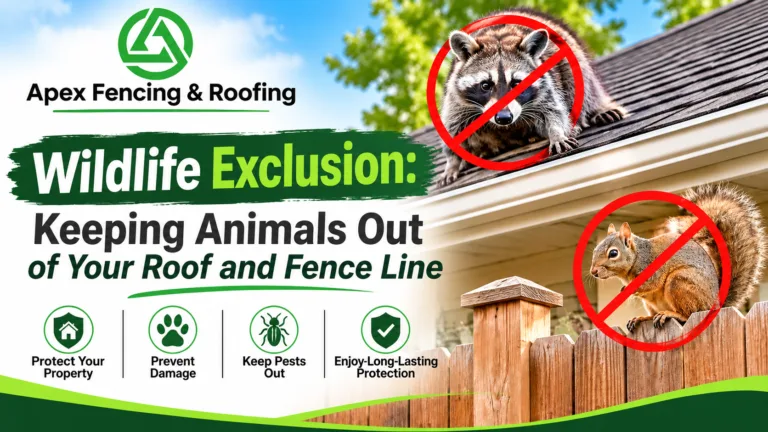
Wildlife can do more damage to a home’s exterior than most homeowners expect. Squirrels chew through soffits and gutters. Raccoons pry open vents and nest in attics. Birds build nests in eaves and chimneys. Burrowing animals dig under fence lines and along foundations, undermining posts and opening up escape routes for pets. The damage tends to be gradual and hidden, so by the time it’s noticed, insulation may be soiled, wiring chewed, and the exterior in need of real repair.
Good exclusion comes down to finding the entry points, sealing them with the right materials, and making the property less appealing to animals in the first place — and doing it humanely, in line with local wildlife rules, which can restrict certain work during nesting season.
Know the Common Entry Points
Most wildlife intrusions follow a predictable pattern. Gaps at the eaves, where the roof meets the wall, are a common access point, especially where soffit panels are damaged or missing. Vent covers that are bent, loose, or missing their screens invite small animals into the attic. Gaps around chimneys, plumbing penetrations, and utility lines come up often. Gable vents, ridge vents, and loose fascia boards are other weak spots. Near the ground, burrowing animals often use gaps under fence lines, beneath gates, and along foundations where the soil has eroded. Walking the exterior slowly, ideally after rain when tracks show up, helps spot these openings.
Sealing Roof and Attic Openings
Entry points should be sealed with materials animals can’t easily chew or push through — fine-gauge metal mesh, sheet metal, and durable exterior-grade fasteners are the usual choices. Foam alone isn’t a reliable barrier, since animals tear it out. Replace damaged vent screens, and make sure the screen is secured firmly to the vent frame. Before sealing anything, confirm no animals are inside and that there are no young present. Wildlife rehabilitators and local agencies can advise on timing, since sealing an active nest can cause harm and may be against the rules in some areas. A Roof Installation Services Belton provider can inspect eaves, vents, and soffits and recommend exclusion methods that fit the roof design.
Soffits, Fascia, and Gutters
Soffits and fascia are favorites of squirrels and birds since they offer protected spaces near the roofline. Replace damaged soffit panels rather than patching them with material that can just get chewed through. Gutter guards can discourage nesting in the channel and cut down on debris, but they need to be installed so animals can’t climb behind them. Trim tree branches that bridge to the roof, since squirrels and raccoons use overhanging limbs as a way in.
Chimneys and Flue Openings
Chimneys attract raccoons and birds because they offer shelter and a dry spot to nest. A properly fitted chimney cap with sturdy mesh screening blocks entry while still letting the flue vent. Caps should be checked for damage, rust, and loose fasteners, and screens for holes or shifting. Chimney work needs a careful hand, since the flue and masonry have to stay safe for normal use.
Protecting the Fence Line
Burrowing animals can dig under fences, opening gaps that pets and other wildlife use to get through. Extending a buried barrier of wire mesh or solid material along the fence base discourages digging. The barrier should go below the frost line where that applies, and angle outward or inward to make digging harder. Filling in burrows and keeping the grading right helps too. A Fencing Company in Temple can design a base barrier that fits your fence material and soil conditions. A fence contractor in Temple can inspect existing fences for burrows and recommend repairs that don’t damage posts or footings.
Removing Food and Shelter Sources
Animals go where the food and shelter are. Keep trash containers tightly lidded, don’t leave pet food outdoors, and clean up fallen fruit or seed. Woodpiles, brush, and dense shrubs against the house or fence give animals places to hide and nest, so keeping that material away from the structure cuts down the draw. Bird feeders can pull wildlife toward the house too. Position them away from walls and roof edges, and clean up spilled seed regularly.
Attic Damage and Cleanup
If animals have already gotten into the attic, remove them before sealing anything, using humane methods or a licensed wildlife professional. Droppings, nesting material, and contaminated insulation need careful removal, since some wildlife waste carries health risks. Wear the right protection, avoid stirring up dust, and follow local guidance on disposal and decontamination. Damaged insulation should be replaced. Have a licensed electrician check any chewed wiring, since damaged wire is a fire hazard.
Legal and Humane Considerations
A lot of wildlife species are protected under state and federal rules, with restrictions on trapping, relocation, and the timing of exclusion work. Nesting season is the main concern, since sealing an opening while young are still inside can be both illegal and cruel. Check with your state wildlife agency or a licensed wildlife control professional before taking any significant action. Where possible, choose methods that let animals leave on their own — one-way devices installed over openings, for instance — and avoid anything that traps or injures them.
Routine Inspection
Inspect the roofline, vents, chimney, and fence base once or twice a year. Look for chewed material, displaced screens, droppings, nests, and tracks in soil or dust. Deal with small openings quickly, since they only grow over time. Keep a record of repairs so recurring problems get identified and fixed at the source instead of patched over and over.
Working With Professionals
Some wildlife problems call for professional help — animals already in the attic, active nests, or structural damage that’s already happened. A licensed wildlife control operator can identify the species, advise on legal options, and handle humane removal. A roofing contractor can then seal the openings with durable materials and repair any damage to soffits, vents, or flashing. A Roof Repair Services Harker Heights provider can repair roofline damage, while a Roof Installation Services Killeen provider can replace damaged soffit and fascia sections as part of a larger project.
For a fence that’s been compromised by burrowing, a Roof Repair Services Temple provider can help coordinate repairs where the exterior work overlaps, and a fence contractor in Temple can rebuild the base line. A Fencing Company in Temple can advise on the best long-term barrier.