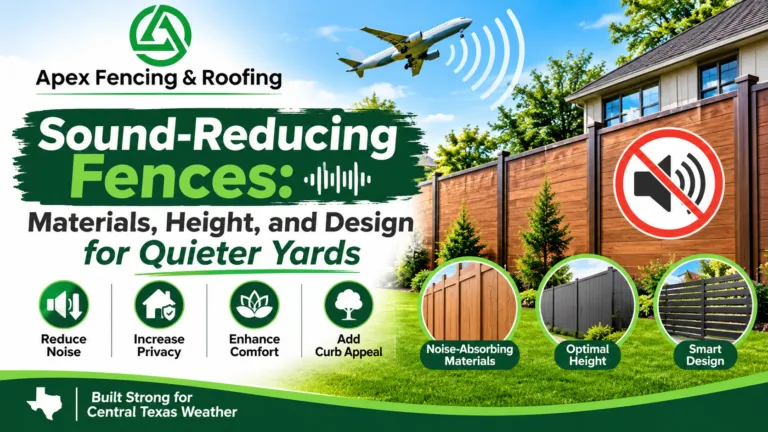
Noise is one of the most common complaints about living near a busy street, a commercial area, or a loud neighbor. A fence can’t eliminate sound, but a well-designed one can cut down how much reaches the yard and make the outdoor space a lot more comfortable. The right design depends on the sound source, the distance involved, and the materials used. A lot of homeowners assume any solid fence will do the job, but performance actually comes down to mass, height, continuity, and how the fence sits in the landscape.
Here’s how fences affect sound, which materials and designs tend to perform well, and what limits to expect. Results vary, and no fence turns a noisy environment silent.
How Fences Reduce Sound
Sound travels as waves, and a barrier can block, absorb, or deflect them. Dense, heavy materials block more sound than light or porous ones. A continuous barrier without gaps beats one with openings, since sound passes through even small gaps. The fence also needs to be tall enough to break the line of sight between the sound source and the listener — a barrier that’s too low lets sound pass right over it. Sound bends around barriers and reflects off surfaces too, so the fence’s position relative to the house, the yard, and the source all affect how much noise actually reaches the outdoor space.
Materials That Perform Well
Solid wood fences built from thick boards cut down noise better than thin or open designs, especially when the boards sit tight with no gaps. Masonry walls and dense composite panels offer high mass, which helps performance. Vinyl panels with thick, solid profiles can help too, as long as they’re installed without openings. Lightweight, open, or slatted materials generally do less, though they can still soften certain sounds. Some specialty products use layered construction or acoustic panels built for sound control. Ask manufacturers for documented performance data and compare products before choosing — claims vary, and independent verification matters.
Height and Continuity
Height matters because sound has to be blocked along the line between source and listener. A fence taller than the listener’s ear line and the source’s sightline usually performs better than a short one. Continuity matters just as much — gaps at the bottom, between panels, or at gates all let sound through and cut the overall effect. Local height limits may restrict how tall a residential fence can be, so check those before planning, and think about whether fence plus landscaping gets you there within the allowed height.
Double Walls and Layered Designs
Some designs use two parallel barriers with an air gap between them, which can reduce sound more than a single barrier of similar weight. Staggered boards, offset panels, or layered construction help too. These take more material and more careful building, and they may not fit in a small yard or where space is tight. A layered design can also soften the visual impact of one thick wall while still delivering the acoustic benefit. Talk through the options with your contractor to balance performance, appearance, and cost.
Landscaping as a Supplement
Dense plantings soften noise and improve the sense of privacy, though they reduce sound less than a solid barrier does. Evergreen shrubs and layered plantings absorb some high-frequency sound and add a visual buffer. Plant on the yard side of the fence, with enough room for mature growth and maintenance access. Pairing a solid fence with landscaping gets you a more comfortable outdoor space than either one alone — the fence does the main blocking, while the plantings soften the look and add texture.
Placement Matters
The closer a barrier sits to the sound source or the listener, the more effective it tends to be. Placing a fence near a noise source, like a driveway or street edge, helps. Placing it near the seating area gives a more localized benefit. Think about how sound actually reaches the yard, including reflections off nearby walls and surfaces, before picking a location. Gates and openings should be designed to keep gaps to a minimum. Solid gates with tight seals perform better than open gates or ones with big gaps at the bottom.
Setting Realistic Expectations
A fence reduces noise, but it can’t block everything. Low-frequency sound — heavy truck engines, bass from loud audio — passes through barriers more easily than high-frequency sound. Wind, uneven terrain, and reflective surfaces all affect the outcome too. Walk the yard with a neighbor or friend while the noise source is active to get a feel for the likely improvement. Talk through expectations with your contractor, and ask about the likely performance of the proposed design. A reputable contractor will tell you plainly what the fence can and can’t do.
Maintenance of Sound-Reducing Fences
Sound performance depends on the fence staying intact. Gaps from warping, loose boards, or settling cut into effectiveness. Inspect the fence regularly, fix damage promptly, and keep finishes maintained so they don’t deteriorate. Keep gates tight, and check that bottom gaps haven’t widened over time. Vegetation growing through the fence can also create gaps or damage panels, so trim back anything interfering with the barrier.
Permits, Codes, and Neighbor Considerations
Taller or specialty fences may need permits, and some communities have rules on materials, design, and placement. Check local requirements and any HOA guidelines before ordering materials. If the fence will affect a neighbor’s view or access, talk to them early to head off disputes. Confirm property lines before installation — a fence on the wrong side creates conflict even if it performs great acoustically.
Planning the Right Solution
A sound-reducing fence works best when it’s built around the specific noise source and the layout of the property. Weigh material, height, continuity, placement, and supplemental landscaping together. Get written proposals describing the design, materials, and expected performance, and compare them side by side.
A Fencing Company in Temple can review the noise source and yard layout and recommend a design that balances performance and appearance. A fence contractor in Temple can plan the height, continuity, and gate details that make a sound barrier actually work. Homeowners planning roof work at the same time can coordinate with a Roof Installation Services Belton provider, while a Roof Installation Services Killeen or Roof Repair Services Harker Heights provider can help schedule exterior work so the yard isn’t disrupted twice. A Roof Repair Services Temple specialist can also check roof edges and drainage near the fence line.