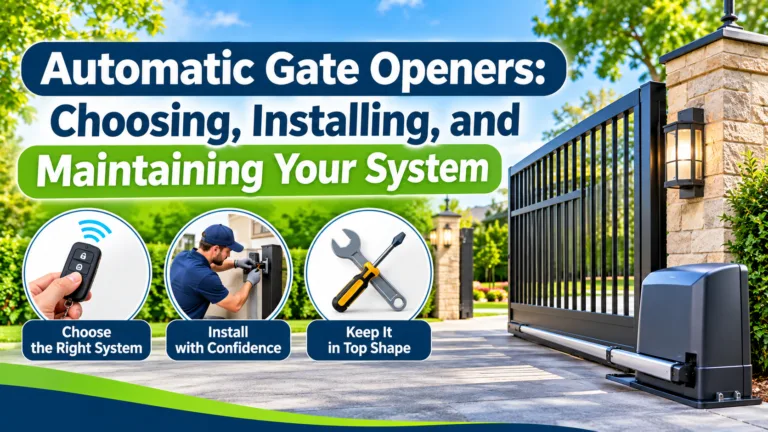
An automatic gate opener makes coming and going a little easier, and it adds a layer of security by keeping a driveway gate closed unless someone deliberately opens it. For a lot of households, the main appeal is just pressing a remote or punching in a code. But a gate opener is a mechanical and electrical system, and it needs to be matched to the gate, installed correctly, and kept up. Mismatch the opener and the gate, and you shorten the life of both while creating safety risks.
Here are the main decisions behind choosing a gate opener, what affects performance during installation, and the maintenance that keeps the system reliable.
Swing Gates and Slide Gates
Automatic gates generally fall into two categories. Swing gates pivot on hinges and open toward or away from the driveway, while slide gates move horizontally along a track. Each has different space requirements, load demands, and operator designs. A swing gate needs clearance for its arc of travel, while a slide gate needs room along the fence line for the gate to move its full distance. The choice between swing and slide often comes down to the property layout. A sloped driveway, tight space, or curved entrance may make one type more practical than the other. Talk through the options with your contractor before settling on a design.
Matching the Opener to the Gate
The opener has to be sized for the gate’s weight and length. A heavier or longer gate needs a more powerful operator — undersized equipment strains, overheats, and fails early. Wind load matters too, since a large solid gate can catch wind and put extra demand on the motor. Manufacturers list specs for maximum gate weight and length, and those limits are worth respecting. Gate design affects how it operates as well. A gate that’s out of square, sags, or binds on its posts won’t run smoothly no matter what opener you put on it. Fix structural problems before installing an opener, since the opener can’t correct a poorly hung gate.
Posts, Hinges, and Structural Support
An opener puts added force on the gate’s hinges and posts with every cycle. Posts need to sit in sturdy footings, and hinges should be rated for automatic use, which usually means heavier construction than a manual gate needs. Check hinge pins and brackets regularly, since repeated automated movement loosens fasteners over time. A Roof Installation Services Belton provider who also handles fencing can evaluate posts and footings before the opener goes in.
Power, Wiring, and Weatherproofing
Most openers need a dedicated power supply, and the wiring should be installed to code, often by a licensed electrician. Outdoor components need weatherproofing and should be mounted somewhere protected from direct water exposure. Control boxes, transformers, and receivers should be sealed and kept off the ground where flooding or splashing could reach them. Central Texas heat can affect electronics, so place things away from direct afternoon sun where you can. Follow the manufacturer’s guidance on ambient temperature range and enclosure ratings.
Safety Features and Sensors
Automatic gates need safety features that detect obstructions and reverse the gate’s movement when something’s in the way. Photo-eye sensors, safety edges, and force settings all play a part in safe operation. Test these after installation and keep testing them periodically. A gate that doesn’t reverse when it meets an obstacle is a serious hazard, especially for kids and pets. Entrapment risk is a big reason to stick with professional installation and follow local requirements for gate design and safety devices. Have the installer demonstrate each safety feature before calling the job done.
Access Controls
Gate openers can be controlled by remote transmitters, keypads, intercoms, smartphone apps, and vehicle detection, each with its own tradeoffs between convenience and security. Remote transmitters are simple but can be lost or copied if they’re older technology. Keypads let you change codes, while app-based systems can offer guest access and activity logs. Pick what fits your household, and think about how visitors and service providers will get access. Keep access codes private and update them whenever someone leaves the household. Pull old transmitters out of rotation once they’re no longer needed.
Backup Power and Emergency Release
Power outages can leave a gate stuck open or closed. A lot of openers include battery backup or a manual release that lets the gate be moved by hand. Make sure everyone who uses the gate knows how to work the manual release, and keep it accessible. Test the backup system now and then so you know it’ll work when you actually need it.
Routine Maintenance
Automatic gate systems should get inspected once or twice a year. Check hinges and brackets for looseness, lubricate moving parts per the manufacturer’s guidance, and test safety sensors and reversal features. Look for wear on the track or rollers in slide gates, and clear debris from the tracks. Confirm the gate closes fully and latches reliably. Watch for changes in sound or speed — a motor that strains, a gate that moves unevenly, or a sensor that cuts out now and then all point to something worth addressing soon.
Coordinating Gates With the Fence
A gate opener works best when the gate and fence go in as one system. The gate should align with the fence line, posts should be plumb, and drainage at the gate base should keep soil from washing out. Coordinate the gate installation with the fence work so footings and conduit get placed correctly the first time. A Fencing Company in Temple can design the gate and fence together and plan where the electrical conduit goes. A fence contractor in Temple can inspect existing gates and tell you whether an automatic opener makes sense. Homeowners planning exterior work at the same time can also coordinate with a Roof Installation Services Killeen provider, while a Roof Repair Services Temple specialist or a Roof Repair Services Harker Heights provider can help with roof drainage near the entry