
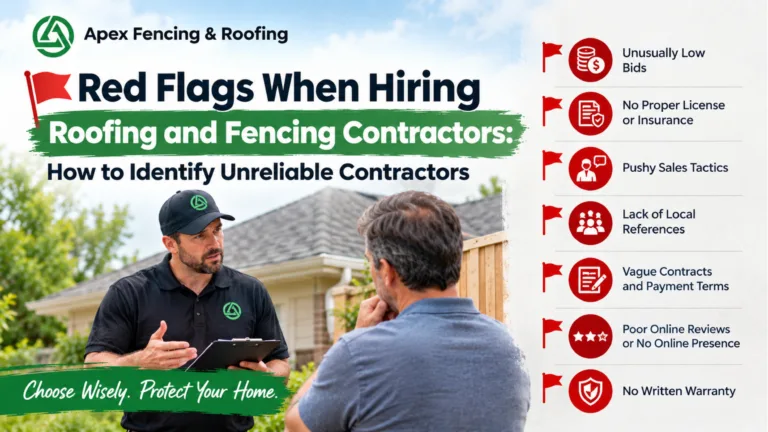
Hiring reliable contractors is essential to ensuring that roofing and fencing projects are completed properly and professionally. Unfortunately, not all contractors operate with integrity or competence. Learning to recognize red flags helps homeowners avoid unreliable or unethical contractors who might perform poor work, charge high costs, or disappear before completing projects.
Taking time to evaluate contractors carefully before hiring prevents problems that emerge during or after project completion. Recognizing warning signs early allows you to choose qualified contractors and avoid costly mistakes.
Lack of Proper Licensing and Insurance
Licensed contractors have demonstrated knowledge of their trade and understanding of building codes and legal requirements. Licensing requirements vary by location and trade, but generally indicate that contractors have proven competence. Contractors should provide license numbers on request and allow verification through your state’s licensing board.
Insurance protects you if workers are injured or if work causes property damage. Contractors should carry liability insurance to cover damage to your property and worker’s compensation insurance to cover worker injuries. Request proof of insurance before hiring and verify that coverage is current.
Contractors operating without proper licensing or insurance are red flags indicating that they may not follow legal requirements or industry standards. Unlicensed contractors may lack necessary training or experience. Uninsured contractors create liability problems for you if injuries or property damage occur during work.
Reputable contractors offering Roof Installation Services Belton maintain all necessary licenses and insurance and provide documentation willingly.
No References or Poor Track Record
Reliable contractors have satisfied customers willing to provide references. Request contact information for at least three recent clients and call them to ask about their experience. Ask about work quality, timeliness, professionalism, and whether they would hire the contractor again.
Contractors who refuse to provide references or whose references consistently report problems are red flags. Be particularly suspicious of contractors who have been in business for a very short time or whose references cannot be reached.
Check online reviews on Google, Yelp, and industry sites. Multiple negative reviews, particularly complaints about poor quality or unfinished work, indicate problems. While some negative reviews are inevitable with any contractor, patterns of complaints are concerning.
Better Business Bureau ratings and complaint history provide additional information about contractor reliability. Contractors with numerous complaints and poor ratings should be avoided. Reputable contractors maintain good ratings and few unresolved complaints.
Pressure to Pay in Advance or High Upfront Costs
Contractors typically request a deposit to reserve the project date and purchase materials, but be cautious about excessive upfront payments. Requesting fifty percent or more of project cost before work begins is a red flag. Unethical contractors sometimes take advance payments and disappear before completing work.
Legitimate contractors typically request a deposit of ten to twenty-five percent of project cost. The remainder is paid in installments as work progresses, with final payment due after completion. This arrangement protects both parties and ensures that the contractor completes work properly to receive final payment.
Be suspicious of contractors who demand cash payments or who resist written contracts. Contracts protect you by outlining work scope, timeline, costs, and completion standards. Contractors who avoid written agreements are red flags indicating potential problems.
Unrealistically Low Estimates
If a contractor’s estimate is significantly lower than other quotes for the same work, this is a red flag. Unrealistically low estimates often indicate that the contractor plans to cut corners, use substandard materials, or rush work to maintain profitability.
Obtain estimates from at least three contractors for comparison. If one estimate is substantially lower than others, ask the contractor to explain. Sometimes detailed questions reveal that the low estimate excludes work included in other estimates, making comparison difficult.
Quality work requires quality materials and skilled labor. Prices reflecting these requirements are higher than rock-bottom estimates. Selecting contractors based solely on lowest cost often results in poor work that requires expensive fixes.
Professional contractors offering Roof Repair Services Harker Heights provide competitive but realistic estimates reflecting actual project costs.
Vague Scope of Work and Contracts
Contracts should clearly detail work scope, timeline, materials, costs, and warranties. Vague contracts that do not specify exactly what work will be completed are red flags. Unclear terms lead to disputes about whether specific work is included.
If a contractor cannot or will not provide a detailed written contract, this is a significant warning sign. Reputable contractors explain their work in detail and document agreements in writing. Contractors avoiding detailed contracts may be hiding something.
Review contracts carefully and ask questions about any unclear provisions. Do not sign contracts you do not fully understand. Contracts should be specific enough that both you and the contractor agree on exactly what work will be completed and how much it will cost.
Poor Communication and Unavailability
Reliable contractors communicate promptly and keep you informed about work progress. Contractors who are difficult to reach, do not return calls or emails, or do not update you on project status are red flags. Poor communication suggests that you are low priority to the contractor.
During projects, contractors should provide regular updates about progress and any problems that arise. If you must chase the contractor for information or cannot easily reach them, this indicates unreliability.
Establish communication expectations before work begins. Ask how often you will receive updates and what contact methods the contractor prefers. Contractors who are organized and professional have communication systems in place and keep clients informed.
No Warranties or Questionable Warranties
Professional contractors stand behind their work with warranties covering workmanship. Warranties typically cover one to ten years depending on the contractor and type of work. Contractors who offer no warranty or extremely short warranties are red flags.
Read warranty terms carefully. Some warranties have restrictions or exclusions that significantly limit coverage. Understand exactly what the warranty covers and for how long. Warranties protecting you against problems justify contractor’s confidence in their work quality.
Contractors offering Roof Installation Services Killeen should provide warranty documentation in writing. Be suspicious of contractors who are vague about warranty coverage or who cannot provide written warranty terms.
Operating Without a Permanent Address or Changing Business Names
Contractors operating from a residential address or without a permanent business location are less established than those with commercial offices. While new contractors may operate from residential addresses, established contractors typically maintain business locations.
Contractors who frequently change business names or operate under multiple names raise red flags. Frequent name changes may indicate that the contractor is trying to escape negative reputation or avoid accountability for past problems.
Verify that the contractor’s current business name matches the name on licensing, insurance, and contract documentation. Inconsistent names are red flags indicating potential fraud or deception.
Pressure to Start Work Immediately
Contractors should be willing to schedule work at a mutually agreeable time. Contractors who pressure you to start work immediately or who claim that you must decide today to get a discount are using high-pressure sales tactics that are red flags.
Legitimate contractors want you to make informed decisions and have adequate time to prepare for projects. Contractors using pressure tactics are more focused on making the sale than on your satisfaction.
Take time to evaluate contractors, obtain references, and compare estimates. Do not let pressure tactics rush you into hiring contractors you have not adequately evaluated.
Complaints About Previous Employers or Customers
Contractors who frequently complain about previous customers or former employers raise red flags. While occasional customer difficulties are normal, contractors who blame all problems on others rather than taking responsibility suggest problematic attitudes.
Listen to how contractors speak about their work, customers, and competition. Contractors who are professional speak respectfully about customers and competitors. Those who are dismissive, rude, or blame-focused may treat you similarly if problems arise.
No Written Estimates or Contracts
Professional contractors provide written estimates and contracts. Do not hire contractors based on verbal estimates or handshake agreements. Written documentation protects both parties and provides reference if disputes arise.
Contracts should be specific about work scope, timeline, payment terms, materials, warranties, and cleanup responsibilities. Both you and the contractor should sign contracts before work begins.
How to Protect Yourself
Research contractors thoroughly before hiring. Check licensing, verify insurance, contact references, and review online ratings. Obtain detailed written estimates and contracts. Clearly communicate expectations and get agreements in writing. Monitor work progress and do not release final payment until work is completed to your satisfaction.
Do not hesitate to address concerns during projects. If work quality is not meeting expectations, raise concerns promptly with the contractor. Quality contractors address concerns and make corrections. Those who ignore concerns or become defensive are red flags indicating problems.
If you are having a roof or fence project completed, work with contractors you have thoroughly vetted. Roof Repair Services Temple and fence contractors should demonstrate professionalism, clear communication, and commitment to quality.
When to Walk Away
If multiple red flags appear or if your instincts tell you something is wrong, walk away and hire a different contractor. The money you save by avoiding problems with unreliable contractors far exceeds the time spent evaluating options.
A contractor who demonstrates reliability, professionalism, clear communication, and quality work is worth the investment. Fencing Company in Temple and roofing contractors should inspire confidence through their professionalism and track record.
Similarly, a fence contractor in Temple should demonstrate all the qualities of reliability and professionalism that make for successful projects. Trust your instincts about contractor reliability.
Final Thoughts
Hiring reliable contractors requires careful evaluation and due diligence. Recognizing red flags helps you avoid unreliable contractors and select contractors who will complete projects professionally and to your satisfaction. Quality contractors provide documented evidence of reliability, maintain clear communication, and stand behind their work with warranties.
Protecting your investment in roofing and fencing projects starts with hiring the right contractors. Taking time to evaluate options thoroughly prevents problems and ensures successful project completion.