
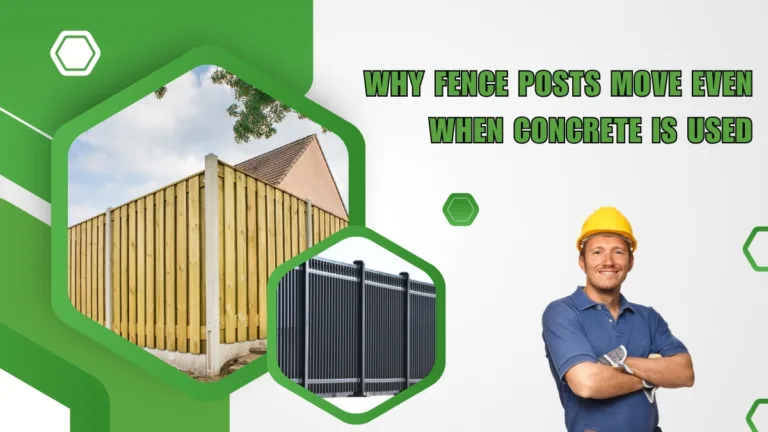
Have you ever noticed that a fence post starts to lean or wobble after some time, even though you or someone else poured concrete around it? It feels confusing, right? You did everything “the right way.” You dug the hole. You mixed the concrete. You waited for it to dry. But still, the post moved.
This happens more than you think. And there are real reasons behind it. Let us walk you through everything in simple words, so you understand exactly why this happens and what can be done about it.
What Is a Fence Post and Why Does It Matter?
A fence post is the part of the fence that goes into the ground. It holds everything up. Think of it like the legs of a table. If the legs are weak or shaky, the whole table falls. Same with a fence if the posts are not strong and stable, the whole fence will lean, shake, or fall over time.
Many people think that pouring concrete around the post will fix everything. Concrete is hard. Concrete is strong. So it should hold the post forever, right?
Not always. Here is why.
Reason 1: The Hole Was Not Deep Enough
This is one of the most common reasons fence posts move. If the hole is too shallow, the post does not have enough support underground. The part of the post in the ground needs to be deep enough to stay firm when the wind pushes against the fence or the ground moves.
A simple rule that many professionals follow is: one-third of the post should be underground. So if your fence post is 6 feet tall, at least 2 feet of it should be buried. If the hole is only 1 foot deep, the post will not stay still for long.
Reason 2: The Ground Moves Especially in Texas
Texas soil is very active. It expands when it gets wet and shrinks when it dries out. This constant movement pushes and pulls on everything buried in the ground, including your fence posts and the concrete around them.
This is called soil movement or ground shifting. You cannot see it, but it is always happening beneath your yard. Over months and years, this slow movement can tilt a post that seemed perfectly straight at first.
In Central Texas, especially, the clay-heavy soil is known for this kind of movement. It is one of the biggest reasons why fence posts shift, even when concrete is used.
Reason 3: Water Got Trapped Around the Post
Water is sneaky. When it rains, water can collect around the base of a fence post. If the concrete was poured flat or slightly sunken, water sits right there around the post instead of draining away.
Over time, this water softens the soil below the concrete. It can also rot a wooden post from the bottom up, even if the top of the post looks perfectly fine. When the wood at the base starts to rot, the post becomes weak and starts to lean.
A good way to avoid this is to make the top of the concrete slightly rounded or sloped, so water runs away from the post rather than collecting around it.
Reason 4: The Concrete Was Not Mixed or Poured Correctly
Not all concrete is mixed the same way. If there is too much water in the mix, the concrete becomes weak after it dries. If it was poured too quickly or not packed in properly, there may be air pockets inside. These air pockets make the concrete crack over time.
Also, if someone poured dry concrete mix directly into the hole without mixing it first, hoping it would just absorb moisture from the soil, it may not have hardened evenly. This is a shortcut that many DIY fence builders try, and it often leads to problems later.
Reason 5: The Post Was Not Straight When the Concrete Dried
This sounds simple, but it happens a lot. If the post was not held perfectly straight while the concrete was drying, it dried slightly tilted. Once concrete hardens around a tilted post, that post is set at the wrong angle forever or until someone digs it out and starts over.
Holding a post straight while concrete dries usually takes braces and some patience. Rushing this step is a mistake that costs a lot of time and money later.
Reason 6: Frost Heave in Cooler Months
Even though Central Texas is mostly warm, it can experience cold snaps in winter. When the ground freezes, water inside the soil expands. This expansion pushes things upward, including fence posts and the concrete around them. This is called frost heave.
When the ground thaws again, it may not settle back in exactly the same way. So after a few freeze-and-thaw cycles, a post that was once solid can start to rise or tilt.
Reason 7: The Wrong Type of Concrete Was Used
There are different types of concrete for different jobs. Regular concrete mix works well in many cases, but fast- or post-setting concrete is often better for fence posts. It hardens faster and grips the post more firmly.
Using the wrong product for the job or an old, poorly stored concrete mix can lead to weak results even if everything else is done correctly.
Why DIY Fence Installation Often Leads to These Problems
All of the reasons above are real and common. But here is the honest truth: most of these problems occur when fences are installed by people without professional experience.
When you try to install a fence on your own, it is hard to know:
- Exactly how deep the hole needs to be for your specific soil type
- How to handle the clay soil movement common in Central Texas
- The right way to mix and pour concrete for fence posts
- How to keep posts perfectly straight while everything dries
- Which materials work best for your climate and yard conditions
A small mistake in any one of these areas can lead to a fence that looks bad, leans over, or even falls within a year or two. And fixing a poorly installed fence usually costs more than getting it done right the first time.
What a Professional Fence Installer Does Differently
A professional brings the right tools, materials, and knowledge. They know how deep to dig for your specific location. They know how Central Texas soil behaves. They know how to mix and pour concrete so it grips the post firmly and lasts for years.
They also know how to read the ground where it is soft, where it drains well, and where water tends to collect. These small details make a huge difference in how long your fence lasts.
This Applies to More Than Just Fencing
You might be wondering why we are talking about fence posts on a blog that also covers roofing? The answer is simple. The same lesson applies to both.
Whether it is a fence post that shifts because the ground was not prepared properly, or a roof that leaks because the installation was rushed, the result is the same. A job done without proper knowledge and care will fail sooner than it should.
If you are in Central Texas and you need a Roof Installation Service in Theon, TX, or anywhere nearby, the same rule applies. Quality installation matters. The materials matter. And experience matters more than anything.
A Quick Word About Roofing in Central Texas
Since we are on the topic of proper installation, it is worth knowing your roofing options if you ever need a new roof or a repair:
- Asphalt Shingle Roof Installation is one of the most popular choices. It is affordable, comes in many colors, and works well in most weather conditions
- Metal Roof Installation is great for durability. A good metal roof can last 40 to 70 years and handles Texas heat and storms very well
- TPO Roof Installation is a smart choice for flat or low-slope roofs. It reflects heat and helps keep energy bills lower in summer
- If you are looking for a Roof Installation Service in Theon, TX, knowing these options helps you make the right choice for your home and budget
Every roofing type needs to be installed correctly, just like fence posts. Cutting corners on roof installation leads to leaks, damage, and expensive repairs down the road.
Final Thoughts
Fence posts move even with concrete for many reasons, such as shallow holes, soil movement, water damage, poor mixing, and more. Understanding these reasons helps you see why professional installation is so important.
Whether you need fencing or a Roof Installation Service in Theon, TX, working with an experienced local team makes all the difference.
Visit Apex Fencing & Roofing
If you are in Central Texas and need help with fencing, roofing, or any home improvement work, feel free to visit Apex Fencing & Roofing. They are a local, family-owned team with over 50 years of combined experience, serving homeowners and businesses across the region. You can reach them at (254) 239-0434 or email jeff@apexfencingandroofing.us for a free inspection.

