When you are relaxing at home with your family, you probably do not think about what is happening on top of your house. The roof just sits up there, doing its job day after day. It keeps the blazing sun off your head, shields you from heavy rain, and blocks the cold winter wind. Because it is high above your head and out of sight, it is very easy to forget about it completely.
However, roofs do not last forever. In places with wild weather and hot sunshine like Texas, shingles and metal panels face a lot of daily stress. A roof rarely breaks all at once without warning. Instead, it leaves tiny clues and warning signs long before a major disaster happens.
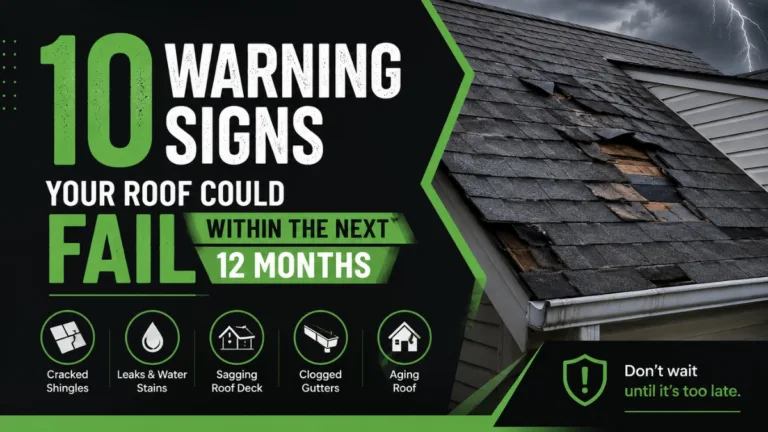
If you know what to look for, you can spot these warning signs early. Catching a problem today can save you thousands of dollars, protect your family’s furniture, and prevent a massive emergency later. Here are ten clear signs that your roof could fail within the next 12 months, along with simple steps to keep your home safe.
1. Shingles That Curl at the Edges Like Potato Chips
Take a walk out into your yard on a bright day and look up at your house. Look closely at the flat squares that cover the surface. These are your shingles. When shingles are new and healthy, they lie completely flat against the wooden boards underneath.
Over time, the hot summer sun cooks the oils out of the shingles. As they lose their natural moisture, they start to warp.
- Cupping: This happens when the edges of the shingle turn upward while the middle stays flat, making the panel look like a tiny bowl.
- Clawging: This happens when the edges stay flat, but the center bumps upward like a claw.
When shingles start curling, they lose their sticky glue seals. The next time a strong wind blows across your neighborhood, it can easily catch under those lifted edges and rip entire rows of shingles right off your house.
2. Piles of Dark Colored Sand in Your Gutters
If you touch a shingle, it feels rough and bumpy, almost like heavy sandpaper. Those tiny rocks glued to the top are called granules. They are not just there to make your house look pretty. They are the actual shield that protects the soft asphalt layer from the sun’s burning rays.
As shingles get old, the glue holding those tiny rocks breaks down. Every time it rains, the loose rocks wash down the roof slope and end up in your gutters.
When you clean out your gutters in the spring or autumn, look at the dirt you are scooping out. If you find thick piles of heavy, colored sand, your shingles are going bald. Once a shingle loses its rock shield, the sun will destroy the naked asphalt underneath within a few short months.
3. Dark Black Streaks and Green Moss Growth
Have you ever noticed long, ugly dark lines running down the top of a house? Many homeowners think those dark marks are just dirt or pollution from passing cars. However, those dark streaks are actually alive.
They are caused by a specific type of blue-green algae that feeds on the limestone filler used in modern shingles.
Along with algae, you might also see soft green moss growing in the dark, shaded corners where trees hang over the house. Moss behaves like a small sponge. It holds rainwater against your shingles for days without letting it dry. In the winter, that trapped water freezes into solid ice, expanding and cracking the shingles wide open.
4. Spongy or Bouncy Floorboards Under Your Feet
You do not always have to look at the outside of your house to find roof problems. Sometimes, the most serious clues hide directly under your feet inside the attic.
If you have an attic space, carefully walk up there with a bright flashlight. Stand on the solid wooden floorboards and pay close attention to how the floor feels under your shoes.
- Hard and Solid: A healthy roof structure feels completely stiff and solid, just like walking on a concrete sidewalk.
- Soft and Bouncy: If the floor feels soft, spongy, or gives way slightly under your weight, water has been leaking through the top layers for a long time.
The wooden boards under your shingles have absorbed the rainwater and turned soft like wet cardboard. If your roof deck feels spongy, the wood is rotting and needs immediate professional help before it sags inward.
5. Sunlight Peeking Through Your Attic Ceilings
While you are standing inside your dark attic, turn off your flashlight for a moment. Stand still and look up at the dark ceiling boards above your head.
Do you see tiny pinpricks of bright light shining through the dark wood, looking like stars in the night sky?
If light can find a way into your attic, water can find the exact same path down into your home. Those tiny light holes mean that nails have backed out of the wood, shingles have cracked open, or the waterproof paper layer has completely disintegrated. During the next heavy rainstorm, those light holes will turn into active water drips.
6. Flashing That Is Cracked, Loose, or Rusted
The most delicate parts of any roof are the spots where two different surfaces meet. This includes the area around your brick chimney, the spots where air pipes poke through, and the deep valleys where two roof angles join together.
To keep these corners dry, builders install thin strips of metal called flashing.
In older homes, builders often sealed the edges of this metal using cheap plastic caulk or rubber glue. The intense Texas heat bakes that glue until it becomes hard, shrinks, and splits apart. If you see metal flashing that is rusted out, bent upward, or missing its rubber seals, water is guaranteed to slide sideways underneath the shingles.
7. Mysterious Water Stains on Your Upstairs Ceilings
One day, you are lying in bed looking up at the ceiling, and you notice a light brown circle that looks like a coffee stain on the white paint. Or maybe you notice a strange yellow line running down the inside of your bedroom closet wall.
Many people ignore small ceiling stains because they do not see water actively dripping onto the floor. This is a big mistake.
Water is a sneaky traveler. When rain enters a crack in your roof, it rarely falls straight down. Instead, it runs along the slanted wooden beams, travels ten feet across your attic, and then drips down onto your drywall ceiling. By the time a brown stain appears on your bedroom paint, the water has been rotting your attic wood for weeks or even months.
8. Sagging Roof Lines Against the Sky
Walk across the street, turn around, and look at the main horizontal peak of your house against the sky. That top line should look perfectly straight, like one drawn with a ruler.
If you notice that the line dips down in the middle, or if a section of the roof looks like a gentle wave on the ocean, your house is in serious trouble.
A sagging line indicates that the main wooden support beams in your attic are failing. This usually happens when long-term water leaks rot the wooden frames, or when an improper past installation overloaded the structure. A sagging roofline is a major structural warning sign that the entire shield could collapse within the next 12 months if it is not fixed.
9. Cracked Rubber Boots Around Ventilation Pipes
Look at the top of your house, and you will notice several small pipes sticking out through the shingles. These are your plumbing and vent pipes. They allow air and gas to leave your bathrooms and kitchen safely.
To stop rainwater from sliding down the sides of these round pipes, workers install a rubber ring called a boot around the base of each pipe.
Rubber is a fantastic material for stopping water, but it hates the sun. Constant sunshine causes the rubber to dry out, lose its stretch, and split open. Once the rubber boot cracks, rain will slide straight down the pipe and drop directly into your wall spaces, rotting the wood framing inside your home.
10. Your Roof Is Over 20 Years Old
Even if your roof looks okay from the street and you have not seen any water stains on your bedroom ceilings yet, age is a factor you cannot ignore.
Standard asphalt shingles are designed to last between 15 and 20 years under normal weather conditions. Once a roof passes its 20th birthday, the materials inside the shingles have reached the end of their natural life. The sticky glue lines lose their grip, the asphalt turns brittle, and the waterproof paper underneath begins to fall apart.
If your house has a 20-year-old top layer, waiting for a major leak to happen is a dangerous gamble. Getting an official evaluation from a team that offers Roof inspection services is the smartest way to know how much time your house has left before total failure.
What Should You Do Next?
If you walked outside today and noticed two or three of these warning signs on your home, there is no need to panic. Spotting these clues today gives you time to take action before a major rainstorm causes expensive water damage inside your rooms.
Here is a simple plan to keep your property safe and dry:
- Stay Off the Roof Yourself: Climbing up high ladders is very dangerous, especially on old, slippery shingles. Always stay safely on the ground and use binoculars or your phone camera to look at the details.
- Schedule an Expert Evaluation: Partnering with professionals who provide Roof inspection services is the best way to get clear, honest facts. An expert can safely climb up, examine every metal seam, check your attic wood, and tell you if you just need a small patch or a complete replacement.
- Keep Up with Daily Care: Booking regular Roof maintenance services helps clear trapped leaves, seal loose pipe boots, and keep your drainage channels open so water drains quickly.
- Fix Small Damage Fast: If you notice a single broken shingle or a tiny ceiling stain, don’t wait until next year to address it. Booking local Roof repair services right away stops a minor $200 fix from turning into a $10,000 indoor disaster.
By taking care of your home’s top shield, checking the warning signs every spring and autumn, and calling in Expert Roofing Services Temple when problems appear, you can sleep comfortably knowing your family and belongings are safe from every storm.