A fence is only as strong as the hardware holding it together. Panels, rails, and posts all depend on fasteners, brackets, and connectors that resist pulling out, shearing, and corroding. Hardware usually shows up as a small line item on a fence proposal, but the wrong choice causes rust stains, split boards, loose panels, and fasteners that fail long before the wood or metal around them gives out. Knowing what to look for helps homeowners ask better questions and spot quality construction when they see it.
Here are the main types of fence hardware, how to pick corrosion-resistant options for Central Texas conditions, and how to inspect and maintain the connections over time.
Why Corrosion Resistance Matters
Fence hardware lives in a rough environment — rain, humidity, sprinkler spray, soil moisture, summer heat, and often direct contact with treated lumber that speeds up corrosion. Ordinary steel fasteners rust fast, leaving dark streaks on the wood and weakening the connection. Rusted hardware is also more likely to snap under load or pull out of soft wood, which is how a lot of panels end up loose. Corrosion-resistant hardware is built to hold up under these conditions. The right choice depends on the wood species, the treatment, and how close it sits to water and soil, but the principle stays the same: fasteners should last at least as long as the fence they’re holding together.
Hot-Dip Galvanized and Stainless Options
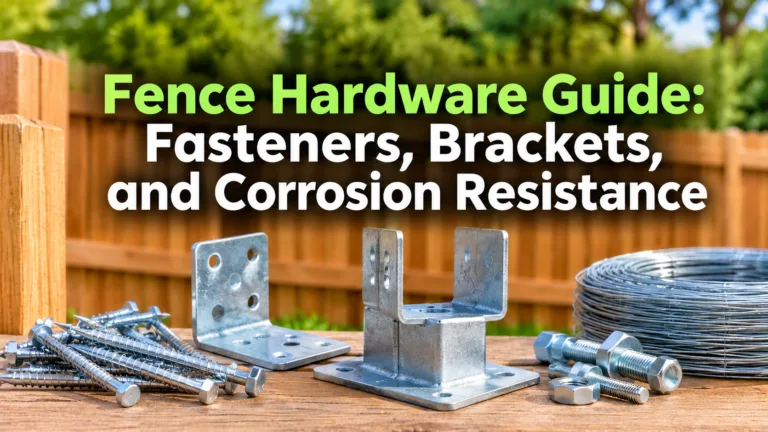
Hot-dip galvanized fasteners carry a thick zinc coating that protects the steel underneath, and they’re a common, widely available choice for fences. Stainless steel fasteners resist corrosion even better and get used near pools, in damp soils, or with certain treated woods. Stainless costs more, but it sidesteps a lot of the staining and corrosion problems that come with lower-grade products. Avoid mixing incompatible metals in the same connection, since that speeds up corrosion. Ask your contractor which fastener type they’re using and whether it’s rated for the wood treatment on the job.
Choosing Nails Versus Screws
Nails go in fast and work fine for some fence components, but screws generally hold better and are easier to remove or adjust later. For panels and rails that might need servicing down the road, screws are usually the better call. Ring-shank nails resist pulling out better than smooth nails and sometimes get used in framing. The right choice comes down to the material, the load, and how the fence will be maintained. Pilot holes help prevent splitting, especially in hardwood or near board ends. Overdriving a fastener crushes the wood fibers and weakens the hold, so it should sit flush without tearing the surface.
Brackets, Clips, and Post Connections
Brackets and clips connect panels to posts, and they’re often carrying the most load in the whole structure. Heavy-duty brackets make sense for taller fences, gates, and anywhere with strong wind exposure. Check that the bracket size actually matches the rail, and that it’s fastened with enough screws to spread the load. Replace any bracket that’s bent, cracked, or loose. For metal and vinyl fences, the manufacturer’s connectors are built to work together. Mixing in mismatched parts can throw off the fit and void warranties, so confirm everything’s compatible with the system before installation.
Gate Hardware
Gates put repeated stress on hinges, latches, and whatever holds them in place. Hinge bolts should be through-bolted where possible, with washers to spread the load. Latches should be rated for outdoor use and secured with fasteners long enough to reach solid framing. Self-closing hardware and lock mechanisms add even more demand, so check their mounting regularly. Gate hardware is usually the first place cheap components fail. Good hinges and latches are one of the better investments you can make in a fence’s long-term performance.
Fasteners on Treated Lumber
Modern pressure-treated lumber often contains preservatives that corrode standard fasteners faster than older treatments did. Confirm the treatment type and match the fastener rating to it. Using hardware rated for that specific treatment helps avoid early failure. Ask the supplier or installer to confirm compatibility before the materials get ordered. Protect cut ends and drilled holes in treated wood with an appropriate sealer, since exposed wood is more vulnerable to moisture.
Installation Details That Make a Difference
Even good hardware fails if it’s installed poorly. Fasteners should sit where the design calls for them, with enough distance from board ends to avoid splitting. Brackets should be level and square. Pilot holes belong in hardwoods and dense materials. Washers go where specified, and fasteners should drive in straight so they grip evenly. Good installation also means checking that connections are still tight after the first few weeks of use, since wood shrinks and settles. A quick re-tightening at that point heads off small problems before they grow.
Inspecting and Replacing Hardware
Inspect fence hardware at least once a year. Look for rust stains running down boards, loose panels that move when pushed, bent brackets, cracked clips, and fasteners backing out. Tighten what’s loose, replace what’s corroded, and reinforce connections showing movement. Keep a record of repairs so you can track where problems tend to crop up. If rust has started bleeding into the wood, clean the area and fix the source before refinishing. Painting over rust stains without replacing the fastener just lets the problem come back.
Working With a Qualified Installer
A knowledgeable installer specifies hardware that matches the fence design, the material, and the local environment. Ask what fasteners and brackets are included, whether they’re corrosion-resistant, and how they’ll be installed. A written proposal should list out the hardware types, not just say “fasteners included.” A Fencing Company in Temple can recommend hardware suited to your fence and property, and a fence contractor in Temple can inspect existing hardware for corrosion and loose connections. Homeowners with roof work planned can coordinate with a Roof Installation Services Killeen provider, and a Roof Repair Services Harker Heights specialist can address any roof drainage concerns affecting the fence line. A Roof Installation Services Belton provider can also help when metal flashing or gutter hardware is getting replaced at the same time.
A Roof Repair Services Temple provider can check the roof edges and flashing while the surface is being evaluated.