Metal fencing offers a combination of strength, security, and visual refinement that few other materials can match. It can be formal and decorative or clean and contemporary, and it holds its shape under the wind and sun that define Central Texas weather. The most common metal options for residential properties are aluminum, wrought iron, and steel. Each has distinct strengths, and each responds differently to the environment and to ongoing care. Understanding those differences helps homeowners choose a fence that fits both the property and their expectations.
This guide compares the three materials, describes how they are typically installed, and outlines the maintenance each one requires.
Aluminum Fencing
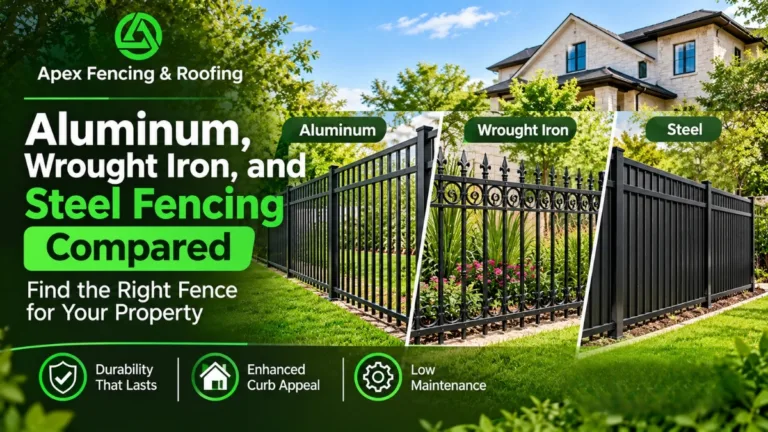
Aluminum is one of the most popular metal fencing options for homes. It is lightweight, which makes it easier to handle during installation, and it resists rust because aluminum forms a protective oxide layer on its surface. Aluminum fences are typically powder-coated in a range of colors, and the coating provides both appearance and additional protection. Common designs include straight pickets, spear tops, and ornamental panels with decorative cutouts. Aluminum is well suited to pool enclosures, front yards, and boundaries where a low-maintenance, open appearance is desired. Its strength is generally adequate for residential use, though it is not as heavy as steel or iron. Inspect the powder coating periodically for scratches or chips, which can be touched up to prevent surface wear.
Wrought Iron Fencing
Wrought iron offers a classic look with intricate scrollwork and substantial presence. Traditional wrought iron is heavy and durable, and it can be shaped into elaborate designs that suit historic or formal homes. Many products sold as wrought iron today are actually steel or aluminum with a finish that mimics the look of iron, which is worth clarifying when reviewing proposals. True wrought iron requires more attention than aluminum. Bare or poorly protected iron rusts, so the finish must be maintained. Periodic inspection, sanding of rust spots, and repainting with a suitable metal primer and topcoat keep the fence in good condition. Welded joints and bottom rails are common areas where moisture collects, and corrosion begins.
Steel Fencing
Steel is among the strongest residential fencing materials. It is commonly used for security fencing, heavy-use gates, and properties that need robust containment. Galvanized steel, which has a zinc coating, resists corrosion well and is often used for both fence panels and posts. Painted or powder-coated steel adds color and a further layer of protection. Steel is heavier than aluminum and requires solid posts and footings. Its weight and rigidity make it well suited to taller fences and larger gates, but installation should account for the load. Any scratches that expose bare metal should be touched up promptly, since rust can spread beneath the coating.
Comparing Strength and Weight
Strength depends on the specific design, gauge, and construction, not only the base metal. Steel generally offers the greatest rigidity, wrought iron is heavy and substantial, and aluminum is strong for its weight but more flexible. For residential fencing, the choice often comes down to how much load the fence must withstand, whether it is intended for security, and how the gates will be used. Heavier fences demand stronger posts and deeper footings. Discuss the post sizing and setting method with your contractor, since the weight of the material affects how the entire fence performs over time.
Corrosion and Coatings
Metal fences face a corrosion challenge in humid or wet conditions and where the finish is damaged. Aluminum resists corrosion naturally, which is one of its major advantages. Steel depends heavily on its galvanizing and coating, while wrought iron relies entirely on its paint or sealed finish. Ask about the coating system, its warranty, and how the manufacturer recommends maintaining it. Inspect the fence after storms, when debris and moisture may have damaged the finish. Address scratches and chips early to keep corrosion from starting beneath the surface.
Installation Considerations
Metal fence installation typically involves setting posts in concrete footings, attaching panels with brackets or clamps, and checking alignment carefully. Because metal panels are rigid, the posts must be set accurately so that the panels line up cleanly. Gate posts require particular attention because the gate’s weight must be supported and the hinges must be aligned correctly. Soil conditions affect installation as well. Expansive clay can move posts over time, so footings should be designed to resist that movement. Drainage at the post base also helps prevent corrosion where the metal meets the ground.
Maintenance Expectations
Aluminum needs the least maintenance, typically periodic cleaning and occasional touch-up of the coating. Steel needs regular inspection and prompt repair of any damaged finish. Wrought iron requires the most attention, including periodic repainting and removal of rust. A realistic assessment of your willingness to maintain the fence is one of the most important factors in choosing a material. Keep the area around the fence clear of vegetation that traps moisture against the metal. Trim plants and avoid piling soil or mulch against the base of the panels, since both can accelerate corrosion.
Security and Visibility
Metal fences offer good visibility, which many homeowners prefer, while still providing a secure boundary. Their open designs allow light and air to pass through, making them suitable for pools, play areas, and front yards. Where greater privacy is desired, metal fences can be combined with privacy screens or landscaping. Steel and wrought iron are often selected when the goal is a more robust barrier, while aluminum suits lighter-duty applications. Gate hardware should be chosen carefully for security. Latches and locks rated for outdoor use and sized to the gate are important, and self-closing hinges can help when children or pets are present.
Choosing the Right Metal for Your Property
Choose aluminum for low maintenance, a clean look, and lighter weight. Choose steel when strength and security are the main priorities. Choose wrought iron when a traditional, ornamental style is central to the design and you are prepared for regular care. Consider the home’s architecture, the surrounding landscape, and your budget and maintenance capacity together. Request written proposals that name the material, gauge, coating, posts, and warranty. Confirm whether the product is true wrought iron or a finished alternative, since that difference affects maintenance and longevity.
Working With a Qualified Crew
Metal fencing requires precise measurement, accurate post setting, and careful handling of finished surfaces to avoid scratches during installation. A contractor who has installed metal fencing regularly will know how to protect the finish, align panels, and install gates that operate smoothly. Ask for references and examples of similar projects. A Roof Installation Services Belton provider who also handles fencing can coordinate metal fence installation with roof or gutter work, which helps avoid damage to new finishes from other trades.
Planning a Lasting Metal Fence
A metal fence can be a long-lasting, attractive feature of a property when the material is chosen to match the site and the homeowner’s expectations. Its appearance, strength, and maintenance needs should all be weighed. A Fencing Company in Temple can help you compare aluminum, steel, and wrought iron options for your yard. Homeowners who want a full review of metal fence design and gate hardware can also consult a fence contractor in Temple, while a Roof Installation Services Killeen provider or a Roof Repair Services Temple specialist can help schedule exterior work so new metal fencing is installed without interference.
A Roof Repair Services Harker Heights provider can examine the roof edges in the same visit.