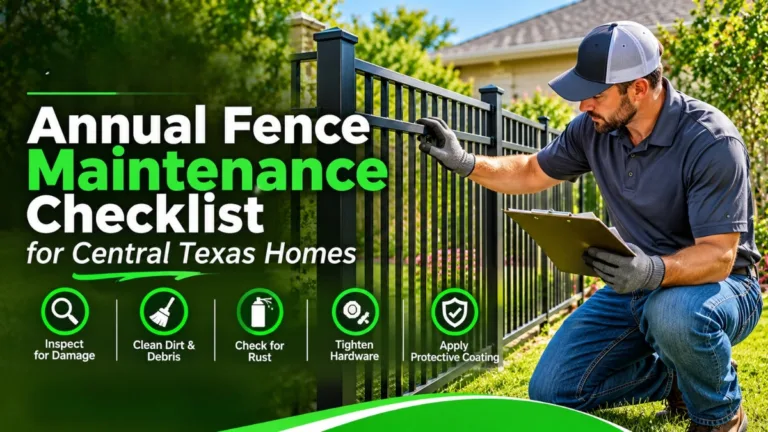
A fence works quietly in the background, holding back pets, marking boundaries, and giving a yard privacy and security. Because it’s always there, it’s easy to ignore until a problem becomes obvious. A leaning post, a sagging gate, or a rotted rail can seem to appear overnight, but most of these issues build up gradually. A simple annual routine catches small problems before they turn into expensive repairs, and stretches the life of the fence no matter what it’s made of.
This checklist is organized by season so the inspections fit into a natural rhythm. It covers wood, vinyl, metal, and chain link fences, with notes where materials differ. Adjust it to the age of your fence, how exposed your yard is, and anything specific to your situation, like pets or nearby trees.
Spring: Inspect After Winter and Storm Season
Spring is the right time to take stock of whatever winter and early storms did to the fence. Walk the full length of it and look for leaning posts, loose boards or panels, broken rails, and gaps near the ground. Check each gate for sag and test the latch. Look for wood that’s split or gone soft, rust on metal, or cracks in vinyl. Clear vegetation and debris away from the base of the fence so the boards and posts can actually dry out. Probe the base of wood posts with a screwdriver to check for soft spots. Any post that feels spongy or shifts when pushed needs a closer look. A Roof Installation Services Belton provider who also handles fencing can check the posts while looking at other exterior components.
Summer: Check Finishes and Heat Effects
Summer sun is hard on finishes. Watch for fading on stained wood, peeling or chalking on painted surfaces, and cracking on vinyl that’s aged. Wood that’s lost its finish should be cleaned and re-stained when the weather allows it, usually during a milder stretch. Metal fences need checking for scratches that expose bare metal, which should get touched up right away. Summer’s also a good time to confirm plants aren’t working against the fence. Vines, shrubs, and trees can push against panels, trap moisture, or hide early rot. Trim back anything touching the fence, and pull vines off wood and metal surfaces before they cause real damage.
Fall: Clean, Tighten, and Prepare
Fall brings leaves and debris that collect at the base of the fence and against the panels. Clear it out so the fence can dry before winter. Tighten loose hardware, including screws, brackets, and gate hinges. Lubricate hinges and latches with something made for outdoor use, and test how the gate swings and closes. Check the drainage around the fence. Water pooling near posts or along the bottom rail speeds up rot and corrosion. Adjust grading or add gravel where it’s needed, and keep soil from building up against the fence line.
Winter: Monitor and Plan Repairs
Winter in Central Texas is generally mild, but freeze-thaw cycles and heavy rain can still shift soil and stress a fence. Walk the perimeter after any significant weather and note new lean, gaps, or displaced panels. Make a list of repairs and schedule them for milder weather when you can. Avoid working on wet wood or frozen soil, since those conditions make accurate repairs harder to pull off. Winter’s also a good time to go back over your records. Note what needs attention before spring and plan ahead for staining, panel replacement, or gate adjustment in the coming season.
Gates: Give Them Extra Attention
Gates work harder than any other part of a fence. Check hinges for looseness, look for sag on the latch side, and confirm the gate closes fully and latches reliably. Check the ground clearance under the gate too, since shifting soil can narrow or widen that gap over time. A gate that drags or won’t latch usually points to a post or hinge problem that needs attention soon. For self-closing and child-safety gates, test the mechanism monthly. Replace springs or latches that have weakened, since a gate that doesn’t close reliably defeats the point of having one.
Posts and Footings: The Foundation of the Fence
Posts are the most important structural piece of any fence. Check each one for plumb, looking for lean that may have built up gradually. Inspect the ground line of wood posts for rot and insect activity. For metal posts, check for rust at the base and at welded joints. For vinyl and composite posts, confirm the caps and brackets are still secure. If a post has moved, figure out why before resetting it. Poor drainage, insufficient depth, or shifting soil could be the cause. Resetting a post without fixing what moved it in the first place usually just means doing it again later. A Roof Repair Services Harker Heights provider with fence experience can evaluate posts and drainage together.
Pets and Digging Areas
If pets live in the yard, keep an eye on spots where they dig, push, or chew. Fill and reinforce these areas promptly, and consider a digging barrier if it keeps happening. Check the bottom rail and lower boards, since they take the most pressure and chewing. Catching this early keeps small breaches from turning into escape routes.
Keeping a Simple Maintenance Log
Write down the date of each inspection, what you checked, and any repairs made. A short log makes it easier to notice patterns, like a corner that keeps needing attention or a gate that loosens every year. It’s also useful history if you sell the property or a contractor needs to understand the fence’s condition. Photos from each season help too. Comparing them over time makes gradual changes much easier to spot.
When to Call a Professional
Some maintenance is fine to handle yourself, like tightening hardware, clearing debris, and cleaning surfaces. Other jobs call for a professional: resetting or replacing posts, repairing extensive rot, correcting major lean, or fixing gates with structural damage. A qualified crew can assess the whole fence, prioritize the repairs, and give you a written plan. A Fencing Company in Temple can run a complete annual inspection and recommend a maintenance schedule suited to your fence material. Homeowners who want fence and roof inspections done in the same visit can talk to a Roof Installation Services Killeen provider. For a second opinion on repairs or a full review of posts and footings, a fence contractor in Temple is a solid resource, and a Roof Repair Services Temple provider can handle any roof drainage issues affecting the fence line.
Protecting Your Investment Year After Year
A fence that gets inspected each season and repaired promptly looks better and lasts longer. The checklist doesn’t have to be complicated: a few focused hours each season, with attention paid to gates, posts, and finishes, keeps it secure and attractive for years.