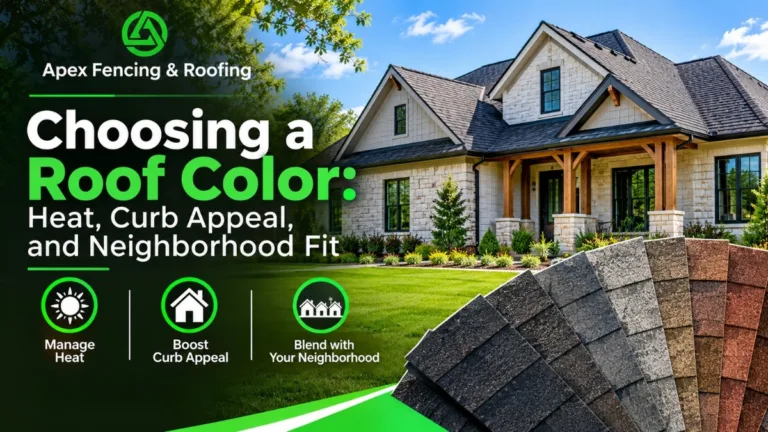
Roof color is one of the first things people notice about a home, yet it is often chosen quickly, based on a sample swatch and a general impression. In Central Texas, the choice has practical consequences as well as visual ones. Dark roofs absorb more sunlight and tend to run hotter, while lighter roofs reflect more energy. The color also shapes the home’s overall character, works with the siding and trim, and must sometimes fit within neighborhood guidelines. A thoughtful decision balances these factors rather than focusing on one.
This guide explains how color interacts with heat, how to coordinate roof color with the rest of the exterior, and how to avoid common mistakes when selecting shingles or metal panels.
How Color Affects Heat
Color determines how much of the sun’s energy a roof surface absorbs. Darker shades absorb more, which raises the surface temperature and can increase the heat that reaches the attic. Lighter shades reflect more of the sun’s energy. The difference between colors is measurable, and it becomes more significant on a roof that is exposed to direct sun for long hours. Color is only one part of the heat equation. Attic ventilation, insulation, and the roofing material all contribute. A light roof over a poorly ventilated attic will still trap heat, while a well-ventilated attic can perform better regardless of color. Ask your contractor to describe the complete system, not just the shingle shade.
Matching the Roof to the Home
A roof should complement the house it covers. Lighter roofs can brighten a home with pale siding or create contrast with darker trim. Darker roofs can give a more dramatic appearance and pair well with brick, stone, or deep-toned siding. Consider the color of the masonry, windows, doors, and fascia. The roof is a large surface, so small mismatches can become prominent when the roof is viewed from the street. Architectural style also matters. Traditional homes often suit earth tones and classic blends, while contemporary homes may look best with cooler grays or crisp, uniform shades. The roof should feel like part of a single design rather than an afterthought.
Shingle Blends and Variations
Asphalt shingles are often sold in blends that combine several granule colors across the surface. Blends can look more natural than solid colors and help disguise minor variations in the roof surface. Some homeowners find that a blend looks more dimensional, while others prefer a clean, uniform look. Ask to see samples in natural light, ideally on your home or a similar property, since shingle color can look quite different in a store than on a roof. Because shingle batches can vary slightly, make sure the contractor orders enough material from a single production run to avoid visible differences across the roof.
Metal Roof Colors and Finishes
Metal roofing offers a different palette. Painted finishes are available in many colors, and some are engineered to reflect infrared energy, which helps control heat. Metal finishes can fade over time, especially in strong sun, so ask about the coating warranty and how the product performs under intense exposure. Matte and textured finishes can reduce glare and give a more subtle appearance. Also evaluate the metal color in person. Its appearance can shift depending on the angle of light and the surrounding landscape. A small sample panel mounted on the house for a few days can reveal how the color behaves.
Neighborhood Guidelines and Approvals
Some communities and homeowner associations regulate roofing materials and colors. Guidelines may restrict specific shades, require certain profiles, or call for approval before work begins. Obtain written guidelines early in the planning process and submit samples when required. Choosing a color that is not approved can lead to delays or costly changes. Even where no formal rules apply, consider the streetscape. A roof that is dramatically different from its neighbors may draw attention, which is fine for some owners and not for others. Walking the neighborhood and noting roof colors can help you choose a shade that fits without looking out of place.
Resale and Long-Term Appeal
Roof color can influence how a home is perceived by future buyers. Neutral and classic colors tend to appeal to a broad audience, while very bold choices may be less universal. This does not mean that a homeowner should avoid personal taste, but it is worth considering if you may sell the property in the future. Keep records of the shingle or panel product, color name, and manufacturer. Those details make future repairs and matching easier, especially years down the road when the original product may have changed.
Common Mistakes to Avoid
One common mistake is choosing a color based only on a small sample. Another is ignoring how the roof will look from the street or from upper windows. A third is forgetting the gutters, vents, and flashing, which should be coordinated with the roof color where possible. Finally, some homeowners overlook the difference between a color that looks good when new and one that holds its appearance over years of sun and weather. Review the full set of options with your contractor. A good roofer will show samples, explain how colors perform, and suggest combinations that work with the existing home.
Coordinating Roof Color With Fencing and Exterior Finishes
Roof color should be considered alongside fence color, siding, and trim. A fence that complements the roof can tie the property together, while a clashing fence can make the exterior look disjointed. Coordinating these elements during planning helps create a cohesive result. A Roof Installation Services Belton provider who also works with fencing can help align the roof with the surrounding exterior.
Making the Final Decision
Choose a roof color that balances heat performance, appearance, neighborhood fit, and long-term satisfaction. Compare samples in natural light, review the warranty, and confirm that the roof system is designed to manage heat. Request written proposals that name the product and color, so the final result matches what was approved. A Roof Installation Services Killeen provider can help you compare options, and a Fencing Company in Temple can help select fence colors that complement the new roof. Homeowners looking at the entire exterior can also consult a fence contractor in Temple and a Roof Repair Services Harker Heights provider to coordinate the full look.
If the review turns up roof or drainage concerns, a Roof Repair Services Temple provider can address them alongside the fence work.