
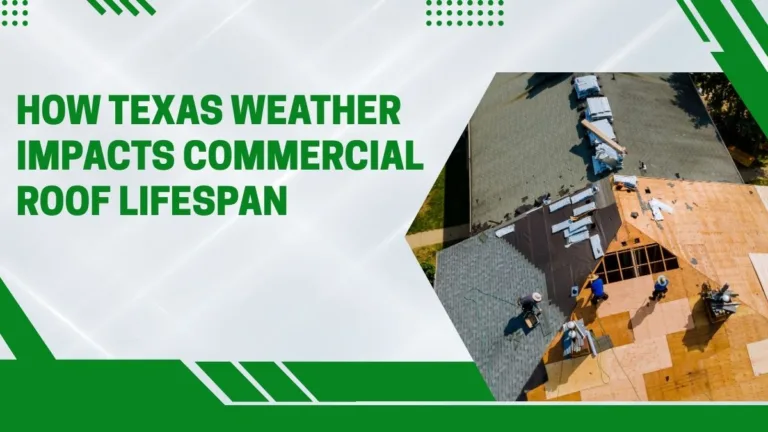
Ask any commercial property owner in Central Texas, and they’ll tell you the same thing: the roof that was “fine” last winter doesn’t always survive the summer. It’s dramatic, no single event, no obvious disaster. Just months of relentless UV radiation, a couple of hail events, a late-season freeze, and suddenly a roof that should have had another eight years is showing signs of failure that can’t be patched away.
This isn’t a worst-case scenario. It’s the baseline reality of owning a commercial building in Texas. If your property is in Bell County and you’re evaluating roof installation service in Temple, TX, or trying to understand why your existing commercial roof is ageing faster than projected, Texas weather is the variable that changes everything, and it affects commercial roofing differently than most building owners expect.
The Climate Is Working Against You From Multiple Directions Simultaneously
Commercial roofs in Texas don’t face one threat. They face several, year-round, often at the same time.
UV radiation is the quietest killer. Texas roof surfaces can reach above 160°F during summer, and sustained exposure to ultraviolet rays at those temperatures causes chemical breakdown in roofing membranes and materials at a rate that national product lifespan estimates simply don’t account for. UV radiation is a leading cause of material degradation in both residential and commercial roofing, according to the U.S. Department of Energy. On a commercial flat or low-slope roof, the most common configuration for retail buildings, warehouses, and office spaces in Central Texas, where sun exposure is amplified. A pitched residential roof at least cycles through periods of shade. A flat commercial roof takes the full load all day, every day.
Then comes hail. Texas reported over 700 hailstorms in 2022 alone, with many stones exceeding 1.5 inches in diameter. Commercial membranes that aren’t rated for impact take repeated hits that create micro-punctures and membrane weakening long before a visible leak appears. By the time water reaches the interior ceiling of a commercial space, the membrane has usually been compromised for months.
Thermal cycling completes the picture. UV rays cause roofing materials to expand and contract, leading to warping, cracking, and curling, accelerating the aging process and causing premature deterioration. On a commercial roof with large unbroken surface areas, the movement from thermal expansion and contraction stresses seams, flashing joints, and penetrations around HVAC equipment. These are exactly the spots where leaks establish themselves quietly over time.
What This Means for Lifespan Specifically
The numbers are clear and a little sobering if you’re accustomed to manufacturer estimates. Texas’s extreme weather conditions transform a typical 30-year roof into one lasting merely 15 to 20 years. That gap isn’t a defective product it’s the climate doing what the climate does.
For commercial property owners, this lifespan compression has a direct financial consequence. A commercial roof replacement on a mid-size building in Central Texas runs tens of thousands of dollars depending on square footage and material. If your roof is reaching failure at year 17 instead of year 25, you’re absorbing a replacement cost cycle that your capital planning didn’t account for. Every deferred maintenance call and every ignored inspection pushes that failure date closer.
The material you choose at installation or replacement directly controls where inside that range your roof lands.
Material Performance Under Texas Commercial Conditions
Asphalt roof installation services are common on commercial buildings with moderate slope, and modern architectural-grade asphalt performs significantly better than the standard three-tab product used on most commercial buildings from the 1990s and early 2000s. SBS polymer-modified asphalt offers better flexibility under thermal cycling and improved impact resistance under hail. That said, even premium asphalt has real limitations under Texas UV load. Asphalt shingles often last 12 to 20 years in Texas heat and hail cycles, materially shorter than the 25–30 year lifespan advertised for temperate climates. Understanding how new asphalt shingle technology actively manages heat in Central Texas buildings matters here, granule technology and reflective coatings are the specific features that extend asphalt performance in high-UV environments.
Shingle roof installation services on commercial properties with steeper or mixed rooflines follow similar logic. Profile selection matters for commercial applications just as much as residential, and the six asphalt shingle roofing styles most used across Texas cover the specific performance and aesthetic differences between profiles that a commercial building owner should understand before a replacement conversation with a contractor.
TPO roof installation services are the dominant choice for flat and low-slope commercial roofing in Texas and for good reason. TPO (thermoplastic polyolefin) is a single-ply reflective membrane heat-welded at the seams, which eliminates the mechanical failure points that adhesive-bonded products develop over time. Its high solar reflectance significantly reduces rooftop temperature, cutting heat transfer into the building and reducing HVAC load. In a Central Texas commercial building running climate control through July and August, TPO’s thermal performance has a measurable monthly cost impact. Seam integrity under UV and thermal cycling is TPO’s primary maintenance concern. Regular inspection of weld points extends service life substantially.
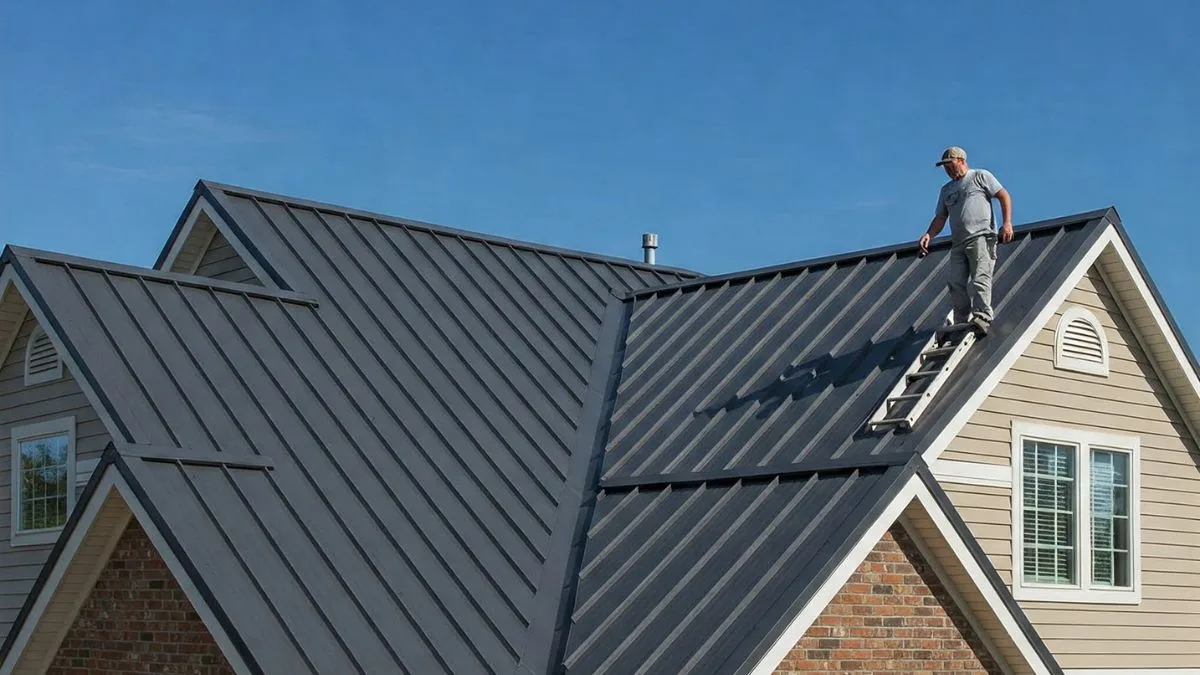
Metal roof installation services represent the premium tier for commercial longevity. Metal roofs are durable and can last 40 to 70 years, making them a great long-term investment. Standing seam metal where fasteners are concealed inside raised seams, eliminates the exposed fastener failure point that plagued older commercial metal systems. It sheds water fast, resists wind uplift, and reflects solar energy effectively. The tradeoff is upfront cost and the aesthetic reality that hail can leave cosmetic denting on softer aluminium panels without compromising function. The full performance comparison between asphalt and metal in Texas climate conditions addresses exactly this trade-off worth working through before committing to either on a commercial project.
Maintenance Is Not Optional in This Climate
It is recommended to get your roof inspected at least twice a year, in the spring and fall, to catch and fix minor issues before they escalate. For commercial properties, that cadence is the minimum. Any significant hail event should trigger an additional assessment, because commercial insurance claims in Texas require documented findings filed within 12 months of the storm and adjuster assessments frequently undercount damage that a trained roofing professional would identify.
Post-storm documentation is a specific skill set. The property owner who has a contractor relationship in place before damage occurs is in a significantly better position than the one calling around after the fact, especially in a market where demand spikes immediately after severe weather events.
The Contractor Variable
Even the right material in the wrong hands fails early. Penetration sealing around HVAC equipment, drain placement on flat roofs, flashing at parapet walls, these are the details that determine whether a commercial roof performs for 15 years or 30. What genuinely separates a reliable commercial roof installer from one that creates problems down the line is a checklist worth applying before any commercial project begins. Manufacturer certifications, documented commercial experience, local references, and itemized contracts are non-negotiable.
When searching for roofing contractors near me in the Temple area, local presence and verifiable commercial track record matter more than a high search ranking. And if your property also needs perimeter work, storm-damaged fencing, property boundary repairs, or a fence installation service from the same contractor simplifies coordination significantly.
Build Your Roof for the Weather That’s Actually Here
Texas commercial roofing isn’t about buying the most expensive product. It’s about matching the right material to your building’s specific configuration, installing it to manufacturer standard, and maintaining it with the awareness that the next hail event or heat summer is already coming.
If you own or manage commercial property in Temple or anywhere in Central Texas, Apex Fencing and Roofing brings the material expertise and commercial installation experience this climate demands. The conversation starts with an honest assessment of what your roof is actually dealing with and what it needs to last.