
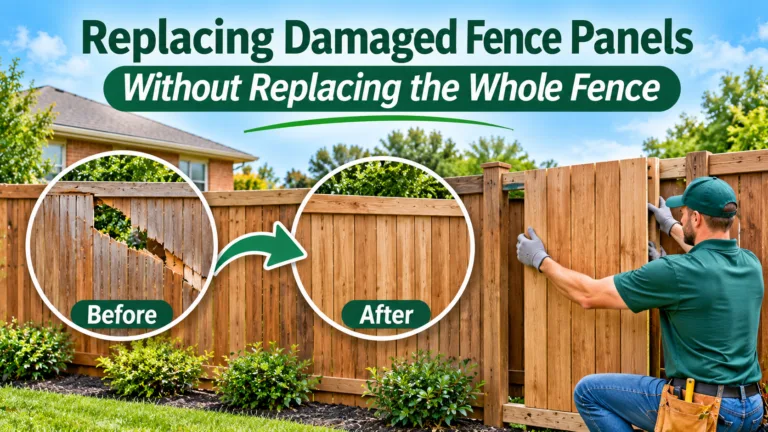
A fence rarely fails all at once. More often, a single panel is cracked by a fallen branch, warped by moisture, or pushed out of line by a determined dog or a strong gust of wind. Many homeowners assume that a damaged panel means the whole fence must come down. In most cases, that is not true. A well-built fence can be repaired panel by panel, provided the posts and rails are sound and the replacement panels are chosen carefully.
The key to a successful panel replacement is careful assessment. The goal is to fix the damage without creating a new weak point or a mismatch that stands out for years. This guide walks through the process and the decisions involved.
Deciding Whether Panel Replacement Makes Sense
Start by determining why the panel failed. A panel damaged by a single impact is usually a good candidate for replacement. A panel that has rotted, warped, or split along many boards may point to a broader problem, such as poor drainage, failing posts, or an aging fence that has reached the end of its service life. In those cases, a single repair may only postpone the next failure. Also examine the posts on either side of the damaged panel. If the posts are loose, leaning, or rotted at the ground line, replacing the panel alone will not solve the underlying problem. Address the posts first, then install the new panel.
Matching Materials and Finish
Matching is the most visible challenge. Wood weathers at different rates depending on its exposure, so a new board or panel will often look lighter than the existing fence. Some owners wait for a fence to be stained as a whole so that new and old sections blend. Others choose a stain color deliberately darker, so the repair reads as intentional. Discuss the options with your contractor before deciding. Vinyl and metal panels are easier to match when the product line is still available, but manufacturers sometimes discontinue styles. If the exact product is no longer made, a close alternative may need to be installed, with a clear explanation to the homeowner about the difference. A Roof Installation Services Belton provider with fencing experience can help identify compatible products and suggest how to handle the transition.
Inspecting the Posts and Rails
Before installing a new panel, inspect the rails that will attach to the posts. Rails that are split, rotted, or bent should be replaced, since they must hold the panel securely. Check the fasteners as well. Screws or nails that have corroded or pulled out of the wood should be replaced with new hardware rated for outdoor use. Posts deserve the same attention. Probe the base of each post with a screwdriver to check for softness. A post that moves when pushed, or that has visible cracks at the ground line, should be reset or replaced. A replacement panel hung on a loose post will fail quickly.
Removing the Damaged Panel Safely
Removing a damaged panel requires patience. Support the panel before unfastening it so that it does not fall and break neighboring sections. Remove fasteners carefully, especially if the wood is brittle. If the panel is attached to posts with brackets, inspect those brackets for wear before reusing them. Keep the removed panel if it may help with matching or if you want to salvage usable boards for later repairs. Clear the area around the posts of debris, soil, and vegetation before installing the new panel. A clean connection point makes alignment easier and reduces the chance of trapped moisture.
Installing the Replacement Panel
Measure the opening carefully, accounting for the actual spacing between posts, which may vary slightly from the original design. Confirm that the replacement panel fits without forcing it. Align the panel so that its top and bottom edges are level with adjacent sections, and check that the panel sits plumb. Fasten the panel using the method appropriate for its material, typically with corrosion-resistant screws or brackets, and avoid overdriving fasteners into the wood. For wood panels, leave a small gap at the bottom to allow for drainage and seasonal movement. Keep the bottom edge a few inches above the soil where possible. This simple detail reduces rot and helps the panel last.
Finishing and Blending the Repair
Once the panel is in place, stain or seal it to match the rest of the fence as closely as possible. New wood may need to dry before finishing, and the timing of the stain should follow the product instructions. Apply the finish evenly, working along the grain, and extend it slightly beyond the repair so the transition looks gradual. If the existing fence is weathered, consider whether a full refinish would give a more uniform appearance. Keep records of the stain product, color, and application date. That information makes future repairs easier and helps preserve the appearance of the fence over time.
Common Causes of Repeated Panel Damage
If panels keep failing in the same location, look for the cause. Wind funneling through a gap between the fence and a building can push panels repeatedly. Pets digging or pushing at one spot can stress the bottom rail. Trees that overhang the fence drop limbs in predictable places. Standing water or poor grading can rot the bottom of panels in one area. Address the cause before replacing the panel again. Adjusting the grade, trimming the tree, or adding a digging barrier may prevent the problem from recurring. A Roof Repair Services Harker Heights provider with fence experience can help identify drainage or structural causes that affect both the fence and nearby roof runoff.
When Replacing the Whole Fence Is the Better Choice
Panel replacement is a practical repair, but it is not always the right answer. If many panels are damaged, if posts are failing throughout the run, or if the fence is so old that replacement parts are no longer available, a full replacement may be more sensible. Compare the cost and long-term value of repairing against replacing, and ask your contractor to explain the reasoning in writing. A proposal for full replacement should describe the new layout, materials, and warranty. Consider whether the new fence can be designed to blend with other exterior updates on the property.
Getting Professional Help
Panel replacement can be done by a homeowner with basic tools and experience, but professional work is worth considering when posts are involved, when the fence is tall or heavy, or when matching is critical. A qualified crew will assess the whole run, recommend solutions, and install replacement panels to a consistent standard. Ask for a written proposal that lists the panel material, hardware, post work, and finish. A Fencing Company in Temple can inspect the damaged section and recommend a repair plan that fits the rest of the fence. If you are also planning roof work at the same time, a Roof Installation Services Killeen provider can help schedule both projects efficiently. Homeowners who want a second opinion on panel repair versus replacement can speak with a fence contractor in Temple for a clear comparison.
If the panel repair uncovers roof or gutter problems nearby, a Roof Repair Services Temple provider can inspect the roof and coordinate any necessary work.

