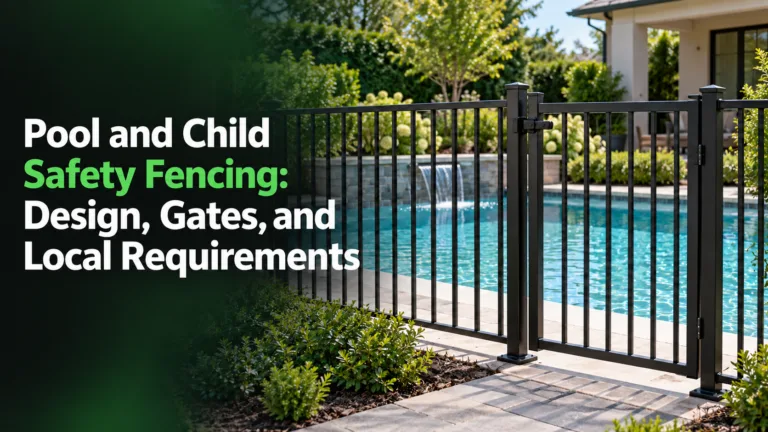
A well-designed barrier is one of the most effective ways to prevent accidents around swimming pools and play spaces. Children are quick, curious, and often faster than adults expect, and a moment of distraction can turn into a serious emergency. A properly built fence with a self-closing, self-latching gate gives caregivers a reliable layer of protection that does not depend on constant supervision. Yet many barriers fail because they were designed without a full understanding of how children move and what local rules require.
This guide explains the principles behind effective child safety fencing and what homeowners should discuss with their contractor before construction begins. It is general guidance, and the specific requirements for any property will depend on local codes and the type of pool or play area involved.
Why Barriers Matter
Supervision is essential, but it cannot be perfect. Phones ring, conversations happen, and a child can slip away in seconds. A physical barrier adds time between a child and the water or play area and gives caregivers a chance to respond. The barrier works best when it is continuous, sturdy, and difficult for a small child to climb or squeeze through.
Barriers also reduce the risk of wandering into hazards outside the yard, such as driveways or streets. A fence that encloses the pool or play area creates a defined, controlled space.
Height and Climbing Resistance
Height is one of the first considerations. Many local codes set minimum barrier heights for pool enclosures, and these requirements are often stricter than general fence standards. Barriers should be tall enough to discourage climbing and should have no footholds on the child’s side, such as horizontal rails spaced so a child can step on them. Vertical pickets or mesh designs with small openings are generally harder to climb than designs with wide horizontal rails.
Keep furniture, planters, and stacked items away from the barrier. These objects can serve as climbing aids and undermine an otherwise compliant fence.
Gap Sizes and Openings
Openings in the barrier should be small enough to prevent a child from passing through. Codes often specify maximum opening sizes, and the spacing must be checked along the full length of the fence, including areas near the ground. Gaps beneath the fence are a frequent oversight. Ground clearance should be minimal, and any settling or soil erosion should be corrected promptly.
Mesh and fabric barriers can be effective when they are securely attached and sized properly, but they should be inspected for tears and loose ties. Any opening that changes over time should be repaired quickly.
Gates That Close and Latch Automatically
The gate is often the weakest point of a child safety barrier. A gate that is propped open or left unlatched defeats the entire enclosure. Self-closing and self-latching hardware is widely recommended, and many codes require it. The latch should be positioned high enough that a young child cannot reach it, and it should engage reliably each time the gate closes. Test the gate regularly, and replace springs or latches that have weakened.
Gates should swing outward from the enclosed area in many designs, so that a child pushing against them does not gain an advantage. Check your local requirements, since specifications vary. A Roof Installation Services Belton provider who also installs fencing can explain how gate direction and hardware should be planned for your site.
Materials for Safety Barriers
Materials should be durable enough to resist impact and weather while providing a secure, consistent barrier. Aluminum, steel, vinyl, and certain composite products are commonly used for pool and play enclosures. Wood can work well when it is properly built and maintained, but it requires regular inspection for loose boards and rot. Whatever material is chosen, the hardware should be corrosion-resistant, particularly near pools where chemicals and humidity are present.
Avoid materials with sharp edges or exposed fasteners that could injure a child. Smooth finishes and secure connections reduce these risks.
Local Codes and Permits
Pool barriers are commonly regulated, and many jurisdictions require permits and inspections. Requirements may address barrier height, gate design, clearances from the pool edge, and the relationship between the house and the enclosure. Some rules also apply to existing pools when a home is sold. Check with your local building department before designing the barrier, and ask your contractor to confirm that the plan meets current requirements.
Requirements vary widely, so do not rely on general advice alone. Written confirmation from the local authority is the most reliable source.
Play Areas and Yard Zones
Play areas benefit from the same principles. A fenced zone separates play equipment, sandboxes, and open lawns from driveways, gardens, and streets. Avoid sharp corners, protruding hardware, and gaps near the ground. Position gates so adults can easily supervise the area and children can’t leave unnoticed.
Consider how the barrier interacts with the rest of the yard. A fence that connects to a shed, a tree, or a raised bed may create a climbing route. Map the yard and identify these connections before finalizing the design.
Maintenance and Ongoing Checks
A safety barrier must be maintained to remain effective. Inspect the fence and gate monthly. Look for loose boards, bent mesh, rust, cracked posts, and gaps that appear as soil shifts. Test the gate closing and latching each time. Replace worn springs and tighten hardware. Keep the surrounding area clear of objects that could help a child climb. Children grow, and their abilities change, so periodically reassess whether the barrier still provides the protection you need.
Working With a Qualified Contractor
Safety fencing requires planning, accurate measurement, and careful installation. A qualified contractor will confirm local requirements, recommend appropriate materials and hardware, and install the barrier to specification. Ask for a written proposal that describes height, gap sizes, gate hardware, materials, and warranty terms. A Roof Repair Services Harker Heights provider with fence experience can coordinate this work with other exterior projects so that the barrier is planned with the rest of the yard in mind.
A child safety barrier is an investment in peace of mind for every family that uses the space. A Fencing Company in Temple can review your property and recommend a design that fits your needs, and a fence contractor in Temple can help you navigate permitting and installation. Homeowners planning roof and fence projects together can also review timing with a Roof Installation Services Killeen provider, and a Roof Repair Services Temple specialist can confirm that roof drainage does not undermine the fence line.