
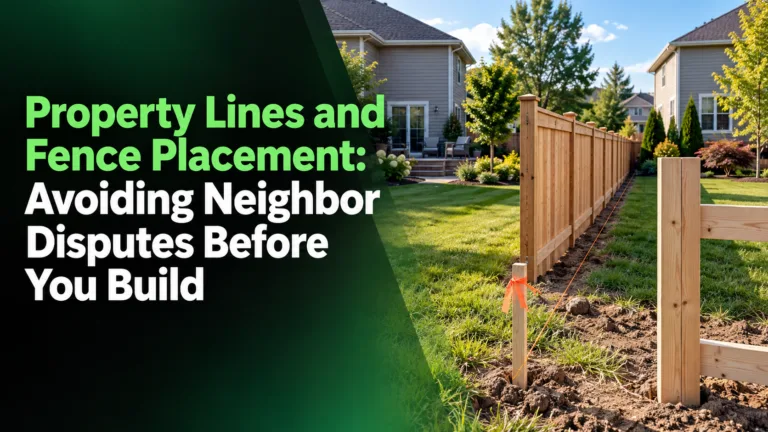
A fence is one of the most visible boundary markers on a property, and it is also one of the most common sources of neighbor disagreements. A fence placed a few inches over the line, or built on a shared boundary without clear agreement, can lead to strained relationships, costly removal, or legal disputes. Most of these problems are avoidable with careful planning before any posts are set.
This guide explains the practical steps homeowners can take to confirm their boundaries, communicate with neighbors, and plan fence placement. It is general information and not legal advice. For questions about specific property rights or disputes, consult a qualified attorney or your local records office.
Know Your Actual Property Line
Many homeowners assume they know where their property line runs, but assumptions are not reliable. Boundaries are defined by recorded documents, often including a plat or survey. A survey by a licensed surveyor provides the most accurate location of the line. Existing markers, such as iron pins or monuments, may help, but they can be buried, moved, or disturbed over time. Before relying on an old survey, check whether it is recent and whether any improvements have changed the area. Fences, hedges, and sheds placed by previous owners may not follow the legal line.
Understand Setback and Easement Rules
Local zoning rules may require fences to be set back from the property line or from the street. Some areas also have utility easements that restrict building or planting along certain strips of land. These rules affect where a fence can be placed and how it must be built. Check with your local planning or building department, and review any recorded easements on your property deed or plat.
Homeowner associations may add their own requirements for placement, height, and appearance. Obtain written guidelines before finalizing the design.
Talk to Your Neighbors Early
Communication is one of the most effective ways to prevent disputes. Let neighbors know about your plans before work begins, explain where the fence will be placed, and ask whether they have any concerns. Some neighbors may want a shared fence, and others may prefer a fence entirely on one side. Clear conversations early on can prevent misunderstandings later. If a fence will be built on or near the boundary, a written agreement can clarify ownership, maintenance responsibilities, and access. Keep copies of any agreements in your records.
Placing the Fence Correctly
Once the boundary is confirmed, mark the planned fence line with stakes and string or with spray paint on the ground. Measure carefully and consider the width of posts, rails, and any trim that may extend beyond the main fence face. Allow for a small buffer so that the finished fence does not cross the line. Verify the layout before digging. Consider which side of the fence the finished face should show. Many communities prefer the finished side to face outward, and some ordinances require it. Discuss this with your contractor and neighbors when planning.
Shared Fences and Good Neighbor Practices
A shared fence can reduce costs and create a unified appearance, but it requires cooperation. Agree on design, height, materials, and cost sharing before construction. Decide who will handle maintenance and repairs, and how decisions will be made if disagreements arise. Shared fences built under a written agreement are generally easier to maintain over time.
Good neighbor practices include notifying others before tree removal or landscaping near the fence, keeping access open for maintenance, and respecting agreed-upon design choices.
Permits and Inspections
Many jurisdictions require a permit for fence construction, particularly for taller fences or those near the street. Inspections may verify placement, height, and structural integrity. Permits protect homeowners by confirming that the fence meets local requirements, and they create a record that can be helpful when selling the property.
What to Do If a Dispute Arises
If a neighbor objects to a fence after it has been built or started, pause work and gather the relevant information. Review the survey, permits, and any agreements. Try to resolve the issue through direct conversation, and consider a neutral mediator if needed. If the disagreement continues, a qualified attorney can advise on your options. Avoid making decisions in anger, since disputes can become more costly when emotions escalate.
Planning the Fence With Your Contractor
Share your survey, permit requirements, and neighbor agreements with your contractor before installation begins. A professional will verify the layout, recommend a placement strategy, and install the fence accordingly. A Roof Installation Services Belton provider who also installs fencing can coordinate layout with roofing or other exterior work, which helps keep the property planning consistent.
Careful planning protects both your investment and your relationships with neighbors. A Fencing Company in Temple can review your property layout, and a fence contractor in Temple can help you plan placement, permits, and installation so the fence is built where you intend. Homeowners who also have roof work planned can coordinate scheduling with a Roof Repair Services Harker Heights provider, and a Roof Installation Services Killeen specialist can advise on exterior work near the property line.
If any roof repairs are needed alongside this project, a Roof Repair Services Temple provider can inspect the roof and recommend a practical sequence for the work.