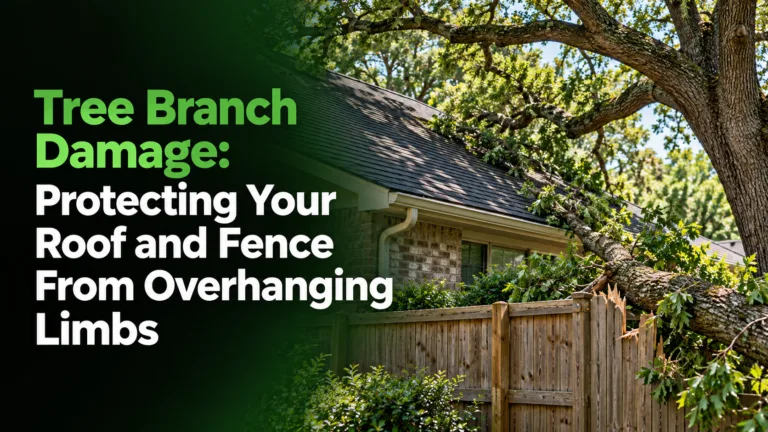
Trees add shade, beauty, and value to a property, but they can also cause significant damage to roofs and fences. Overhanging limbs rub against shingles and wear them down. Branches drop leaves, seed pods, and twigs into gutters and valleys. During storms, limbs can break and fall onto roofs or fences with considerable force. Many of these problems develop slowly, which makes them easy to overlook until the damage is substantial.
Managing trees around a home is a balance between protecting the structure and preserving healthy trees. This guide explains common types of damage and how to approach tree care with safety and good judgment in mind.
How Overhanging Branches Damage Roofs
Limbs that touch the roof surface can abrade shingles over time, particularly when wind moves them repeatedly. The granules that protect shingles from UV exposure can be scraped away, and the shingle surface may crack. Branches can also trap moisture against the roof, which encourages algae, moss, and decay in the decking.
Debris from trees collects in gutters and valleys. Clogged channels cause water to back up under shingles, which can lead to leaks and deck damage. Regular gutter cleaning is essential in tree-heavy areas.
How Branches Affect Fences
Fences are vulnerable to falling limbs and to root growth beneath the ground. Branches that lean on fence panels can bend rails and crack boards. Heavy limbs can break posts or pull fasteners loose. Roots can lift posts and displace footings over time, causing the fence to lean or develop gaps. Trees planted close to a fence line may gradually become a structural problem for the fence itself.
Keep the area around the fence clear of heavy growth, and monitor how roots are affecting the ground beside the posts. A Roof Installation Services Belton provider who also handles fencing can assess whether tree growth is affecting both structures.
Trimming With Care
Trimming can reduce the risk of damage when it is done correctly. Remove branches that touch the roof or rub against it, and cut back limbs that hang over the roof edge. Avoid removing more than a modest portion of the canopy at one time, since heavy pruning stresses the tree. Cuts should be made at proper locations on the branch to promote healthy healing. Trimming near power lines or on steep roofs can be dangerous. Hire a qualified arborist for work that involves height, large limbs, or utility proximity.
When Removal Makes Sense
Some trees pose risks that trimming cannot resolve. Trees with significant structural defects, extensive decay, or root systems that are damaging foundations, walkways, or fences may need removal. Trees that lean toward the house or that have been damaged by storms should be evaluated by a professional. Removing a tree is a significant decision and should consider property value, neighborhood guidelines, and local regulations, which may require permits for certain species or sizes.
Storm Preparation and Response
Before storm season, inspect trees near the house and fence for dead limbs, cracks, and leaning trunks. Remove or secure weak branches when possible, and keep an eye on trees that have shown stress. After a storm, check the roof and fence for impact damage, shingle damage, bent rails, and broken posts. Photograph any damage before cleanup begins, and contact a professional for repairs or for assessment of hazardous trees.
Downed limbs on a roof should be handled carefully. Do not climb onto a damaged roof to remove debris. A Roof Repair Services Harker Heights provider can inspect the roof safely and recommend repairs.
Documenting Tree-Related Damage
Tree damage to roofs and fences may be covered by homeowners insurance depending on the cause and policy terms. Keep records of the tree’s condition, photos of damage, and any professional assessments. Clear documentation supports claims and helps you understand what coverage applies. Review your policy before assuming coverage, and speak with your insurance provider when questions arise.
Long-Term Tree Management
Good tree management is ongoing. Schedule periodic inspections, especially after severe weather. Keep gutters and valleys clear, and check the roof for abrasion marks after trimming or storms. Monitor fence posts and ground movement near roots. Replanting decisions should consider mature size and distance from structures, so that future problems are avoided.
Protecting the Property Together
Trees, roofs, and fences share a boundary zone where problems often overlap. Coordinated planning helps address them together. A Fencing Company in Temple can recommend fence placement that accounts for tree roots and canopy growth, and a fence contractor in Temple can repair fence damage caused by branches or roots. For roof assessment after tree damage, a Roof Installation Services Killeen provider can recommend repairs or replacement where needed, and a Roof Repair Services Temple specialist can address damaged flashing or shingles after storms.